
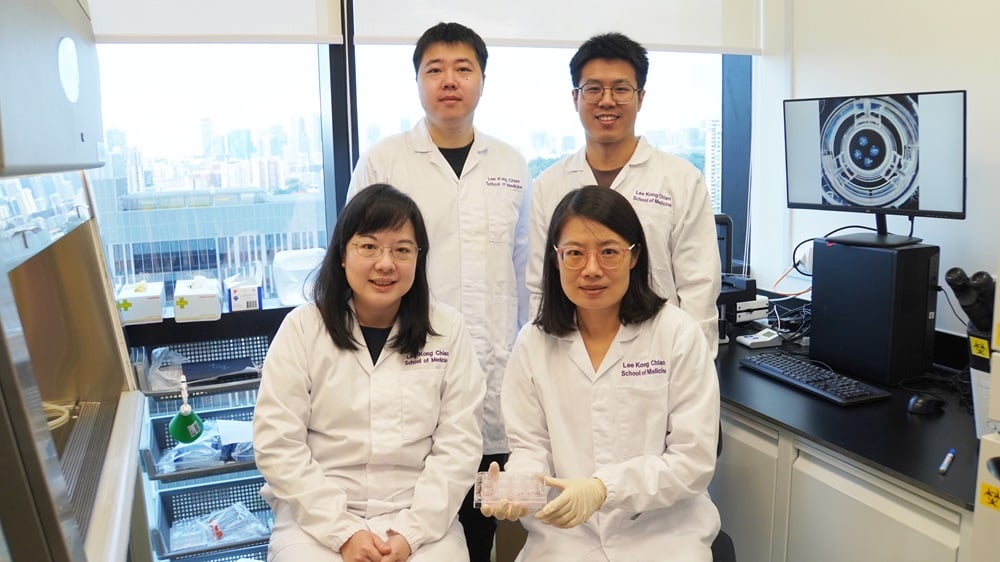

SINGAPORE: Scientists at Nanyang Technological University (NTU) Singapore have achieved a major medical research milestone by cultivating ‘mini kidneys’ in the laboratory.
These kidney organoids, developed by researchers from NTU’s Lee Kong Chian School of Medicine (LKCMedicine), hold promise in unlocking new therapeutic avenues for individuals suffering from polycystic kidney disease (PKD), a prevalent genetic disorder affecting millions worldwide.
PKD, a condition that affects approximately 1 in 1000 individuals across all ethnicities, is characterized by the formation of cysts in the kidneys, leading to eventual kidney failure.
Current treatment options, such as dialysis or kidney transplantation, present significant challenges. Dialysis can significantly impact a patient’s quality of life while obtaining a suitable donor for transplantation is often difficult.
Additionally, the FDA-approved drug Tolvaptan, although effective, comes with high costs and severe liver-related side effects.
In response to these challenges, the NTU research team embarked on a quest to deepen the understanding of PKD and develop novel treatment strategies.
Utilizing skin cells derived from patients with PKD, the researchers generated kidney organoids, or ‘mini kidneys,’ in the laboratory using stem cells.
This innovative approach allowed them to closely mimic the disease’s pathological processes in a controlled environment.
The study, published in a recent issue of a leading scientific journal, involved grafting these mini kidneys into live mice, offering invaluable insights into the metabolic defects underlying PKD.
The researchers observed evidence suggesting that enhancing autophagy, a cellular process responsible for removing damaged components, could potentially mitigate the severity of cyst formation in the mini kidneys.
The successful cultivation and transplantation of mini kidneys mark a remarkable advancement in regenerative medicine and hold immense promise for personalized treatments tailored to individual patients.
As efforts continue to translate these scientific discoveries into tangible clinical benefits, there is renewed hope on the horizon for individuals living with polycystic kidney disease.
 Follow Google News
 Join us on WhatsApp
 Follow us on Telegram