
Young SG accountant says male colleagues made snide comments about her dresses and pressured her to join them for after-work drinks

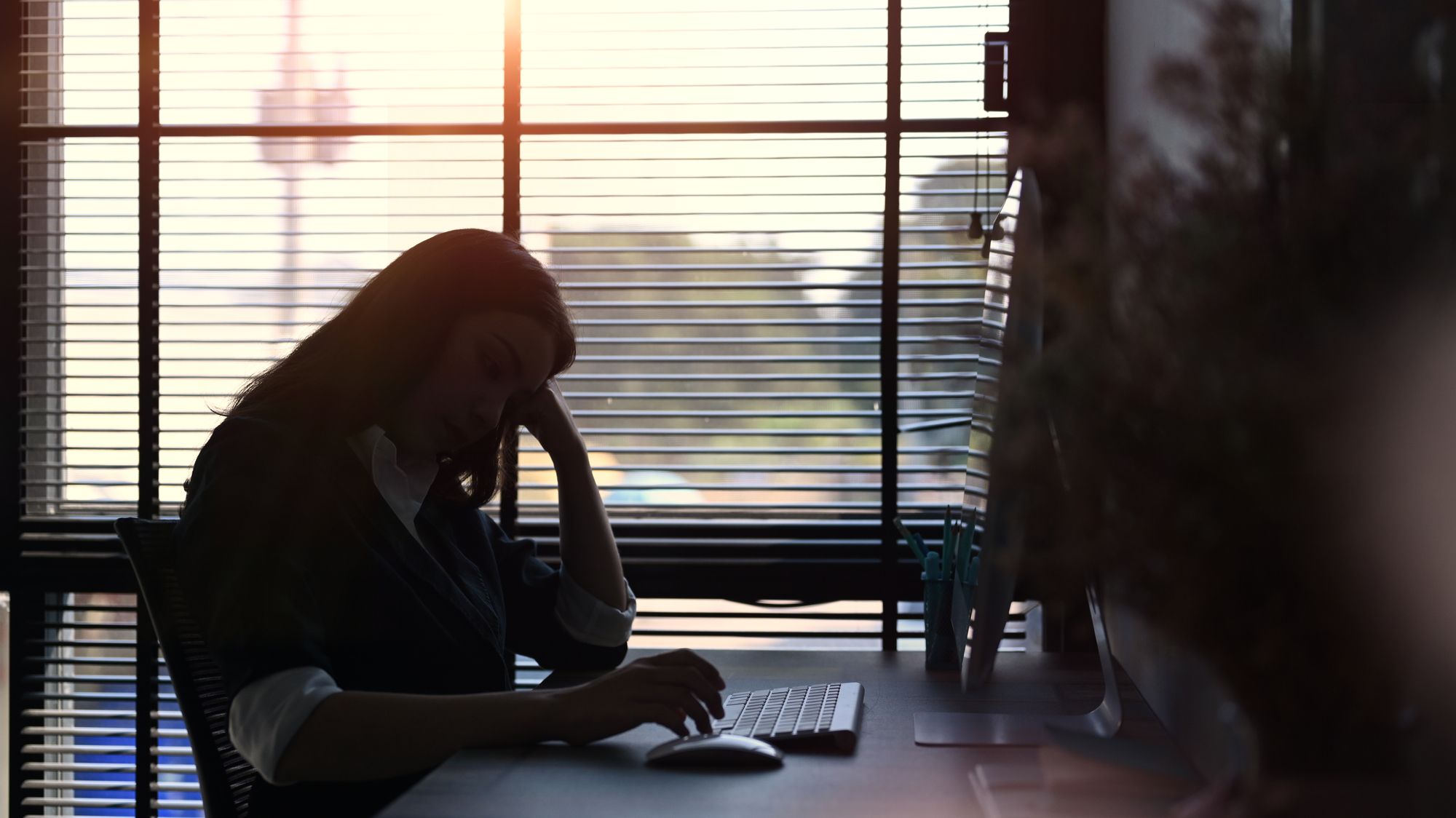
Stressed female employee
SINGAPORE: A Singaporean accountant in her early 20s shared on social media that she has gradually changed her wardrobe and daily routine after allegedly being subjected to inappropriate comments, unwanted attention, and persistent invitations from male colleagues.
In a post on Friday (Jun 19), the woman said she works at a construction SME and earns S$3,600 a month.
“It’s been incredibly isolating, being the only lady in my early 20s surrounded by over 20 male colleagues, and the gender dynamic is just very unbalanced, with another 5 females aged in their 30s- 50s.”
“I’m forced to just take it when seniors make snide comments on my dresses and blouses worn to work, and I have since started to dress less feminine, skipping dresses totally.”
She added that she’s also seen some of her male colleagues “scanning her up and down” during meetings.
The staring didn't stop
In an attempt to avoid attracting attention, she said she started choosing clothes that were less fitted and avoided cuts that highlighted her body shape.
However, she claimed that changing her wardrobe did little to stop the unwanted attention.
“I already tried to avoid silhouettes and cuts that reveal my body lines, but this still didn’t stop the way they stare at me when I change into my gym clothes to leave for the day and get suggestive glares and remarks.”
“Recently, I have also avoided changing into gym wear if I am not in a rush for Pilates class after work.”
Pressure to join after-work drinks
The woman also claimed that some of her male colleagues regularly pressure her to join them for drinks after work.
According to her, they often encourage her to stay out with them rather than head straight home or to the gym.
“Come out with us, don't just go to the gym or go home so early,” they would tell her.
While some may see the invitations as harmless, she said she worries that repeatedly declining could affect her future at the company.
“I'm terrified that saying no too many times will ruin my probation and prospects in this company.”
Manager allegedly touched her shoulder
She went on to share an incident that happened last week, where a senior manager suddenly touched her shoulder.
“A senior manager walked past my desk and touched my shoulder just to comment on how soft my blazer material (which I wore to cover my shoulders) felt, which made me shocked,” she wrote.
Why she can't simply quit
As much as she would like to leave, the woman said quitting is simply not an option for her right now.
Singapore's job market has not exactly been kind to fresh graduates, and she knows that from experience.
Before landing her current role, she submitted more than 50 job applications after graduating from a local university.
“I applied to over 50 jobs before securing this role since I graduated from a local university. I’m afraid of losing the only position I have and not passing my 1-year probation.”
Adding to the pressure is her family situation. The woman said she is the only child in a single-parent household.
“I need to contribute to the household allowance, as my mum, who works as a part-time cleaner, does not earn beyond S$2k/month,” she wrote. “I can't just quit when I can't secure the next job.”
“I’m just so drained when I have to deal with harassment at work and can’t find the way out in another job.”
‘Get out and don’t let this experience ruin your career’
Outraged by the male colleagues' behaviour, many commenters urged the woman to report the incidents to HR, senior management, or even the police. They said what she experienced was workplace harassment and should not be tolerated.
One wrote, “You should tell your immediate manager or the big boss. Many in construction can have unconscious bias and sexism - it needs to be called out. Your firm has a responsibility to make it a safe environment for you.”
Others encouraged her to stand up for herself and call out the inappropriate behaviour.
Newsletter
Get updates straight to your inbox
One said, “If things go overboard, politely let them know, ‘Do you know this is sexual harassment?’”
Not everyone believed reporting the matter would solve the problem, however. Some felt the workplace culture was already too toxic and advised her to start looking for another job as soon as possible.
One user commented, “This is the reason SME will never rid itself of its filthy reputation; it’s the bottom feeder of corporations in this country. Your only way is out; if you have to join a government sector, for the time being, so be it. Get out and don’t let this experience ruin your career.”
Another shared, “I've had a similar experience as you before; I chose to leave the job and found somewhere with colleagues who are professional and respect me.”
Reach out for support
According to the Ministry of Manpower (MOM), individuals who experience harassment at work are encouraged to either “keep their distance” from the aggressors, use a buddy system in circumstances where their safety could be at risk, or “get help using a pre-arranged distress signal.”
If the situation escalates, they can reach out to their supervisor, manager, HR, or a designated neutral representative within the organisation for support. Additionally, they have the option to report the issue to the Tripartite Alliance for Fair and Progressive Employment Practices (TAFEP) or file a complaint with the police.
Read also: ‘Am I a gold digger?’: Woman admits housing worries have shaken her confidence in future marriage