
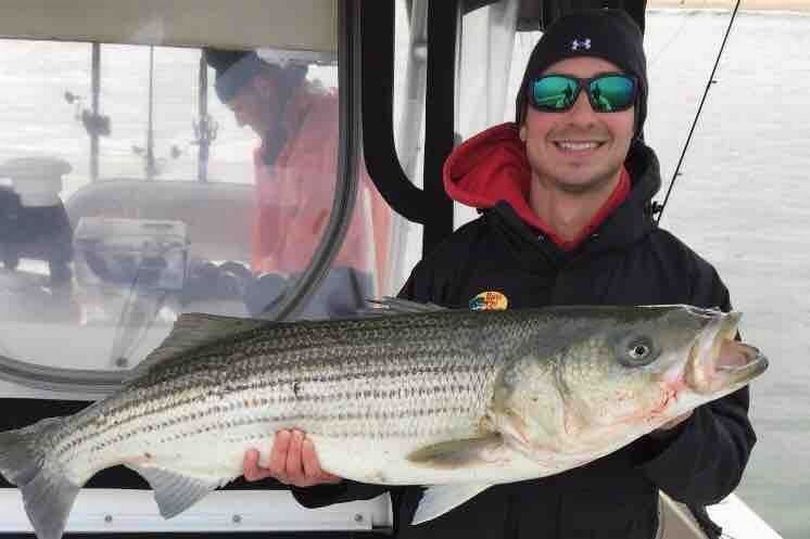

29-year-old Fabrizio Stabile died suddenly last month from a brain-eating amoeba called Naegleria Fowleri that he contracted after inhaling the organism through his nose at a Texas water park.
According to Fabrizio’s mother, her son had been moving the lawn of his New Jersey home on Sept 16 when he complained of a headache before going to lie down. Fabrizio awoke the next day and realised his still had a headache. Taking more medicine, he went back to bed.
When she woke her son later that afternoon, Fabrizio’s mother noticed that he was speaking incoherently and she immediately called an ambulance to take her son to the hospital.
At the hospitals, doctors who had initially diagnosed Fabrizio with bacterial meningitis, were confused when he did not respond to the treatment. Several tests for bacteria and other illnesses were ordered but failed to help doctors understand what Fabrizio’s condition was – that is, until the results of a spinal tap came back positive.
By the time doctors correctly diagnosed Fabrizio, it was too late to give him the drug that could have helped him stay alive. Fabrizio’s condition was so rare that the drug, that could have saved his life had he been diagnosed earlier, has been administered to three of the only five known survivors in the whole of North America.
Doctors pronounced the young man dead on 21 Sept – five days after he first suffered from the headache – shattering the hopes of his friends and family who believed that he would make it out alive ‘until the end.’
According to doctors, Fabrizio is believed to have inhaled the amoeba while visiting the BSR Cable Park and Surf Resort in Waco, Texas.
The Centre for Disease Control (CDC), which is investigating samples from the case, said that the amoeba Naegleria Floweri – which cannot be contracted through the mouth – is commonly found in warm freshwater lakes, rivers, hot springs and soil, and that it uses the brain as a food source.
Contracting the brain-eating amoeba is extremely rare. The deadly amoeba, which has a 98 per cent mortality rate, has afflicted 143 patients in the US in the last 55 years.
Fabrizio’s is the first person to die after contracting Naegleria Floweri since 2016.
Meanwhile, Fabrizio’s friends and family have set up a GoFundMe page in his memory, to raise awareness about the fatal condition. One representative of the Fabrizio Stabile Foundation for Naegleria Fowleri Awareness wrote:
“We created The Fabrizio Stabile Foundation for Naegleria Fowleri Awareness to bring awareness to, and educate as many people as possible about, this rare and preventable infection.
“We aim to do this through an annual fundraiser in Fabrizio’s memory in hopes that this will not affect another family. Please help us in keeping Fabrizio’s memory alive.”
 Follow Google News
 Join us on WhatsApp
 Follow us on Telegram