

SINGAPORE: Yet another elderly Singaporean living alone has been found dead in their flat a week after he was last seen in public, adding to the worrying spate of unnoticed senior deaths as Singapore grapples with a super-ageing population.
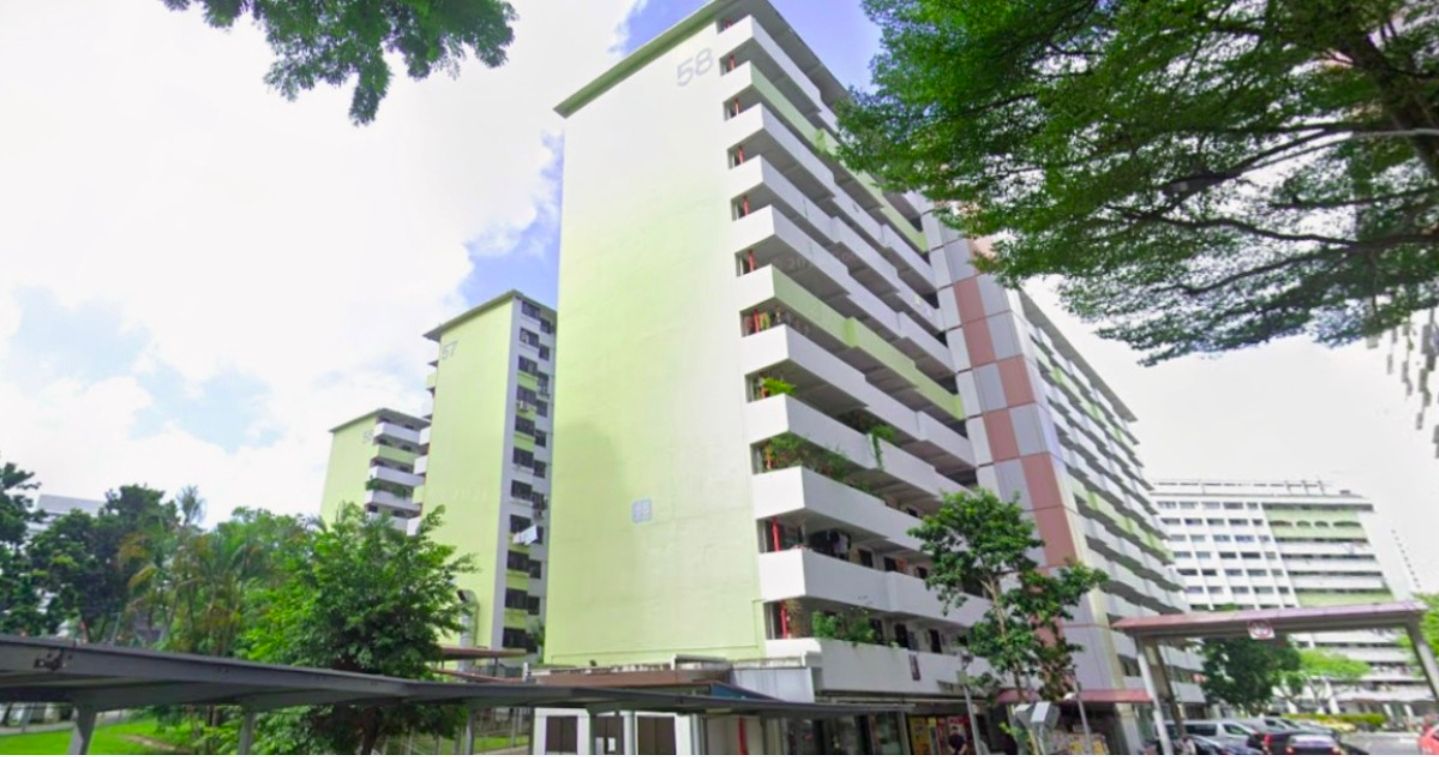
On Saturday (25 July) 78-year-old Lin Yaba (transliterated from Mandarin) was discovered dead in his flat at Block 58 Lengkok Bahru after volunteers carrying out their regular rounds that morning became concerned after noticing that a loaf of bread left at the man’s gate the previous week had not been collected.
Shin Min Daily News reported that the volunteers alerted the police, who later discovered the elderly man inside his home.
Revealing that the flat was said to be heavily cluttered, the Chinese daily reported that the man’s relatives arrived at the unit at around 4 pm and performed traditional rites by burning joss paper before his body was taken away at about 5:30 pm.
Mr Lin was unmarried and never had children. A neighbour, identified only by the surname Chen, said he last saw Mr Lin on 16 July. According to Mr Chen, Mr Lin was a familiar sight in the neighbourhood and would ride his bicycle every day.
He added that when volunteers visited the flat on July 25, they realised that the bread left at the man’s gate on July 18 was still hanging there, raising concerns that something was wrong.
Mr Lin’s younger sister told Shin Min that her brother had generally been in good health. However, he had mentioned suffering from prostate-related problems about two weeks before his death.
She said the family was shocked by his sudden passing.
The police have since confirmed that they received a call for assistance at Block 58 Lengkok Bahru at about 12:20 pm on 25 July.
Officers found the 78-year-old man lying motionless inside a residential unit. He was pronounced dead at the scene.
The police said they do not suspect foul play, and investigations are ongoing.
Mr Lin’s death is the latest in a series of cases involving elderly Singaporeans living alone whose bodies were only discovered days after they had died, highlighting concerns over the growing number of seniors ageing in isolation.
Singapore became a super-aged society in 2026, with more than one in five citizens aged 65 or older. As the population ages, more elderly individuals are expected to live independently, increasing the risk of senior citizens dying unnoticed.
The number of seniors living alone has more than doubled over the past decade, rising from about 41,200 in 2015 to 88,400 in 2025, accounting for around 11.5% of seniors living in households. The number of older couples living only with each other has also increased significantly, meaning there are fewer multigenerational households where family members can quickly notice if something is wrong.
Research also suggests that living alone can have health consequences beyond delayed discovery. A Singapore Longitudinal Ageing Studies paper found that older adults living alone had a significantly higher risk of premature mortality than those living with others, even after accounting for age, health conditions and other factors.
 Follow Google News
 Join us on WhatsApp
 Follow us on Telegram