
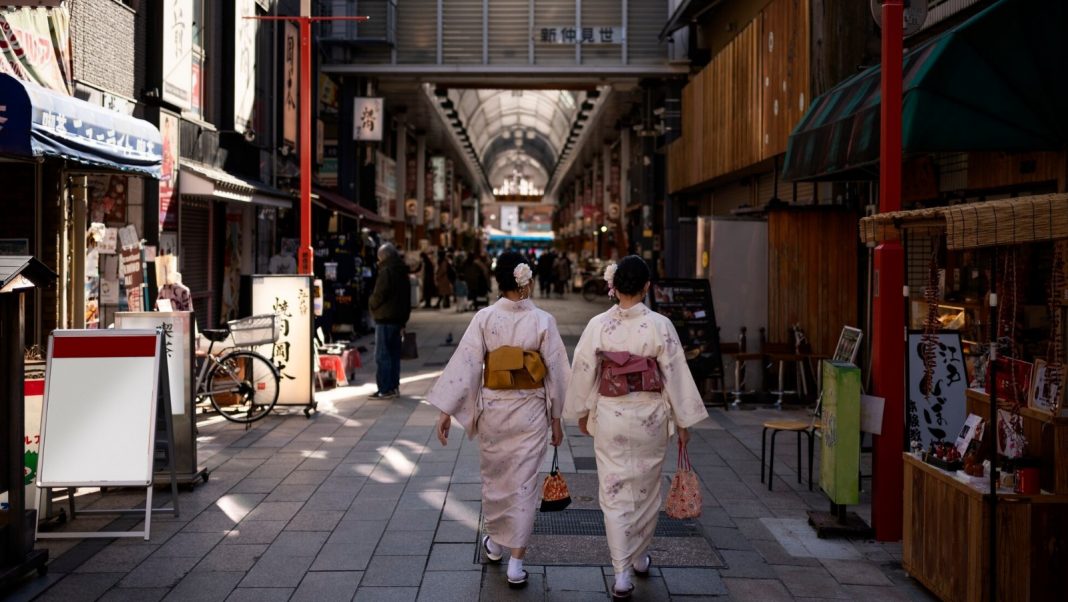

JAPAN: Japan’s unsullied thoroughfares and impeccable public transport leave an imprint on travellers’ minds, but for most, there’s one irksome puzzle — where are all the garbage cans? It’s a query that usually comes out, even among students of Professor Chris McMorran, an instructor of Japanese studies at the National University of Singapore. While his academic concentration is on marginalised communities, labour, and gender, McMorran says his excursions to Japan repeatedly turn up to focus on a far more commonplace worry — trash disposal.
Tourists confused by clean streets and no bins
A recent CNN report featured a survey conducted by the Japan National Tourism Organisation (JNTO) revealing that the topmost logistical problem mentioned by departing visitors wasn’t about language barriers or congestion but the lack of trash cans. Twenty-two per cent of travellers said it was tough for them to find a place to dispose of garbage, overtaking grumbles about inadequate English signage or overcrowding at site attractions.
“Budget-conscious travellers who grab food from a convenience store are left wandering with their wrappers,” McMorran explains. “They don’t expect to carry trash for hours.”
Part of the issue is cultural. Japanese locals regularly don’t eat on the go. Rather, people bring their snacks home or to work and throw the packaging there. Those who do eat outside usually carry their trash bag to avoid dropping litter — a shared practice entrenched in propriety and respect for communal spaces.
From cultural norms to wildlife protection
The dearth of public bins even has matter-of-life-and-death repercussions for Japan’s wildlife. In Nara, well-known for its free-roaming, cracker-loving deer, trash has become a lethal threat. In 2019, nine deer died after consuming plastic leftovers. Though trash cans were taken away from parks in 1985 to stop deer from rummaging, the booming tourist trade has led to swarming clutter and local criticism.
To address the problem, solar-powered containers labelled “Save the deer” have been mounted in high-traffic zones, intending to balance tourist convenience with animal protection.
Safety over convenience
Beyond decorum and wildlife, there’s another reason for the lack of bins — terrorism. After the lethal 1995 sarin gas outbreak by the Aum Shinrikyo cult on Tokyo’s underpass system, many trash cans were eliminated from public transportation centres so that there is nothing to use to hide hazardous materials.
Notwithstanding the challenges, some tourists see the lack or absence of bins as part of Japan’s distinct cultural fabric. Social media platforms like TikTok are bursting with etiquette guides, including guidance on how to inconspicuously bring trash or find convenience stores with a trash bin.
As McMorran puts it, “Japanese communities have collectively accepted the inconvenience of fewer trash cans in favour of a cleaner, safer public environment. For guests, it’s a minor culture shock, and a window into Japan’s deeper values of personal responsibility and public respect.”
 Follow Google News
 Join us on WhatsApp
 Follow us on Telegram