

HANOI — When Vietnam recently sat down with a senior executive from a US energy company to talk about a major liquefied natural gas (LNG) investment, the meeting quickly became a talking point in diplomatic and business circles. It wasn’t the size of the deal that raised eyebrows. It was who was doing the hosting.
Instead of the usual faces from the Ministry of Industry and Trade or the state power utility, the welcome came from an unexpected figure: Minister of Public Security General Luong Tam Quang. He met the CEO of Nebula Energy to discuss the company’s plan to acquire a 49% stake in the Cai Mep LNG terminal — a moment that, for many observers, captured a quiet but profound change underway in Vietnam.
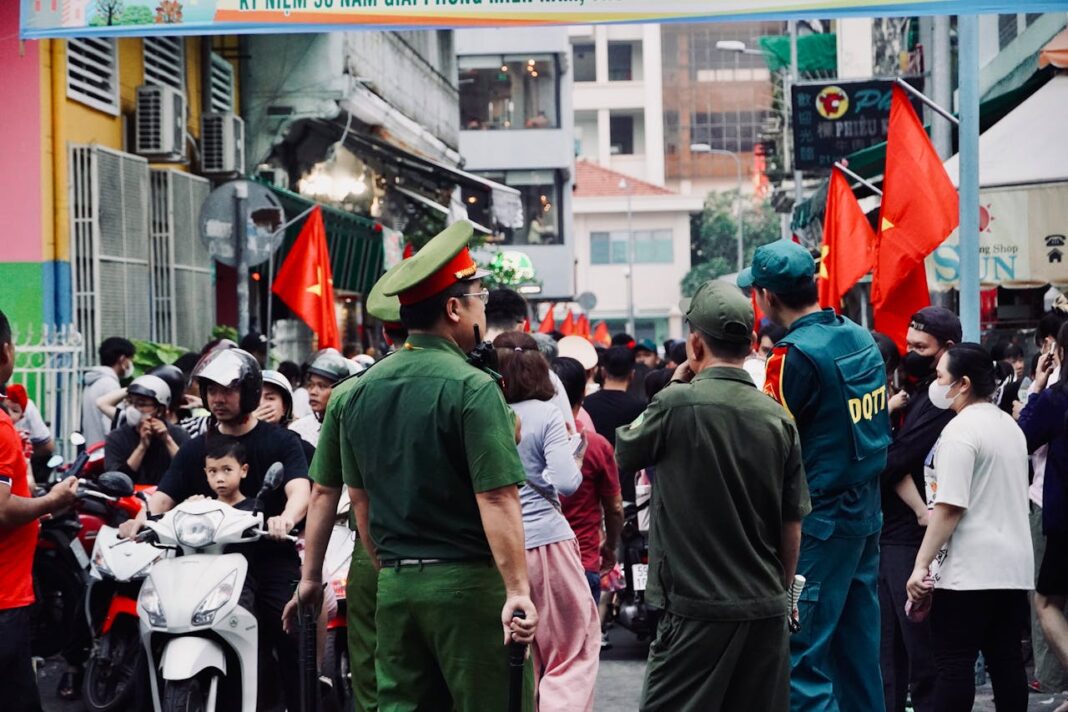
At first glance, the meeting could be written off as bureaucratic coordination in a complex system. But for analysts who track Vietnam closely, it told a bigger story. Under General Secretary To Lam, himself a former public security chief, the Ministry of Public Security (MPS) is no longer confined to policing and internal security. It is steadily stepping into the heart of the economy.
A system stuck in place
For foreign investors, this shift has been years in the making. Vietnam’s sweeping “Blazing Furnace” anti-corruption campaign has removed senior officials, but it has also left key ministries weakened and cautious. At the Ministry of Industry and Trade and state utility EVN, approvals drag on, decisions are deferred, and officials hesitate to put their names to anything that could later be questioned.
The result is a kind of institutional paralysis. And in that vacuum, investors have adjusted their behavior.
“The reality is simple,” said one regional observer. “If you want a project to move, you go to the one institution that still has the authority — and the confidence — to make things happen.”
Today, that institution is the MPS. A meeting with the public security minister is widely seen as a form of reassurance: a signal that a project has political cover and is unlikely to be derailed by sudden investigations or shifting winds in Hanoi.
Powering the digital state
The ministry’s growing interest in energy is not accidental. The MPS is leading some of Vietnam’s most ambitious digital initiatives, including a nationwide population database and the VNeID citizen identification app. These systems are central to a more data-driven model of governance — and they require enormous, reliable supplies of electricity.
Vietnam’s power grid, stretched thin by years of underinvestment and policy delays, struggles to meet even existing demand. By investing directly in LNG terminals and other energy assets, the MPS is ensuring it won’t be dependent on an unreliable civilian system to run its expanding digital infrastructure.
In effect, the ministry is building its own ecosystem — one that links data, surveillance, and energy supply under a single institutional roof. It’s a role no civilian police force in Vietnam has ever played before.
When police become players
Recent legal changes have smoothed the path. Amendments to the Law on Public Employees now allow members of the armed forces to invest in and help manage private enterprises. Vietnam has long accepted military-run companies like Viettel, but the police entering the business world marks a more sensitive turn.
The reason is obvious: the MPS is also the country’s main investigator of economic crimes.
“When the same institution enforces the rules and plays the game, trust breaks down,” said a Hanoi-based economist. “Who is going to challenge or audit a company linked to the police?”
A market economy — or something else?
All of this comes as Vietnam is lobbying the United States to recognize it as a market economy, a status that would bring tangible trade advantages. Yet the growing concentration of power — economic as well as political — inside the security apparatus points in the opposite direction.
As national security progressively intersects with commercial authority, the line between defending the system and making money from it becomes more difficult to grasp and understand — a fuzziness that could outline the nation’s politics and economy for years to come.
 Follow Google News
 Join us on WhatsApp
 Follow us on Telegram