
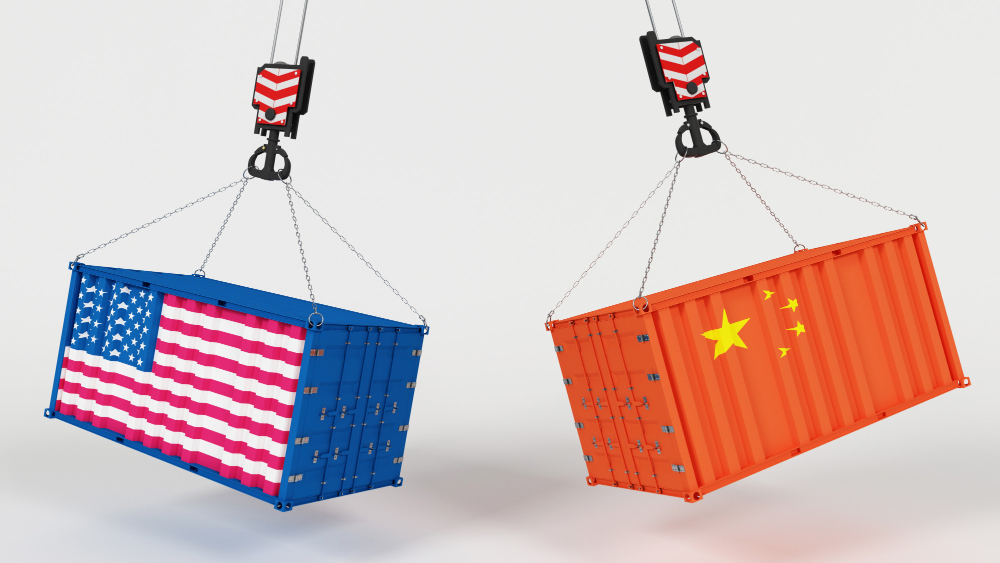

WASHINGTON, D.C.: President Donald Trump announced in a triumphant tone as he broadcast the newly issued arrangement, which he believed could reestablish a subtle ceasefire and reinstate the economic relationship between the two superpowers.
“We made a great deal with China. We’re very happy with it,” Trump spoke to reporters ahead of a performance at the Kennedy Centre, revelling in an agreement he said would place both countries at an advantage. “We have everything we need, and we’re going to do very well with it. And hopefully they are too.”
According to the latest Reuters report, the agreement, reached after rigorous discussions in London, launches a framework for new tariff structures and enlarges academic access for Chinese students in the U.S., while obtaining a consistent source of rare earth minerals, vital to U.S. technology and defence businesses.
Trump shared initial specifics of the agreement through his social media platform, Truth Social, highlighting collaboration on major exports. “Full magnets, and any necessary rare earths, will be supplied, up front, by China,” he wrote. “Likewise, we will provide to China what was agreed to, including Chinese students using our colleges and universities (which has always been good with me!).”
The transaction also sets secure and stable tariff terms. The U.S. will enforce an overall tariff rate of 55% on Chinese imports — a blend of pre-existing and new charges that echo what the White House depicted as “reciprocal and punitive measures.” China, on the other hand, will impose just 10% tariffs on U.S. goods under the new agenda.
Commerce Secretary Howard Lutnick dubbed the arrangement as adding “meat on the bones” of an earlier deal reached in Geneva in May. According to Lutnick, the 55% U.S. tariff rate is fixed and will not be changed.
Notwithstanding the festive tenor, several facets of the transaction remain ambiguous. Details about implementation, mechanisms for enforcement, and bigger economic repercussions are yet to be elucidated.
One thing was clear-cut, though: the matter of artificial intelligence chip exports. Treasury Secretary Scott Bessent explained to lawmakers that the transaction does not comprise the lifting of U.S. restrictions on upscale AI chips in exchange for Chinese mineral supplies. “There is no quid pro quo in terms of chips for rare earths,” Bessent attested before a Senate Appropriations subcommittee.
As the two countries take vigilant steps away from economic skirmishes, questions remain over the sustainability of the delicate armistice. For the time being, both sides gave the impression of having struck a balance, and Trump, never one to understate a conquest, is already claiming victory.
 Follow Google News
 Join us on WhatsApp
 Follow us on Telegram