
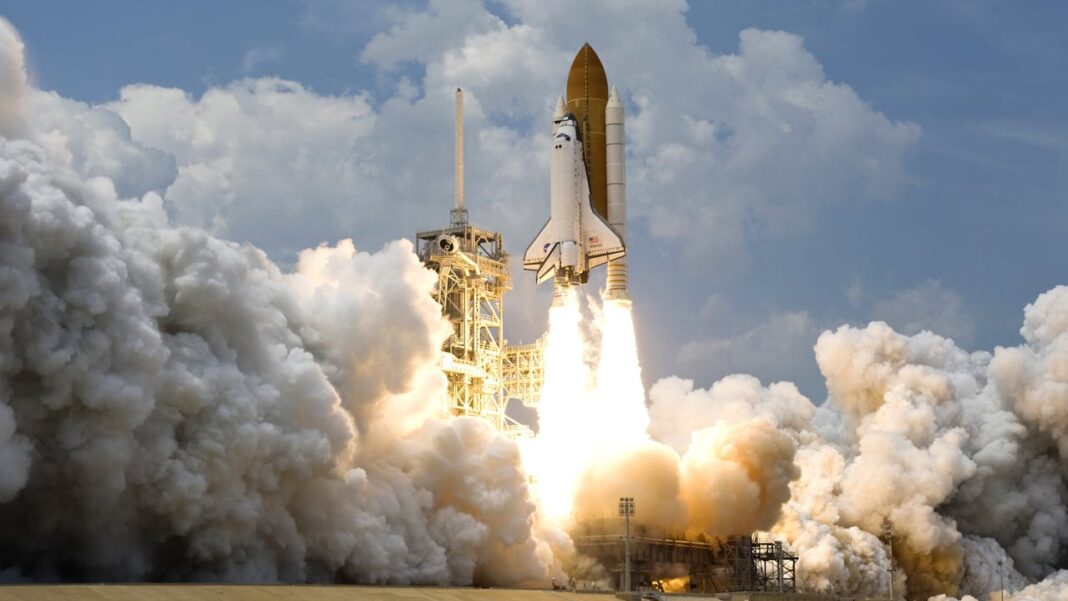

SEOUL: South Korea woke up to a major milestone in its space journey early Thursday, as the country successfully sent its largest-ever satellite into orbit using its homegrown Nuri rocket. The launch marked the fourth of six planned missions through 2027 — and a clear sign that the nation’s space ambitions are gaining real momentum.
The three-stage Nuri rocket lit up the pre-dawn sky over the Naro Space Center in Goheung, lifting off with a 516-kilogram science satellite and a cluster of 12 microsatellites on board. Officials later confirmed that everything reached the intended orbit about 600 kilometers above Earth.
About 40 minutes after the 1:55 a.m. launch, the main satellite checked in with a ground station in Antarctica, confirming that it was healthy, fully powered, and already unfolding its solar panels. The smaller cube satellites will take turns contacting Earth according to their own schedules.
Science Minister Kyunghoon Bae called the mission a major achievement, saying it proves South Korea now has the ability to launch and transport satellites on its own. He also highlighted a historic first: this time, a private company — Hanwha Aerospace — assembled the Nuri rocket through a technology transfer from the national space agency.
“Building on today’s success, we will steadfastly pursue the development of next-generation launch vehicles, lunar exploration, and deep-space missions,” Bae said, framing the mission as a pivotal moment for the country’s growing space sector.
The main satellite is packed with tools designed to observe auroras, measure plasma and magnetic fields, and test life-science experiments in space. The dozen smaller satellites — created by university teams and research groups — will take on a mix of scientific challenges, from detecting plastic in the oceans with infrared cameras to studying Earth’s atmosphere and running tests on solar cells and communication systems.
This was Nuri’s first flight since May 2023,1 when it successfully placed a 180-kilogram observation satellite into orbit, and its fourth mission overall since its less successful debut in 2021.
With two more launches already scheduled for 2026 and 2027, South Korea is clearly aiming to cement its place among Asia’s leading space powers — and close the gap with China, Japan, and India.
 Follow Google News
 Join us on WhatsApp
 Follow us on Telegram