
SMRT hosts Shanghai Shentong Metro delegation at Kim Chuan Depot to showcase rail innovation

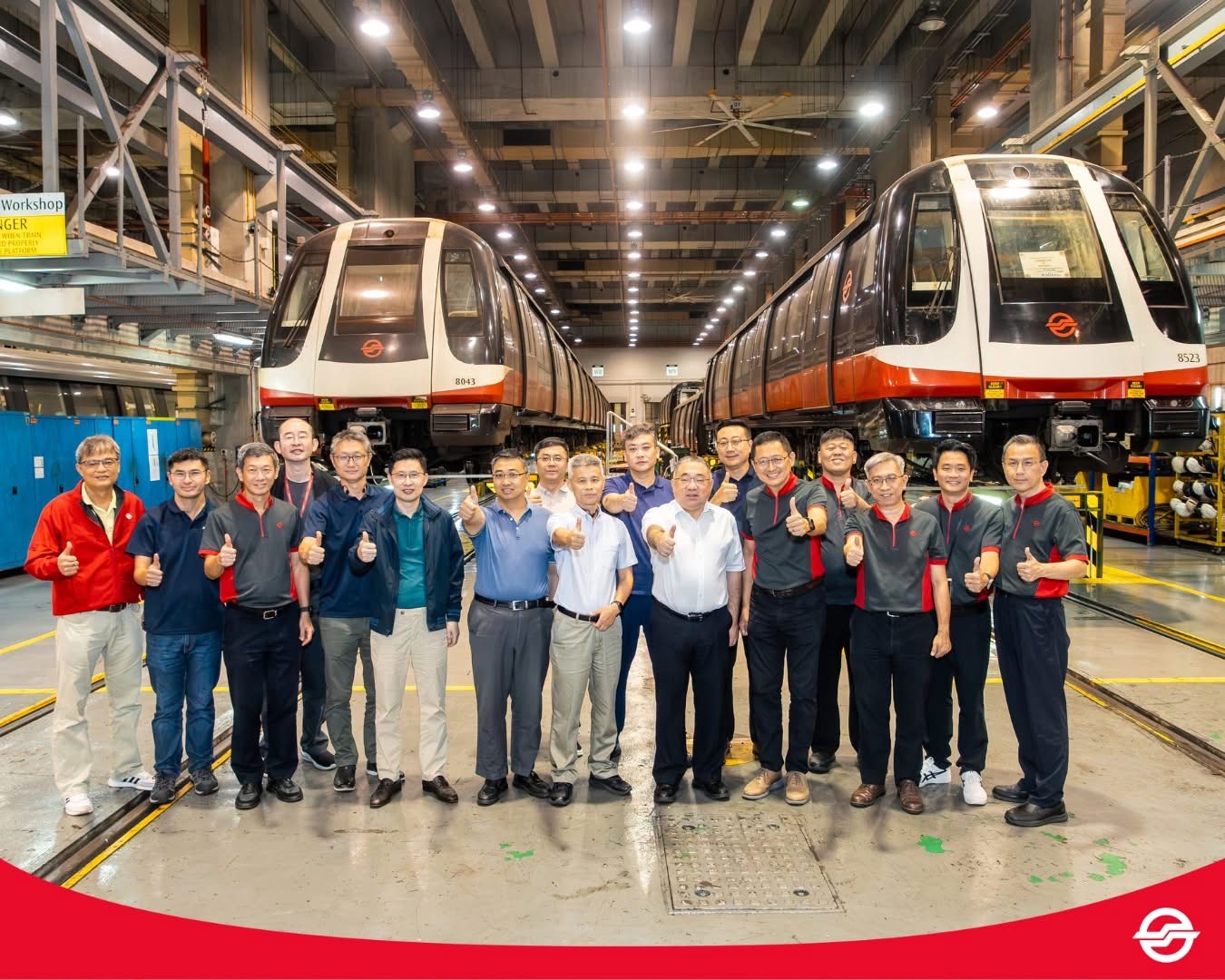
Photo: Facebook / SMRT
SINGAPORE: Most of us only see the MRT when we step into a train or wait on a platform. But behind the scenes, there’s an entire world of control rooms, simulation facilities and maintenance workshops working round the clock to keep those journeys smooth.
This week, SMRT pulled back the curtain a little, not for the public, but for a special delegation from Shanghai Shentong Metro Group, led by its president, Mr Song Bo. At Kim Chuan Depot, they were welcomed by SMRT Trains President, Mr Lam Sheau Kai, for a close-up look at how Singapore keeps its rail system running.
A peek behind the scenes
The visitors got to see the Operations Control Centre for the Circle Line, often described as the nerve centre of the network. Here, SMRT engineers demonstrated “Overwatch”, a system that allows staff to monitor and respond quickly to issues across the line.
At the Maintenance Engineering Centre, data took centre stage. The delegation was shown how predictive analytics can flag potential faults early, similar to how your phone warns you when your storage is almost full, except here it helps prevent train breakdowns.
There were also stops at the CBTC Simulation Facility, which lets engineers test train signalling in a safe environment, and the ALSTOM Long-Term Services Support office, where Singapore’s rail partners work alongside SMRT. The visit ended with a walk through the depot’s workshop, where the not-so-glamorous but vital work of train overhaul and maintenance happens.
[caption id="attachment_693606" align="aligncenter" width="696"] Photo: Facebook / SMRT[/caption]
Why it matters
On the surface, this was just a tour. But for both sides, it was more than that. Shanghai’s metro and Singapore’s MRT may be thousands of kilometres apart, but they face the same pressures: trains usually getting packed during rush hour, commuters expecting reliability, and systems that need constant upgrading to stay ahead of demand.
By sharing approaches and learning from each other, both metros hope to raise the bar. For Singapore commuters, it could mean fewer “sorry for the delay” announcements, smoother rides, and more confidence that the train will get you to your meeting, your exam, or just back home in time for dinner.
As SMRT shared in its Facebook post, the company remains focused on “advancing rail reliability, safety, and excellence through global collaboration and innovation — all in service of delivering better journeys for our commuters.”
[caption id="attachment_693607" align="aligncenter" width="696"] Photo: Facebook / SMRT[/caption]
More than steel and tracks
It’s easy to forget that running a metro isn’t just about steel tracks and heavy machinery. It’s about the people who work behind the scenes; the engineers keeping the systems humming, the planners thinking years ahead, and even the commuters who just want to get where they’re going without hassle.
Newsletter
Get updates straight to your inbox
Visits like this remind us that Singapore isn’t tackling these challenges alone. Every exchange with overseas counterparts is a chance to bring back new ideas, adapt them, and ultimately, make that daily MRT ride just a little bit more reliable.
At the end of the day, whether you’re in Shanghai or Singapore, one thing remains true: nobody likes waiting on a stalled train.
Read also: MRT reliability dips to five-year low, raising questions on system resilience