
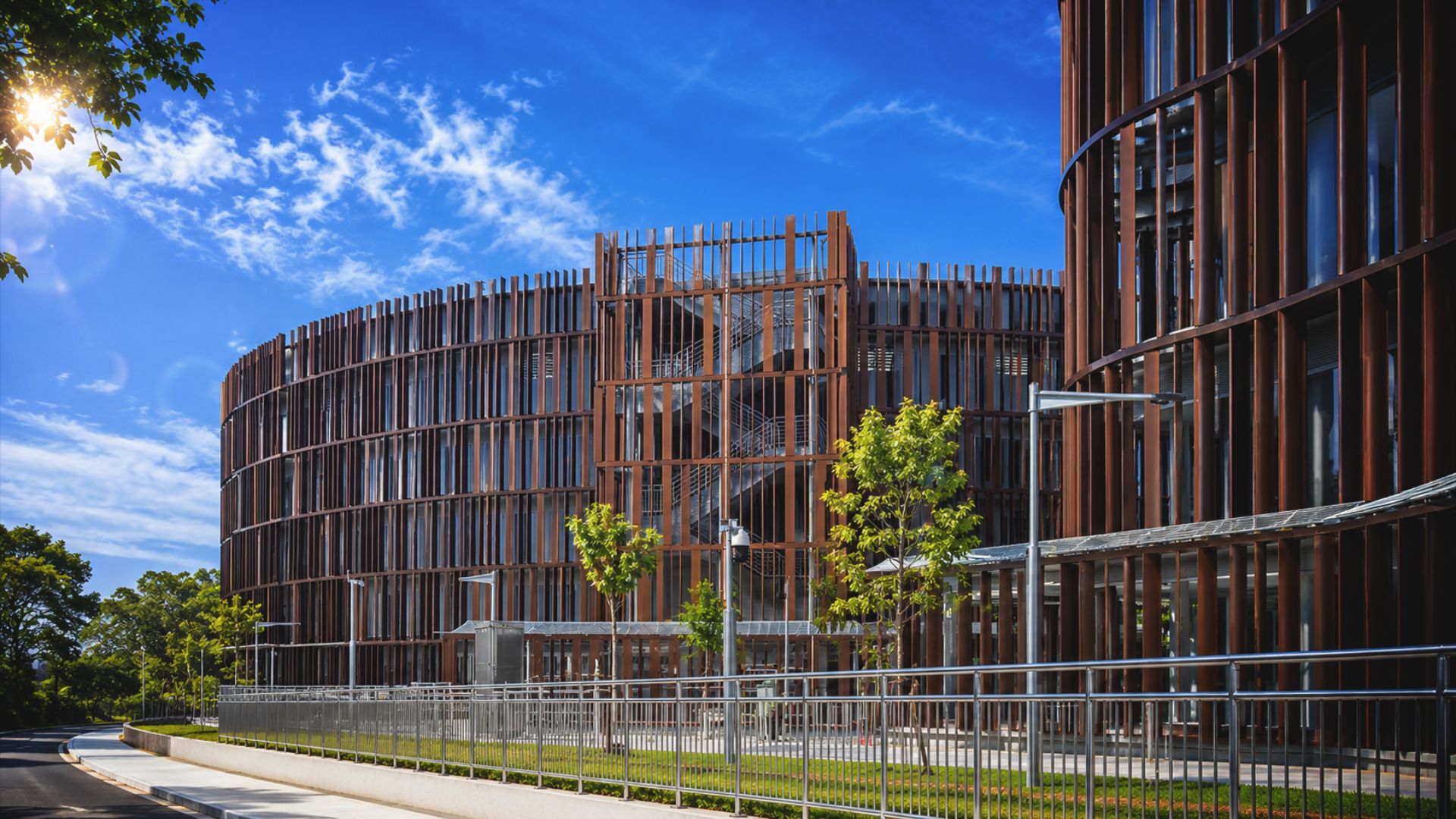

SINGAPORE: A new S$120 million reservoir in Tengah is set to begin operations this year, supplying treated drinking water to about 42,000 households and an upcoming industrial precinct.
The project may only be opening now, but its story began a decade ago. Planning started in 2016, long before most of Tengah’s homes were built. According to Channel NewsAsia (CNA), construction was completed in November 2025 after more than three years of work.
Speaking at the opening of Singapore International Water Week on June 16, Deputy Prime Minister and Minister for Trade and Industry Gan Kim Yong described the reservoir as an example of long-term infrastructure planning that prepares for future demand before it arrives.
Reservoir built for a town still taking shape
The Tengah Service Reservoir sits at the highest point in Tengah, about 40m above sea level. Its location allows treated water to flow by gravity to nearby estates, reducing the need for additional pumping.
The facility consists of two tanks, each about five storeys tall. Together, they can store enough treated water to fill around 22 Olympic-sized swimming pools.
Public Utilities Board (PUB) said service reservoirs help support Singapore’s water system by storing treated drinking water before it is delivered to homes and businesses. They also help smooth out daily demand changes and provide a buffer during peak usage or unexpected disruptions.
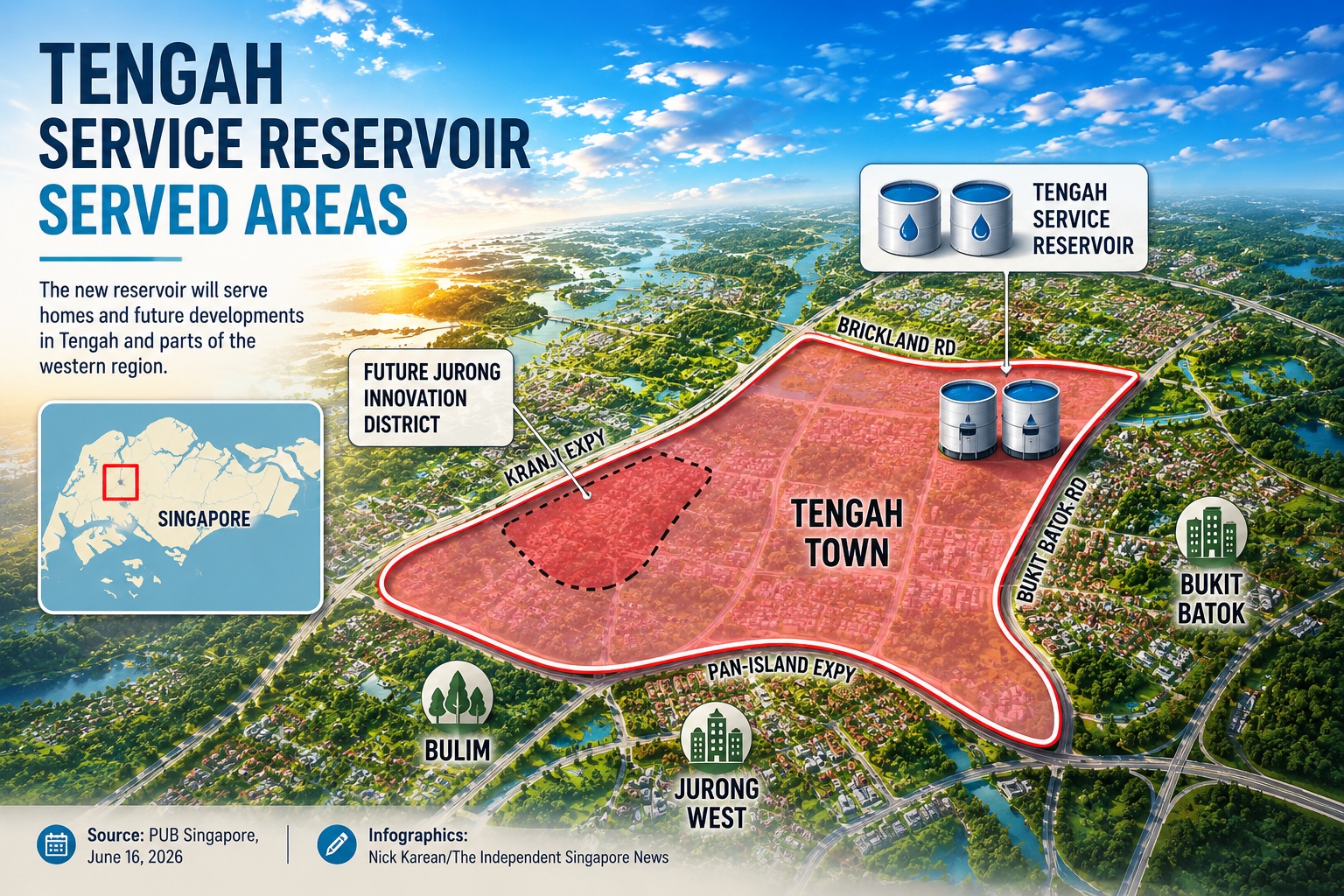
The new reservoir is expected to contribute to future housing developments in Tengah as well as businesses in the upcoming Tengah industrial precinct within the Jurong Innovation District.
Planning ahead for future water demand
Mr Gan said investments in water infrastructure are about increasing capacity and ensuring Singapore has reliable systems in place before demand rises, and that future generations inherit a robust water network.
Singapore continues to balance urban growth, industrial expansion and resource security.
The opening of the reservoir also coincided with an announcement that PUB will invest S$12 million to develop water-efficiency and water-recycling solutions for wafer fabrication plants and data centres, both of which are major water users.
Mr Gan said public funding is important, and he added that larger challenges will require stronger partnerships with private investors and institutions to scale up water projects.
New construction method used
PUB said the project marked the first use of the slipform construction method for a service reservoir in Singapore.
The technique involves continuously pouring concrete into moulds that gradually move upward as the material sets. For the Tengah reservoir, workers poured concrete around the clock for seven consecutive days to create seamless circular walls.
PUB explained that this reduced the number of construction joints, helping to lower the risk of future water leakage.
The reservoir will also be monitored remotely through PUB’s centralised control system. Water quality checks will include monitoring for bacteria, pH levels and residual chlorine. A fish activity monitoring system has also been installed as an additional safeguard.
Measures taken to protect wildlife
Because the site was located in a forested area, PUB implemented measures to minimise the impact of construction on surrounding wildlife.
These included wildlife shepherding before site clearance, checks for nesting areas before trees were removed, and temporary barriers to prevent animals from entering construction zones.
The steps taken show a growing focus on balancing major infrastructure projects with environmental considerations as new towns are developed.
Residents may never see how the water system works, but every shower, washing machine cycle and glass of drinking water depends on it. The Tengah reservoir is one of the country’s most important investments, built long before it was needed.
 Follow Google News
 Join us on WhatsApp
 Follow us on Telegram