
Singapore PHV driver, 37, suffers stroke after driving 14 hours/day; starts work from 4am and only sleeps for few hours daily

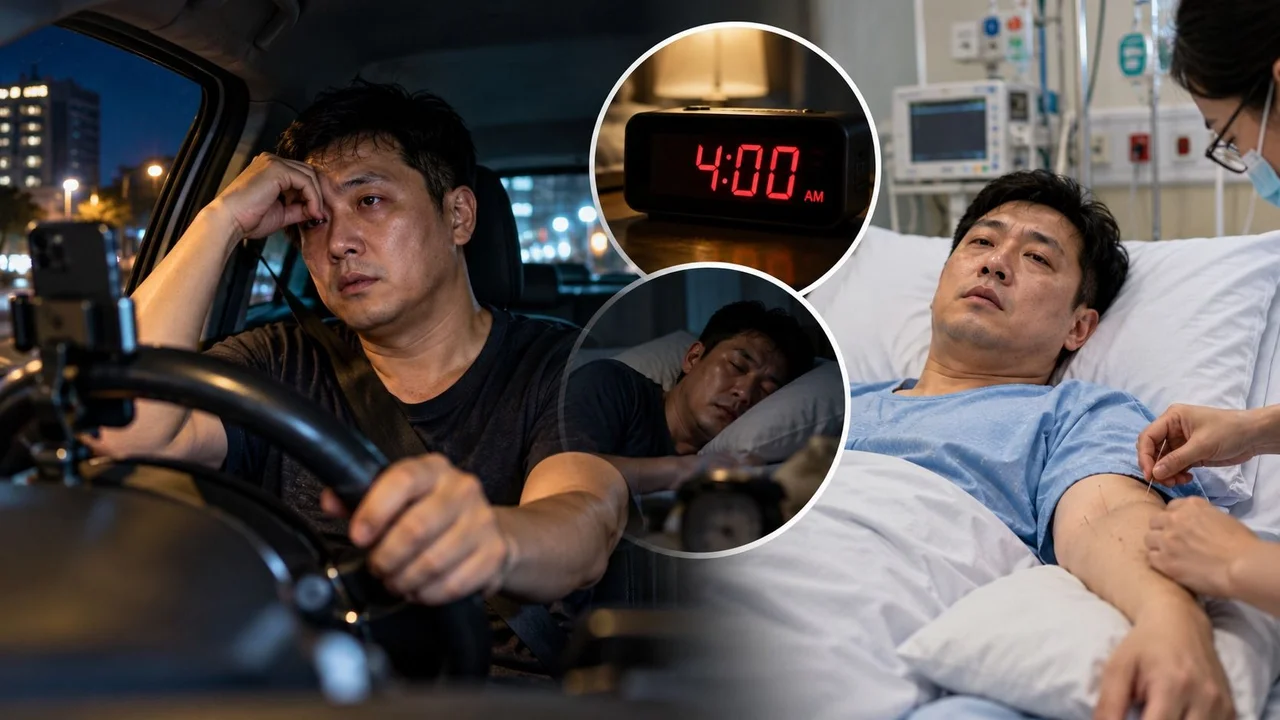
PHV driver suffers health problems after long workdays
Summary
A 37-year-old private-hire driver suffered a serious stroke in September 2026 after working more than 14 hours daily.
Doctors at Tan Tock Seng Hospital linked his stroke to high blood pressure, with high cholesterol, obesity and smoking adding to his risks.
The hospital plans to recruit 250 stroke patients for a two-year programme combining acupuncture with standard rehabilitation from January 2027.
SINGAPORE: A 37-year-old Singapore private-hire vehicle (PHV) driver learnt a hard lesson about his health after suffering a serious stroke in September. Wu Jin Xiong (transliteration) usually started work at 4 a.m. and drove for more than 14 hours daily, leaving little time for exercise and sleep.
Wu suddenly lost his ability to speak clearly. His family called an ambulance, and he was taken to Tan Tock Seng Hospital (TTSH), where doctors found he had high blood pressure. His father, Wu Shun Zhi, 68, said his son had appeared healthy before the incident.
However, long hours behind the wheel, little exercise, and late nights after work may have increased his health risks. Doctors also identified high cholesterol, excess weight and a smoking history as factors linked to Wu’s stroke, Lianhe Zaobao reports (Oct 17).
Acupuncture becomes part of his recovery
After about a week in hospital, Wu’s condition stabilised. He then moved to TTSH’s Integrated Care Hub (ICH) for rehabilitation, where he experienced pain and weakness in his arms.
Wu’s father suggested trying acupuncture, having found it helpful for his own arm and leg pain. Wu began treatment at the hospital, and his father later noticed that his son felt less pain and slept more comfortably during afternoon naps.
These early changes are encouraging for the family, although they don't establish how much acupuncture has actually helped his recovery.
TTSH plans a two-year stroke rehabilitation study
TTSH has offered acupuncture to patients undergoing inpatient rehabilitation since January 2025, with more than 200 patients receiving the service so far.
Professor Loh Yong Joo, head of TTSH’s Rehabilitation Medicine department, said stroke survivors may face pain, fatigue, poor sleep and constipation during recovery. Some also struggle emotionally while coping with changes to their health.
From January 2027, the hospital plans to launch a two-year integrated rehabilitation programme under the Ministry of Health’s Traditional Chinese Medicine (TCM) Integrative Sandbox. It plans to recruit 250 stroke patients, split equally between those receiving acupuncture alongside standard rehabilitation and those receiving rehabilitation without acupuncture.
Eligible patients will receive substantial government subsidies for acupuncture. The programme will assess the combined approach, with the longer-term goal of expanding the treatment model and subsidy scheme if the results support it.
Newsletter
Get updates straight to your inbox
Recovery starts with taking health seriously
Wu’s story shows how a demanding work routine can have serious health implications unnoticed until a major medical event occurs. Long hours behind the wheel may help drivers earn a living, but they can also leave little room for movement, rest and regular health checks.
Acupuncture may offer some patients added support, whether physical or psychological, during rehabilitation, but it doesn't replace medical care or address every stroke risk.
Drivers who spend much of the day seated should make time for health checks, movement and adequate sleep. Protecting their health is part of staying on the road for the long term.