
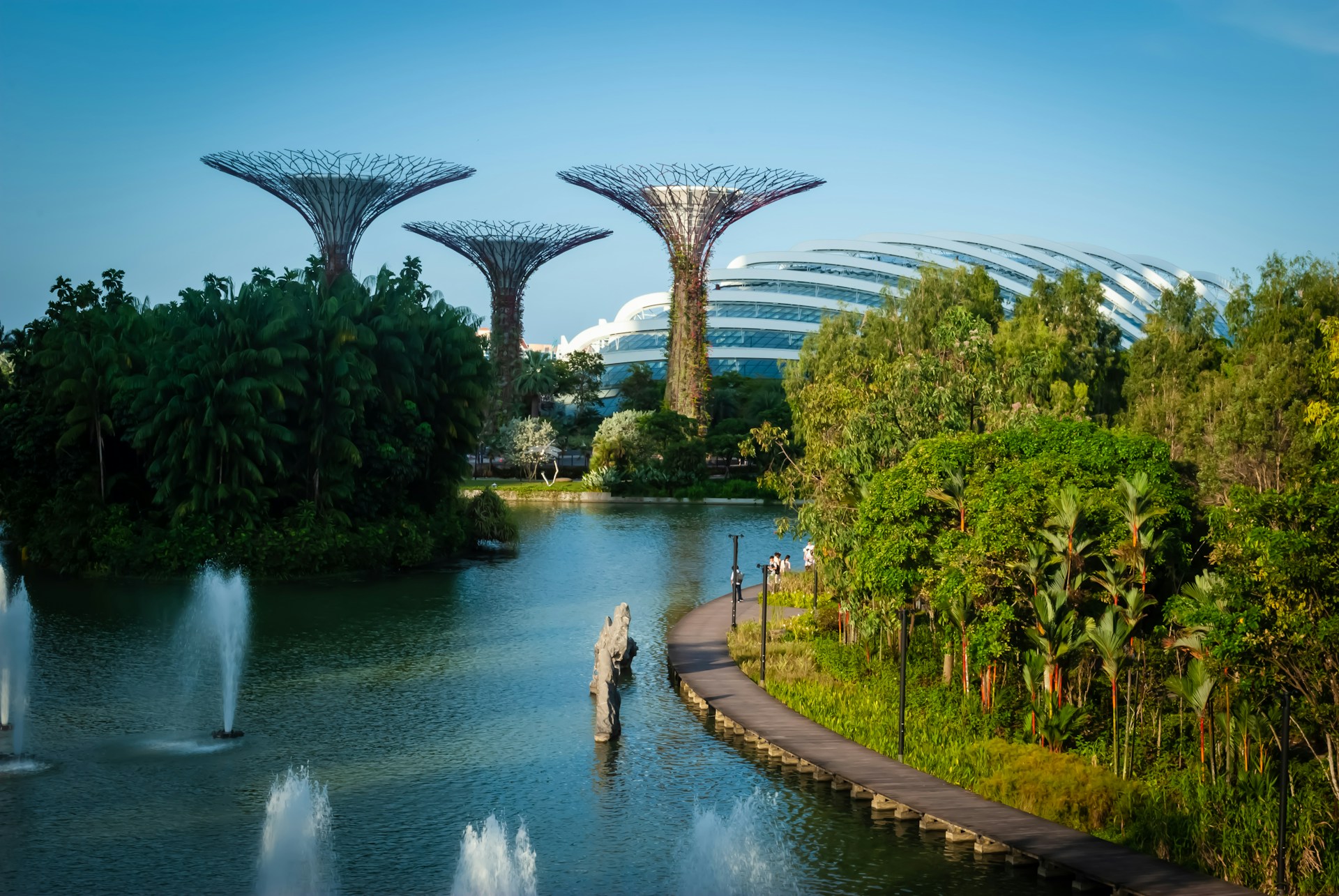
Photo: Unsplash
Singapore named one of Asia’s smartest cities in 2025 — but can tech solve everything?

SINGAPORE: Singapore has long been well-regarded for its admirable vista, opulent foliage, and exceptional development. In the current year, the Lion City earned a new distinction by being named one of Asia’s smartest capitals, according to the newest Smart City Index by the International Society for Urban Informatics (ISUI), featured in a recent story of Time Out.
Classified as the 21st in the world and 5th in Asia, Singapore’s spot strengthens its rank as a trailblazer in smart inner-city development. Thus far, there is one question that continues to nag — can technology really solve all of the city’s glitches and difficulties?
What makes a city ‘smart’?
Many people think being a “smart city” only involves fast internet or the latest tech. The ISUI’s Smart City Index 2025 takes a deeper, more people-focused approach. Using global data, the index assesses 73 cities across six main areas: citizens, environment, social landscape, economy, infrastructure, and governance. This offers a more complete view of urban intelligence.
Each area is divided into specific goals. For example, the "citizens" category includes metrics like education, health, and lifelong learning. The "social landscape" looks at housing affordability, public safety, mobility, and healthcare access. It’s not just about having high-tech solutions; it’s about being well-developed.
Where Singapore stands
Globally, Stockholm leads the list, followed by Washington, D.C., and Barcelona. Singapore ranks 21st worldwide, but in Asia, it proudly stands among the top five smartest cities:
Tokyo (#5 globally)
Hong Kong (#8)
Seoul (#13)
Beijing (#15)
Singapore (#21)
This position puts Singapore ahead of regional competitors like Yokohama, Guangzhou, and Kuala Lumpur, which is no small feat in a region striving to modernize.
High tech, high hopes, but is it enough?
The city-state’s smart city goals are extremely entrenched in its urban uniqueness. Be it the AI-propelled stream of traffic systems or its avant-garde Smart Nation ingenuity, Singapore continues to devote substantial investments to its digital transformation initiatives. Nevertheless, such development raises vital questions:
- Can technology respond to the increasing societal disparity?
- Can it make housing more affordable or strengthen communities?
- Is being smart synonymous with being inclusive, or just efficient?
These are challenges that even the smartest cities face. While it is true that technology can boost services, improve products, and enhance the quality of life, it cannot provide humans’ need for compassion, justice, equality, and connection.
Newsletter
Get updates straight to your inbox
As cities like Singapore climb the ranks, their accomplishment must also be assessed by how fit the city is for human habitation, if it is all-encompassing, if it is robust for all residents and citizens, and not just how speedy or innovative they appear to be.
So yes, Singapore is smart — among the smartest, but the next challenge may not be found in data dashboards or digital services. It may lie in how effectively Singaporeans use that intelligence to create cities that are not only connected but also truly focused on people.