
SBS Transit signs MoU with Guangzhou Metro to advance rail innovation and commuter experience

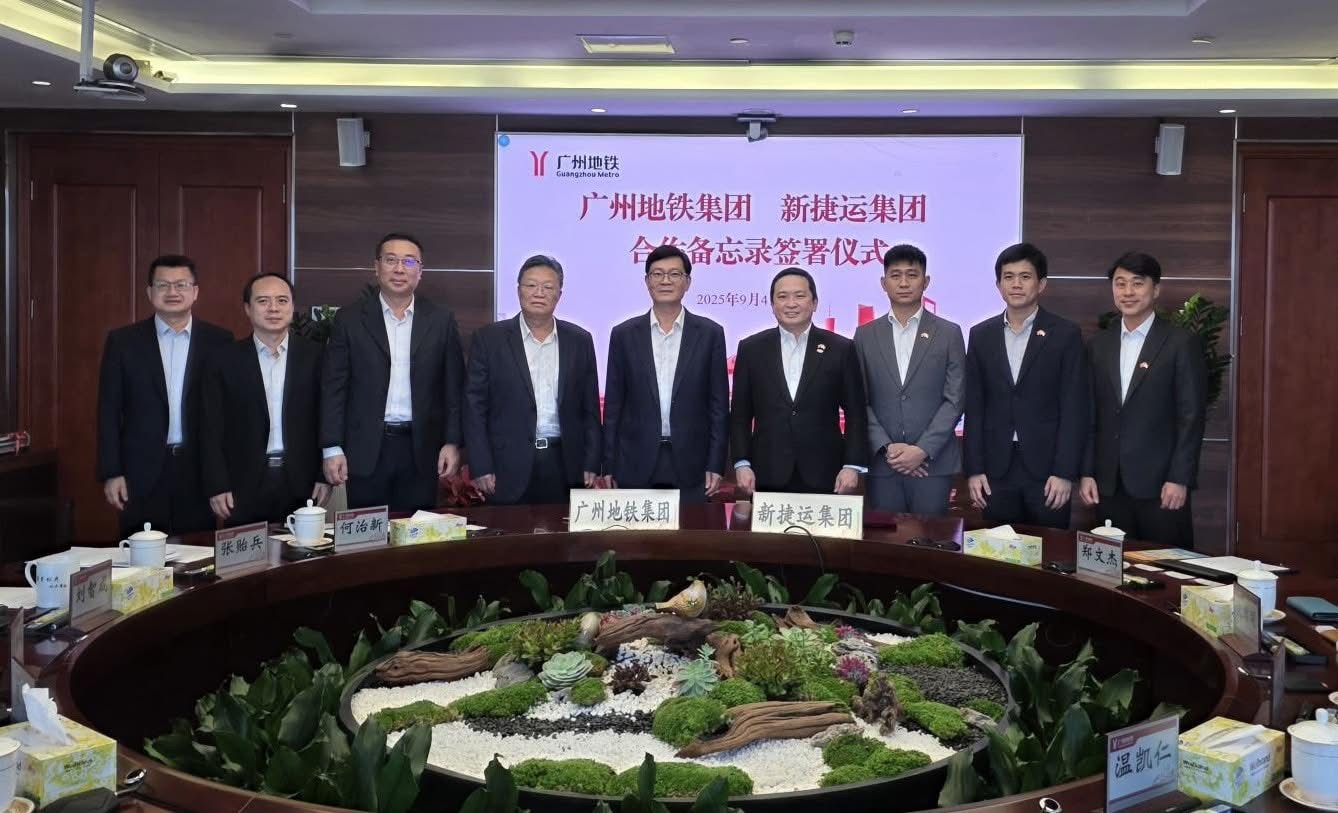
Photo: Facebook / SBS Transit Ltd
SINGAPORE: For the average commuter, the daily train ride is about as routine as it gets. They have to swipe in, squeeze into a carriage, and hope the journey runs smoothly. However, behind the scenes, rail operators are already working on changes that could make those everyday journeys safer, faster, and more reliable.
SBS Transit announced this week that it has signed a memorandum of understanding (MoU) with Guangzhou Metro Group. This marks a new chapter in international cooperation on rail innovation.
The partnership will have both organisations share their expertise in areas such as operations, maintenance, safety, training, and sustainability. Furthermore, they will also collaborate on new technologies like artificial intelligence, machine learning, and data analytics to improve predictive maintenance — spotting issues before they disrupt service.
[caption id="attachment_694846" align="aligncenter" width="696"] Photo: Facebook / SBS Transit Ltd[/caption]
Read related: SMRT, RSAF share insights on AI and predictive analytics in safety and maintenance
Impact on commuters
Terms like “predictive maintenance” and “data analytics” may sound technical, but improvement in these areas can significantly impact the commuter experience. Think about having to deal with fewer surprise train delays, smoother rides, and a system that gets resolved faster when disruptions do happen.
The collaboration could also shape the commuter experience in other ways. Guangzhou Metro, one of the largest urban rail networks in the world, has tested smart station systems, passenger flow management tools, and digital ticketing solutions. If these lessons are brought to Singapore, riders might one day enjoy more efficient boarding, less congestion at platforms, and, quite possibly, more sustainable train operations.
In simple terms, this MoU isn’t just about rail operators trading notes. Rather, it’s about giving commuters a better journey, whether that means shaving a few minutes off travel time, enjoying a cleaner environment, or simply having more peace of mind when stepping onto the platform.
A step towards the future of rail travel
For SBS Transit, the agreement reflects a commitment to keep raising service standards while preparing Singapore’s rail network for the future. By working with a partner like Guangzhou Metro — which operates across one of China’s fastest-growing cities — the collaboration opens the door to innovations that go beyond infrastructure, touching the lives of millions of daily riders.
Newsletter
Get updates straight to your inbox
At its heart, the MoU demonstrates a simple truth: an efficient public transport system is only as strong as the experience of the people who utilise it. With this new collaboration with Guangzhou Metro, Singapore commuters can hopefully look forward to not just reliable, but smarter, safer, and more commuter-friendly journeys.