


SINGAPORE: Marina Bay Sands is set to embark on a bold new chapter. On Jul 15, Las Vegas Sands broke ground on an ambitious S$11 billion (US$8 billion) expansion project that will see the rise of a 55-storey luxury hotel tower, a 15,000-seat state-of-the-art arena, and a suite of premium experiences designed to elevate Singapore’s position in global tourism.
Officiated by Prime Minister Lawrence Wong and key cabinet members, including Minister Grace Fu, the groundbreaking ceremony brought together over 220 dignitaries, artists, and executives, including Sands co-founder Dr Miriam Adelson and CEO Robert Goldstein.
“I’m glad that this partnership has flourished, and even happier that we are now taking it to the next level,” PM Wong said, calling the development “a testament to Singapore’s ambition and resilience.”
The move comes 15 years after the opening of Marina Bay Sands in 2010 — an architectural marvel that has since become a symbol of modern Singapore. Today, the three iconic towers and SkyPark are globally recognised, housing flagship boutiques in their Shoppes, the ArtScience Museum, and the world’s first floating Apple store.
A tower teaching for the sky—and a legacy to match
“This next chapter is not just about adding another tower,” said Goldstein. “It’s about reimagining what luxury, tourism, and entertainment can mean for Singapore and the region. We’re carrying forward Sheldon Adelson’s vision — and taking it higher.”
And by all commercial metrics, that legacy has delivered. MBS is now the most successful integrated resort in the world, drawing over 50 million visitors annually and redefining Singapore’s global brand.
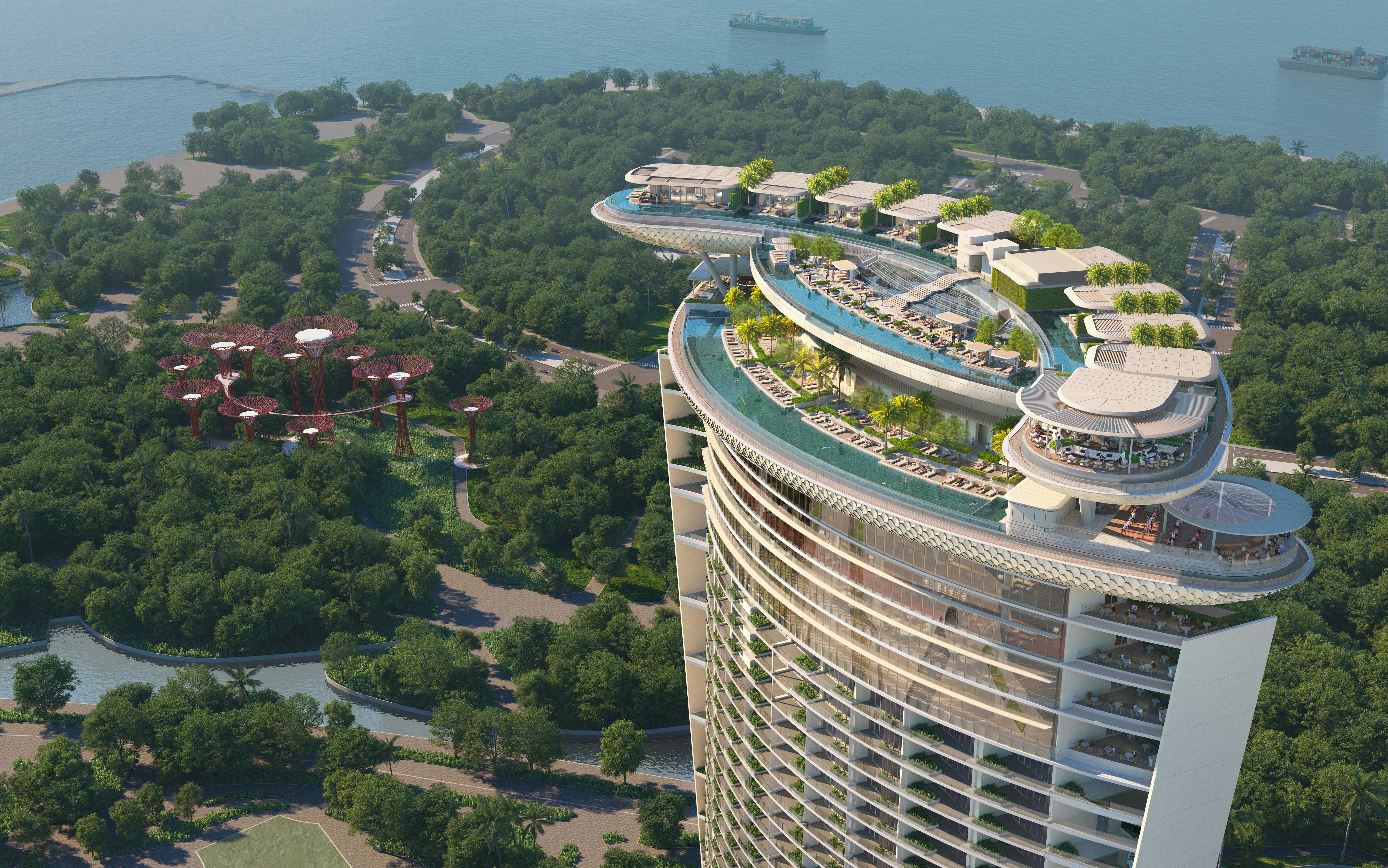
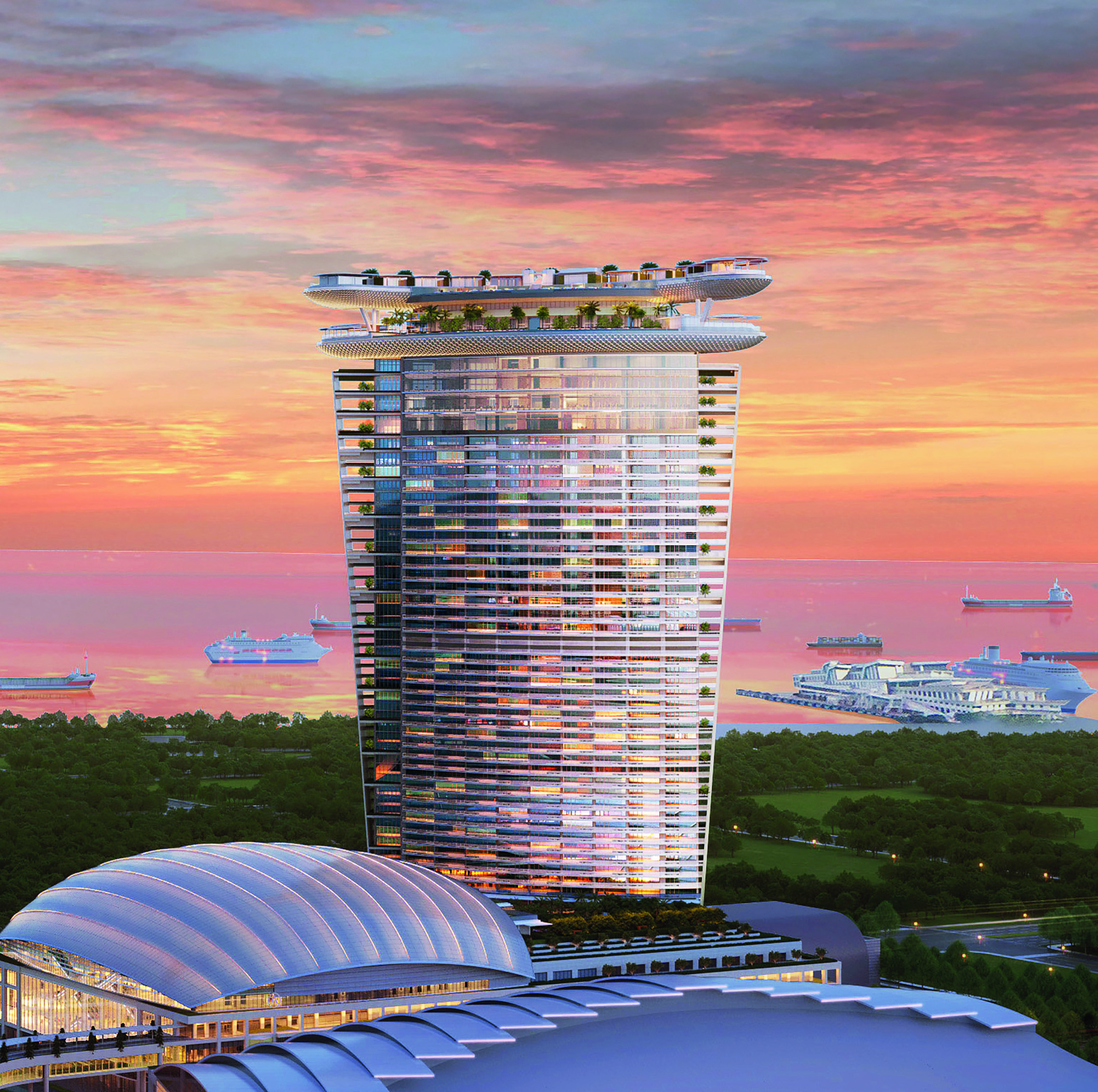
The new tower, again designed by Safdie Architects—the firm behind MBS and Jewel Changi—will spiral upward in twin arcs, capped by a futuristic “Skyloop”: an 18,000-square-foot terrace of infinity pools, observatories, rooftop gardens, and private wellness enclaves. Below it, an entertainment arena by Populous—designers of the Las Vegas Sphere and London’s O2, Optimised for acoustics and flexibility, the venue aims to make Singapore a premier stop for global entertainment tours.
It’s no small feat. The engineering alone will be another chapter in Singapore’s textbook of architectural audacity, but some have begun asking: when every new tower outshines the last, what happens to the horizon line? What does a city see when it can no longer see the sky?
The price of grandeur
Critics, particularly among the Reddit-savvy local crowd, were quick to point out how the new tower—rotated at 45 degrees to offer maximum panoramic views—visually jars against the original triptych of MBS towers. One user called it a “sore thumb,” while others noted the loss of visual harmony in what was once an iconic silhouette.
Still, some conceded: Singaporeans will adjust, just as they always do. The city has long conditioned its people to embrace change as progress, even when it reshapes a shared sense of place.
Yet that quiet resignation speaks volumes. In a city that moves with precision and speed, belonging sometimes feels like a luxury fewer can afford. For many locals, MBS is a landmark they are more likely to gaze at than check into.
A global city for the world—but not necessarily for its people
Singapore remains the world’s most expensive city for luxury spending, and the new development doubles down on that reputation: high-end retail, fine dining, private spas, and experiences curated for the globally mobile.
However, even as the tower promises to “usher in a new era of luxury tourism,” the question looms: who is Singapore really designing itself for?
The new arena will bring in international acts. The luxury suites will host the wealthy elite. And the skyline—once a symbol of shared national ascent—will increasingly reflect a Singapore made to be admired from the outside, viewed from the new tower’s public observation deck.
At the same time, projects like NS Square and the Greater Southern Waterfront are positioned as community anchors, promising to preserve space for culture and public life, but even so, the symbolic tension is hard to ignore: a tower that promises “sky gardens and exclusive vistas” while resale public housing prices soar and green spaces become increasingly curated.
A future already written?
In conjunction with SG60 celebrations, Marina Bay Sands unveiled a short film, Nothing Comes By Chance, directed by Kirsten Tan. The title is not just an ode to Singapore’s relentless planning ethos and unrelenting work ethic but a subtle reminder that in this city, even spontaneity is engineered.
The Sands expansion, for all its grandeur, fits neatly into that narrative, as the city looks up once again, perhaps the question many Singaporeans are asking is not how tall or luxuriously we can build, but how much space is left for people to feel grounded.
 Follow Google News
 Join us on WhatsApp
 Follow us on Telegram