
New study warns sea levels could rise to 1.9 metres by 2100 in high emission scenario

SINGAPORE: A new study by an interdisciplinary team of researchers from Nanyang Technological University (NTU) Singapore and Delft University of Technology (TU Delft) in the Netherlands has projected that global sea levels could rise between 0.5 and 1.9 metres by 2100 if carbon dioxide (CO₂) emissions continue to increase at a high rate.
This upper-end projection is 90 centimetres higher than the latest United Nations (UN) estimate of 0.6 to 1.0 metres.
Published in the scientific journal Earth’s Future, the study offers a very likely range of projections, meaning there is a 90 per cent probability that sea-level rise will fall within this estimate. This contrasts with the Intergovernmental Panel on Climate Change (IPCC), the UN’s climate body, which typically assesses projections within a likely range of 66 per cent probability.
Current sea-level rise projections rely on various modelling techniques, incorporating well-understood climate processes—such as glacier melting—and more uncertain events, including abrupt ice shelf collapses. These differences in modelling approaches have led to varying predictions, making it challenging for policymakers to prepare for extreme sea-level rise scenarios.
Due to these uncertainties, the IPCC has so far been unable to provide very likely ranges for sea-level rise projections, which are crucial for risk management and coastal planning. The NTU-TU Delft team aims to address this gap by developing an innovative method called the “fusion” approach.
The fusion approach combines the strengths of multiple modelling techniques with expert assessments to produce a clearer and more reliable picture of future sea-level rise. By integrating different methodologies, the researchers have created a more robust projection model, which they believe can complement the IPCC’s latest assessments.
Newsletter
Get updates straight to your inbox
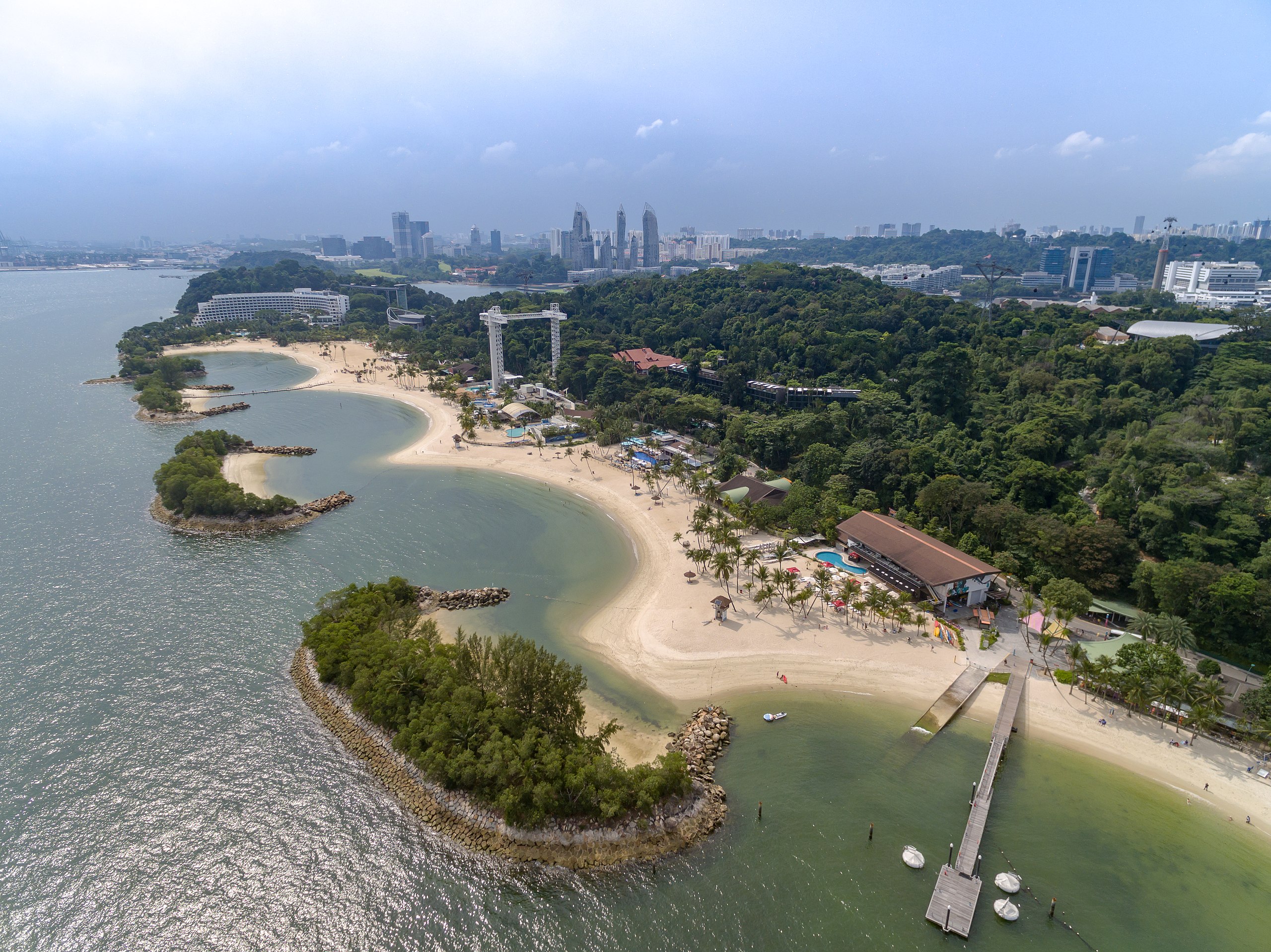
The findings point to the urgent need for action on climate change. If global CO₂ emissions continue on a high trajectory, the potential 1.9-metre rise in sea levels could have catastrophic consequences for coastal communities worldwide, particularly in low-lying regions like Singapore.