
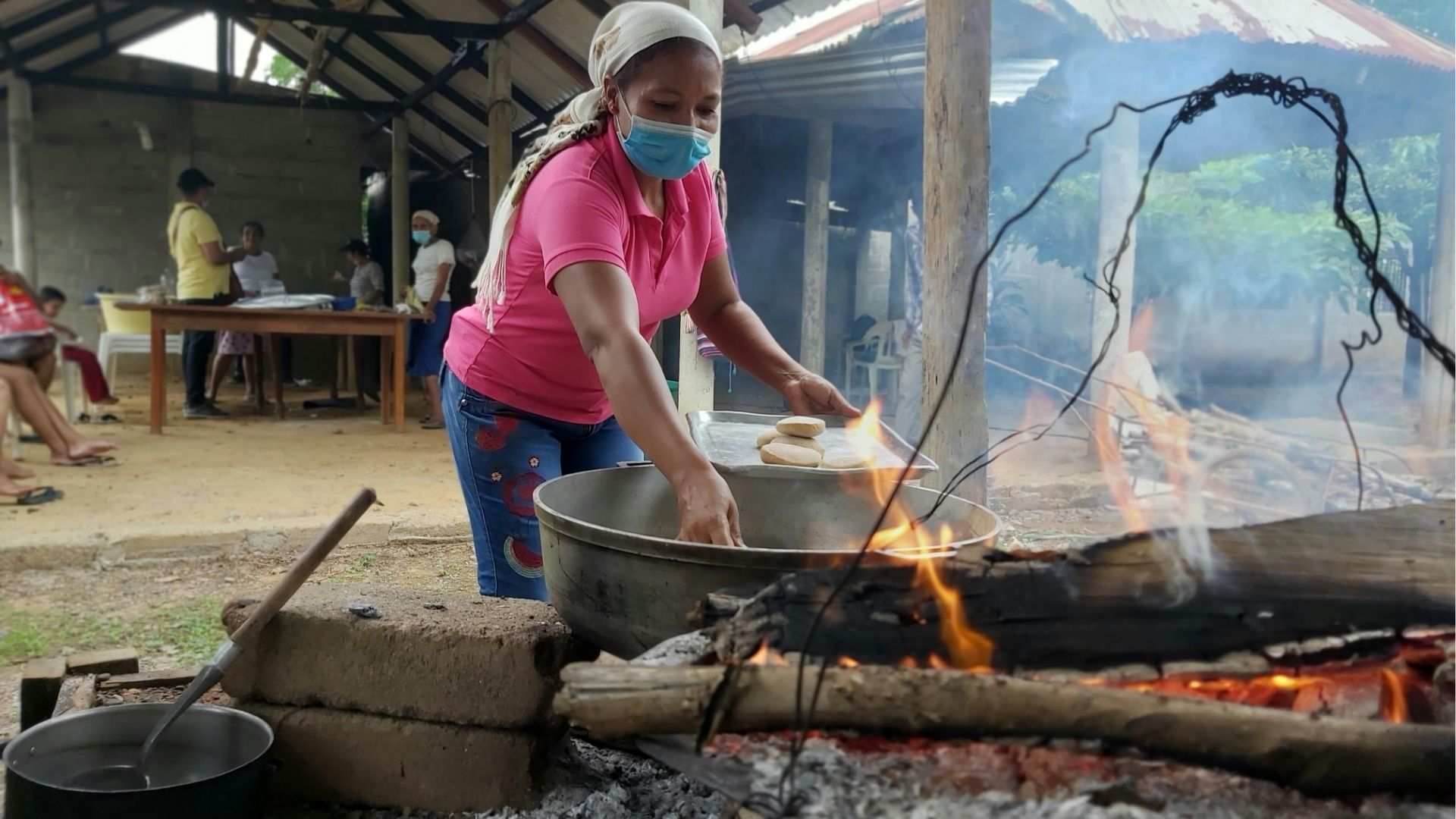

MANILA: As Asia continues to grapple with the fuel crisis brought about by the war in the Middle East, more people have resorted to using charcoal or firewood for cooking. This means higher pollution levels as well as a threat to public health.
The price of fuel rose sharply in the wake of the war due to the closure of the Strait of Hormuz, a chokepoint for 20% of the world’s fuel supply. Asia, which is heavily dependent on oil from the Middle East, has struggled to ensure sufficient supply for domestic use.
As a result, poorer people in countries such as India and the Philippines have gone back to older methods of cooking, which is likely to have an adverse effect on people’s health.
In the Philippines, the demand for charcoal has gone up as the price of the liquefied petroleum gas (LPG) canisters that many use for cooking has doubled.
The head of the LPG Marketers Association told the Philippine Congress last month that LPG consumption was reduced by 30% in comparison to the previous year as many people, especially in the provinces, shifted to charcoal and firewood. However, the price of charcoal has also gone up due to rising transport costs.
In India, over 60% of the population relies on LPG for their cooking needs. A sharp price increase and the scarcity of supplies have meant a return to “dirty” fuels such as firewood for many.
A woman told The Guardian that LPG would now cost her family 1,000 rupees (S$13.29) a week, which her family cannot afford, since her husband only earns between 400 and 500 rupees (S$5.32-S$6.53) daily.
In late March, less than a month after the war in the Middle East began, the International Energy Agency (IEA) warned that higher fuel prices were already driving households to again use charcoal and wood, “undermining longer-term objectives to extend universal access to clean cooking.
This has implications for air quality and health. Using biomass as a traditional cooking fuel is associated with around 2.5 million premature deaths globally each year.”
The pollutants from such cooking methods have been linked to a wide range of diseases, including lung cancer, strokes, and chronic obstructive pulmonary disease.
The World Health Organization has said that the combined effects of ambient air pollution and household air pollution contribute to 7 million premature deaths each year. And, as in any crisis, it’s the poorest in society who are most exposed to these risks, with women and children being particularly vulnerable. /TISG
Read also: Poorest across Southeast Asia are the hardest hit by energy crisis due to Iran war
 Follow Google News
 Join us on WhatsApp
 Follow us on Telegram