
Middle East war leaves Asia’s rice farmers not just in shock but in crisis
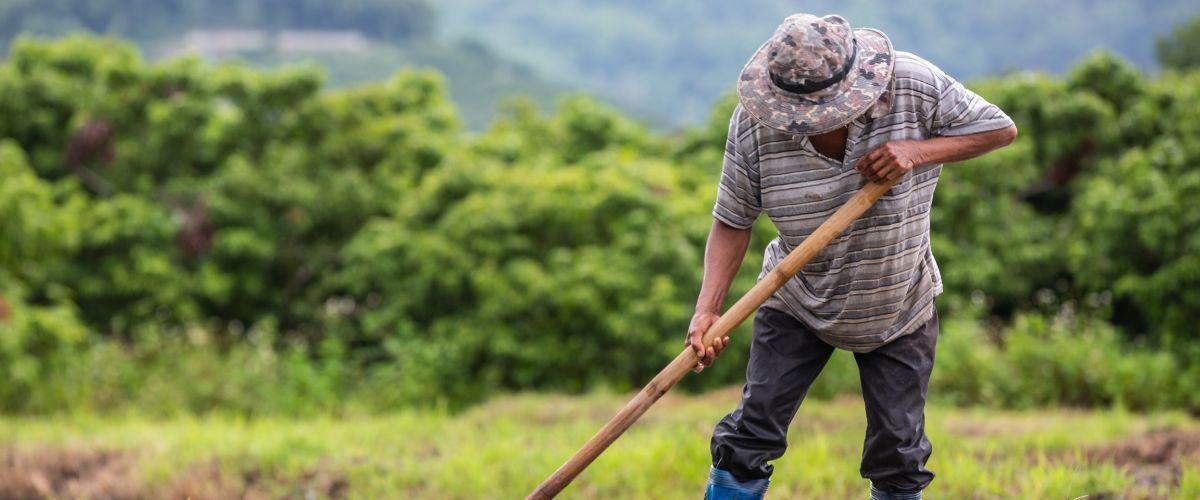
Farmer working
The global fuel emergency resulting from the conflict in the Middle East has placed an important sector in Asia, agriculture, in crisis. Farmers, particularly rice farmers, are seeing a disruption in production due to rising diesel prices and outright shortages.
The war, which began just six weeks ago when the United States and Israel began bombing Iran, has resulted in the effective closure of the Strait of Hormuz, where a fifth of the world’s fuel needs transit. With approximately 80% of fuel passing through the Strait headed for Asia, countries have been scrambling to ensure a steady fuel supply, while grappling with oil prices that have risen steeply. Countries with fewer resources have been hit particularly hard, and the adverse effects are now being felt by rice farmers in Thailand, Vietnam, the Philippines, Myanmar, and Bangladesh, among other countries.
According to a recent Bloomberg report, some farmers across the region have little choice but to forego the second planting season for this year, which could mean a shortage of rice for the back half of 2026.
With rice as the staple food for more than half of the world’s population, or hundreds of millions of people, this will mean Asian countries are expected to experience food scarcity in many places, especially in rural areas.
In many countries, the price of diesel has risen by as much as 50%, and in Cambodia, it has gone up by as much as an astounding 67.8%. In some countries, including Thailand, despite queuing for diesel, farmers have been unable to obtain it as pumps have gone dry. Making the problem worse is that nitrogen-based fertilisers sourced from the Middle East, used by many Asian farmers, have also been blocked with the Strait’s closure. As a result, the price of fertiliser has also gone up by as much as 50%.
With the higher price and occasional unavailability of diesel and fertiliser, farmers are unable to irrigate, plant, harvest, and transport their goods. Crops in Thailand, while ready to harvest, are left on the ground, and in the Philippines, where diesel has become 60% more expensive, farmers have found themselves unable to get their produce to markets for selling, with some abandoning their crops outright. In Bangladesh, meanwhile, rice seedlings are drying out as the summer progresses, while Myanmar faces an acute supply crisis.
Newsletter
Get updates straight to your inbox
There has been support extended by different governments, but these have been either too indirect or too limited to fully protect farmers.
Should the war in the Middle East be prolonged and the crisis continue, there will be a significant regional food security shock, and poverty and hunger rates in Asia are expected to rise.
Maximo Torero, the chief economist at the United Nations’ Food and Agriculture Organization, told Bloomberg that the only way for things to change is for vessels to transit through the Strait of Hormuz, saying, “I don’t see any other solution.” /TISG
Read also: ’There’s nothing we can do’: Filipino farmers abandon crops as fuel costs surge