
Mark Carney seeks greener pastures across the Pacific—but at what risk?

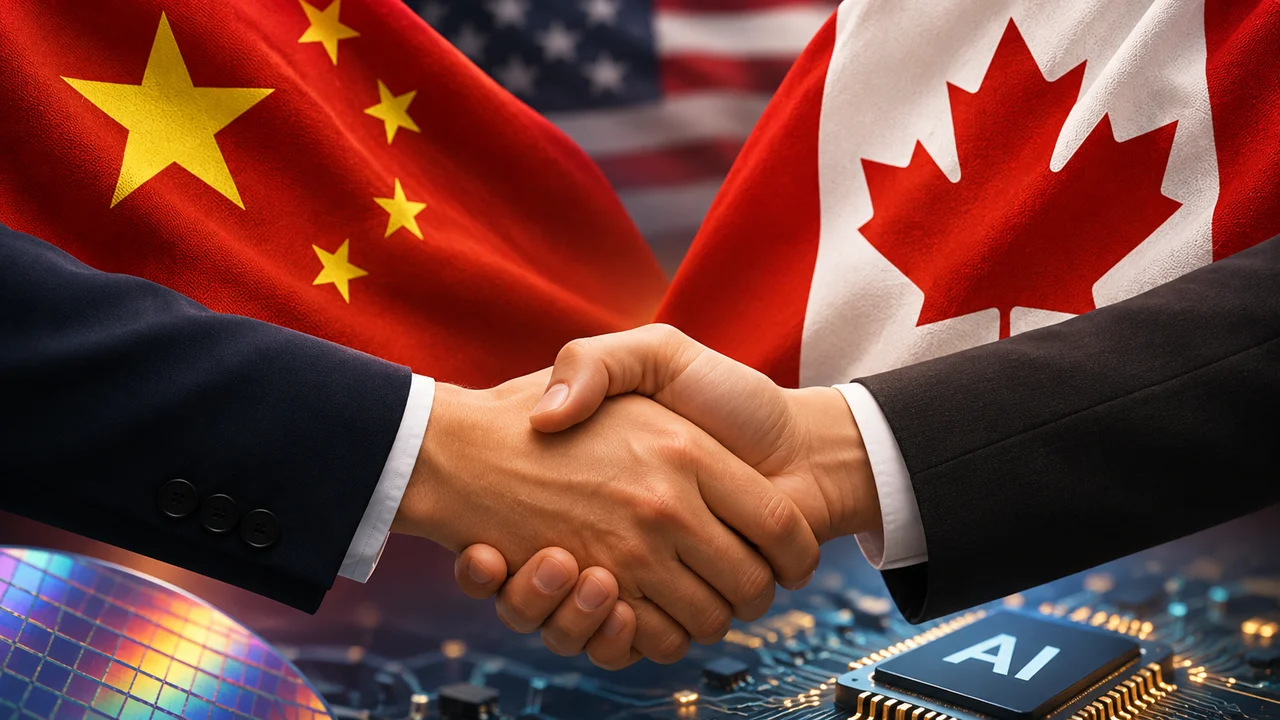
Canada and China’s economic relationship takes centre stage amid growing concerns over AI supply chains, semiconductor security and the US-led Pax Silica initiative.
The grass may look greener across the Pacific to Mark Carney. But what can Canada offer Chinese buyers that China cannot already produce at home? As governments and businesses look to make supply chains less dependent on China, Carney’s push to deepen trade ties with Beijing runs against the wider effort to diversify.
Canada has good reasons to foster its trade with China. President Donald Trump’s tariffs have made some Canadian goods pricier for US buyers, and selling more to China could help Canadian exporters depend less on the American market. But shipping across the Pacific adds additional cost and even with a possible free trade agreement in place with the Chinese, there may not be any cost advantages to Canadian companies.
At his press conference in Montréal on 10th of November, Prime Minister Mark Carney said Canada’s economic partnership with China was “deepening and had clear guardrails. He described the partnership’s security risks as “much, much, much, much less” than the security risks, for example, of the United States. A clip of his remarks was posted on Reddit, where one commenter called China “the lesser of two evils.” But many question: what can Canada sell to the Chinese besides Maple Syrup?
Can closer trade with China can really help Canadian exporters grow?
Canada has gone through years of deindustrialisation and has been overly dependent on American trade for a long time. The trade pivot to the Pacific Rim, however, comes with its own challenges. The risk comes when Canadian businesses increase production to meet Chinese demands without knowing where else they could sell the product.
More suppliers can still mean one chokepoint
If China raises tariffs, Canadian exporters might need to find new customers. Trade disputes can also change what Canada can buy. Even if a manufacturer gets important minerals from different suppliers, they may still depend on the processing facilities in China. If China limits exports of processed materials, all those suppliers could be affected at the same time. The manufacturer would then need to find another processor that fits its requirements before production stops.
This is why it’s important to know where each part of a supply chain is located. NTDV, quoting the Financial Times, reported that India has joined Pax Silica, a US-led initiative to lessen dependence on Chinese chokepoints in AI supply chains. Canada should consider a similar approach as it deepens trade with China. If a Canadian business brings on a new supplier, can that supplier still deliver if processing in China becomes unavailable?
What If the Democrats Reset Trade with Canada at Some Point?
Democrats won both the House and Senate in the US midterms and will take control in January. Some of them expressed that they want to challenge Trump’s tariffs on Canadian goods. At a news conference on Nov 6 in Winnipeg, Manitoba, Carney was asked if he had already talked with Democrats about possible legislation to lift the tariffs. “The short answer is no, I haven’t,” he told reporters. But he added that Canada would be open to efforts to restore free trade.
Newsletter
Get updates straight to your inbox
A few days later, at a Nov 14 press conference in Manila, Philippines, during the ASEAN summit, Carney said he had a talk with Trump. He said Canada and the US were moving forward with a trade deal but had not yet reached an agreement.
It’s valid and easy to understand why some Canadians agree with Carney, given the pressure Trump’s tariffs have put on Canada. But could Carney be making a mistake by relying more on China just as the midterm results give Canada a chance to improve trade with the US?
What would Carney’s guardrails actually protect?
China is giving Canada more access to business, customers, and suppliers. But if China changes its approach, can Canada quickly find new buyers or another processor? Carney should consider whether there are really “clear guardrails” in place. If businesses have few other alternatives, Canada might be depending too much on what China offers today.