
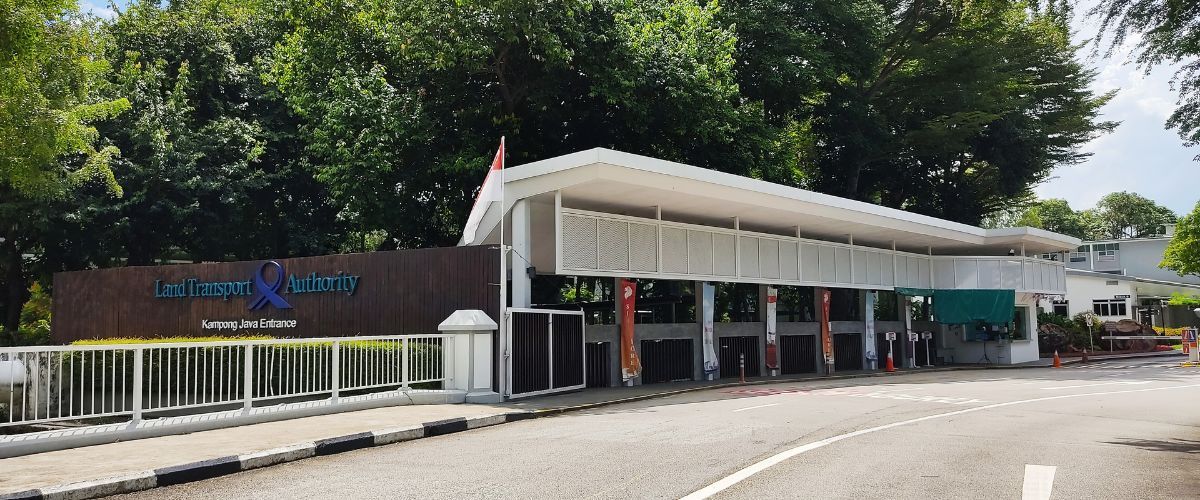
Photo: LTA Kampong Java Entrance
LTA's transport masterplan refresh draws 7,000 responses — here's what Singaporeans want changed

SINGAPORE: The Land Transport Authority has gathered input from more than 7,000 members of the public since November 2025 as part of its ongoing Land Transport Master Plan (LTMP) refresh, with over 400 participants taking part in a second round of focused thematic discussions covering connectivity, comfort, and community.
The sessions, which included focus group discussions, shadowing studies, youth panels, and community outreach, showed a range of views on how Singapore’s transport system should evolve, from restructuring the COE system to expanding micromobility infrastructure and making public transport more accessible for vulnerable groups.
COE reform: Merging Categories A and B on the table
One of the more significant policy discussions to emerge involved the Certificate of Entitlement system, where participants debated whether the current Category A and B split, which distinguishes cars by engine capacity and power, remains fit for purpose.
Deputy GPC Chair Edward Chia put forward a proposal to replace the two categories with a single COE pool, introducing discounts for lower Open Market Value vehicles and surcharges for higher-OMV ones. The reason for this was that engine capacity and power rating have become less reliable as differentiating criteria, with manufacturers increasingly adjusting vehicle specifications to qualify for the cheaper Category A COE.
Chia and MP Ang Wei Neng both noted that this has narrowed the price gap between the two categories, and on two occasions this year, Category A COE premiums actually exceeded Category B.
Participants supported the idea of differentiating by vehicle value rather than engine specifications. Other ideas raised included using vehicle size as a criterion, imposing surcharges for multiple-car ownership, allocating COEs based on family needs, and creating a separate category for car leasing companies.
LTA said it will issue a consultation paper later this year on the proposed policy options, with the review expected to be completed by the end of 2026.
Shared spaces: Pedestrian priority and gracious behaviour
Participants across several discussions called for greater pedestrian priority, particularly in high-activity areas such as town centres, mature housing estates, and school zones. Speed calming measures and speed limit reductions in these areas were widely supported, though participants acknowledged the need to maintain efficient bus operations alongside these changes.
The theme of gracious behaviour in shared spaces came up repeatedly, with participants calling for clearer norms around safe path-sharing and overtaking, and greater consideration for vulnerable users including children and the elderly.
Micromobility: Infrastructure first, then adoption
Participants were broadly open to using micromobility devices more regularly for commuting and daily trips, but flagged that greater adoption would depend on improvements to infrastructure, safety, and user behaviour first.
Specific asks included wider and segregated paths, better path maintenance, more sheltered routes, enhanced parking and charging stations, and stronger integration with public transport. Participants also emphasised that micromobility should remain accessible to seniors and those with diverse mobility needs, not just younger or more physically able users. Shared motorised micromobility services drew interest but were seen as a second step, after infrastructure and safety measures had been strengthened.
Making public transport work for everyone
Inclusivity was one of the most consistent themes across the sessions. Participants called for better accessibility for families with young children, people living with dementia, and persons with disabilities.
Newsletter
Get updates straight to your inbox
To gain direct insight into these needs, LTA staff conducted shadowing studies across 21 commuter profiles. The exercises revealed specific friction points such as the difficulty visually impaired commuters face in identifying the direction of fare gates and escalators, and their reliance on memorising routes to navigate the network. The studies also found that some parents, particularly newer ones, were unaware of family-friendly facilities already available at MRT stations, such as nursing rooms.
LTA is continuing to engage schools, industry partners, and community groups, and has been running youth-focused initiatives including the Youth Panel for Transport and the Transport Future Game Design Competition to bring younger voices into the process.
The insights gathered will feed into the LTMP refresh, which is expected to be released in 2027. Members of the public can find out more at go.gov.sg/ltmp-refresh.