
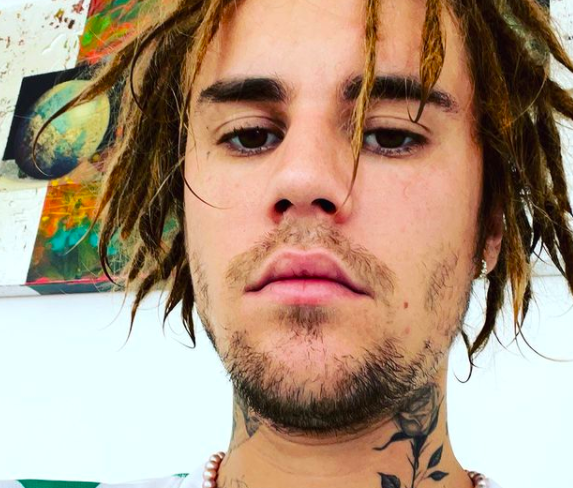

Peaches singer Justin Bieber has been accused of cultural appropriation after showing off his new hairdo, and being a “dilettante…dipping his toe in the culture.”
On Sunday (April 25), Bieber debuted the “locs” style on Instagram, followed by a close-up shot on Monday (Apr 26). Back in 2016, the Canadian singer wore cornrows and it caused an uproar on social media.
Speaking to the Guardian, Stephanie Cohen, co-founder and legal political organiser at the Halo Collective, a natural hair organisation, said: “When I see a white person in mainstream media sporting a black hairstyle, it makes me angry.
“I’m angry because this standard does not exist when a black person simply wears their hair in this way. You can’t just wear something so historically significant and ignore the struggles behind what the hairstyle purports.”
Cohen said Bieber had “no right” to wear the hairstyle.
“My reasoning and understanding of someone wearing something not specific to their culture or ethnicity is that if they cannot speak for black or minority rights [and] be a consistent ally – then they have no right to wear something like locs.”

The editor of Black Beauty and Hair magazine, Irene Shelley, said: “I think why people are annoyed with Justin Bieber casually wearing locs is that it’s seen as not respecting the origins of the style.
“People still face hair discrimination and stigma for their hair choice. … You can face discrimination by your employer or school. [Bieber] is seen as a dilettante, a person who’s dipping his toe in the culture, without any real commitment or knowledge of the style’s history.”
Cohen and Shelley both said the common name for the hairstyle, “dreadlocks”, was rooted in a history of racism.
Shelley said: “It is said that East African Mau Mau warriors wore their hair in a matted style that British colonialists found ‘dreadful’.”
Another version of the origin of the name, she said, was that “the Rastafari religion was once seen as a threat to Christianity and came under attack by the authorities that tried to suppress the ‘Rasta’ movement. Their dreadlocks were thought to be disgusting and frightening, hence the term ‘dread’.”
Cohen said the name “comes from the negative term ‘dreadful’ – coined by slave owners and colonisers to describe the hairstyle.
“The term has been so normalised in the English language that people often are ignorant of its connotations,” she said.
Shelley said, “Loc wearers will sometimes take offence at their locs being called dreadlocks as they see a difference: one is a hairstyle and the other is a lifestyle.”/TISG
 Follow Google News
 Join us on WhatsApp
 Follow us on Telegram