
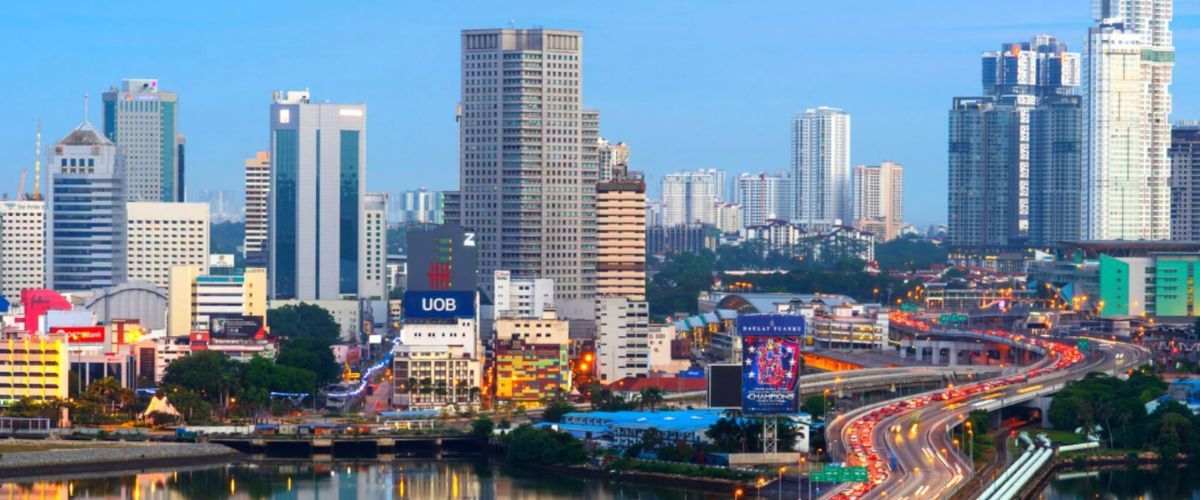

MALAYSIA: Johor has emerged as Malaysia’s fastest-growing state economy in 2025, recording 8% GDP growth. This is the highest among all Malaysian states, as the country’s overall economy expanded by 5.2% to RM1.74 trillion (S$553 billion), according to the Department of Statistics Malaysia (DOSM).
Johor’s economy was valued at RM171 billion for the year, accounting for nearly 10% of the national economy. The standout growth was driven largely by the rapid expansion of its data centre industry and broader digital economy infrastructure, which reflects the wave of tech-related investments that have poured into the state in recent years.
Strong performers across the board
According to Invest Johor, three other states also outperformed the national growth rate of 5.2%. Penang recorded 7.3% growth, Selangor came in at 6.3%, and Perak at 5.7%, according to Chief Statistician Datuk Seri Dr Mohd Uzir Mahidin.
Together, Selangor, Kuala Lumpur, Johor, Sarawak, and Penang remained the country’s main economic engines, contributing a combined 67.9% of Malaysia’s GDP.
Selangor retained its position as the largest single contributor to the national economy, accounting for 26.5% of GDP with an output of RM460.1 billion. This is nearly three times Johor’s output, though growing at a slower pace.
GDP per capita: Where Johoreans stand
Six states and federal territories recorded GDP per capita above the national average of RM59,167. Kuala Lumpur led by a wide margin at RM144,898, followed by Putrajaya (RM126,359), Labuan (RM88,764), Penang (RM80,584), Sarawak (RM73,757), and Selangor (RM70,362).
Johor’s GDP per capita, while not listed among the top six, sits against the backdrop of a state economy that is growing faster than any other, suggesting that if the current trajectory holds, per capita figures may follow suit in the coming years as high-value jobs in the digital and technology sectors become more established.
Why this matters for Singapore
Johor’s 8% growth figure is not just a Malaysian economic statistic but is also a direct effect of some decisions made in Singapore boardrooms, by global technology companies, and by the people in charge of the JS-SEZ framework.
The data centre boom driving Johor’s growth is intimately connected to Singapore’s position as a regional technology and financial hub. As Singapore’s own land constraints limit large-scale data centre development domestically, Johor has absorbed much of that overflow investment, creating a cross-border digital infrastructure corridor that benefits both economies.
For Singaporean businesses and investors with exposure to the Johor market, the 8% growth figure validates the investment thesis that has brought significant capital across the Causeway in recent years. And for Singaporeans watching the JS-SEZ take shape, Johor’s emergence as Malaysia’s fastest-growing state economy is perhaps the clearest signal yet that the broader cross-border integration story is not just policy rhetoric, but is instead already showing up in the numbers.
Read also: Housing, jobs and business support: Johor BN unveils 63-point manifesto ahead of state elections
 Follow Google News
 Join us on WhatsApp
 Follow us on Telegram