

By: David Ngiau
PEKAN NANAS (Johor) — On July 11, Barisan Nasional (BN) didn’t win Johor once. It won three times, for three different reasons, from three electorates that agree on little else. Pragmatic Malay voters weighed delivery over ideology and stayed put. Pakatan Harapan’s (PH) own base, worn down by an unfulfilled unity government, failed to consolidate — some peeling off to new parties, many to no one at all. And conservative voters who’d drifted toward Perikatan Nasional (PN) after the 1MDB scandal drifted back, once PN imploded on its own terms, well before polling day.
Three different currents, one result: BN’s best showing since 2008, a supermajority extended to 48 of the state’s 56 seats. The scale of that win — up from 40 seats in 2022, with PH reduced to eight and PN blanked — invites a simpler story: A single, decisive restoration of faith in BN as a whole. But there’s more nuance to that story.
The scale of BN’s win in Johor reflected more than mere incumbency. The state’s economy grew 5.3 per cent last year against a national 0.7 per cent. Menteri Besar Onn Hafiz Ghazi’s hands-on style — personally showing up for surprise spot checks at the Causeway and Second Link checkpoints — gave voters a tangible reason for pragmatic satisfaction rather than mere habit. That’s the first current: Pragmatism, rewarded.
Riding on a 79 per cent approval rating, according to a July 10 report by independent think-tank Ilham Centre, Onn Hafiz was seen all over Johor on BN’s larger posters with the Menteri Besar wearing a “Mona Lisa” smile. [The Star, July 10] Meanwhile, BN’s UMNO president and deputy prime minister Zahid Hamidi’s approval rating was pegged at 24 per cent nationwide by a Merdeka Centre survey released on June 25. [Malay Mail, June 25]
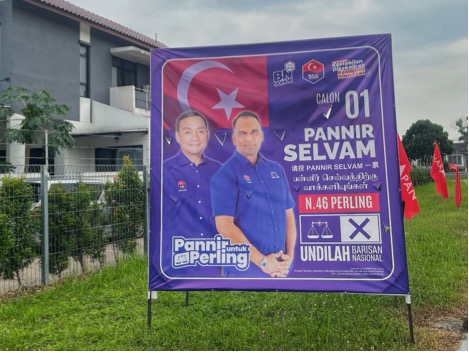
Onn Hafiz Ghazi’s Mona Lisa smile was seen widely across the state in BN’s larger campaign posters, such as this one in Bukit Indah. PHOTO: David Ngiau
The second and third currents are visible once you separate BN’s opposition into its two, quite different, failures.
On PH’s side, their base failed to consolidate. Political analyst Ong Kian Ming, whose projection of 53 BN seats came closest to the actual result, warned of a parallel disengagement among non-Malay PH voters who would not defect to BN so much as stay home, worn down by unfulfilled promises. The former DAP MP for Bangi also argued that PH’s own leaders were in denial about this “growing anti-PH sentiment” across West Malaysia. In her own ground analysis published on July 9, analyst Bridget Welsh estimated the Chinese swing away from PH at 20–30 per cent, noting “considerable movement and indecision among Chinese voters, especially younger ones”. [source: Bridget Welsh, “Johor polls questions: Electoral voting analysis Part 1,” Malaysiakini, July 9]
Newer entrants like Bersama and Muda also drew away enough progressive support to hand BN wins it might not have earned outright. In Perling (N.46), previously a stronghold for PH component party DAP, BN’s Pannir Selvam — contesting under MIC (Malaysian Indian Congress) after the coalition reallocated the seat away from its traditional MCA hold — pulled off a surprise win over Tee Boon Tsong by a margin of 1,611 votes. Bersama candidate Boo Wei Han managed 2,996, comfortably more than the margin of victory.
CNA’s Leslie Lopez noted on July 12 that Prime Minister Anwar Ibrahim’s government assumed office in November 2022, a brokered Madani (unity) partnership with BN, on promises of reform and eradicating corruption. But they were perceived to have delivered too little or not at all, and Johor’s PH politicians could not claim credit for any transformative achievement to address inflation, unemployment and investment stagnation.
That’s Current No 2: Not defection but a base that came apart — some to new parties, many to no one at all.
On the Malay-conservative side, the collapse of the PAS-Bersatu alliance months before polling — PAS lost every one of the 11 seats it contested, Bersatu all 16 — sent voters who’d drifted to PN after the 1MDB scandal back into the BN fold, healed by time and disillusioned with PN’s own implosion. That’s Current No 3: Disappointment with the alternative, not enthusiasm for the incumbent.
A glimpse into the ground dynamics
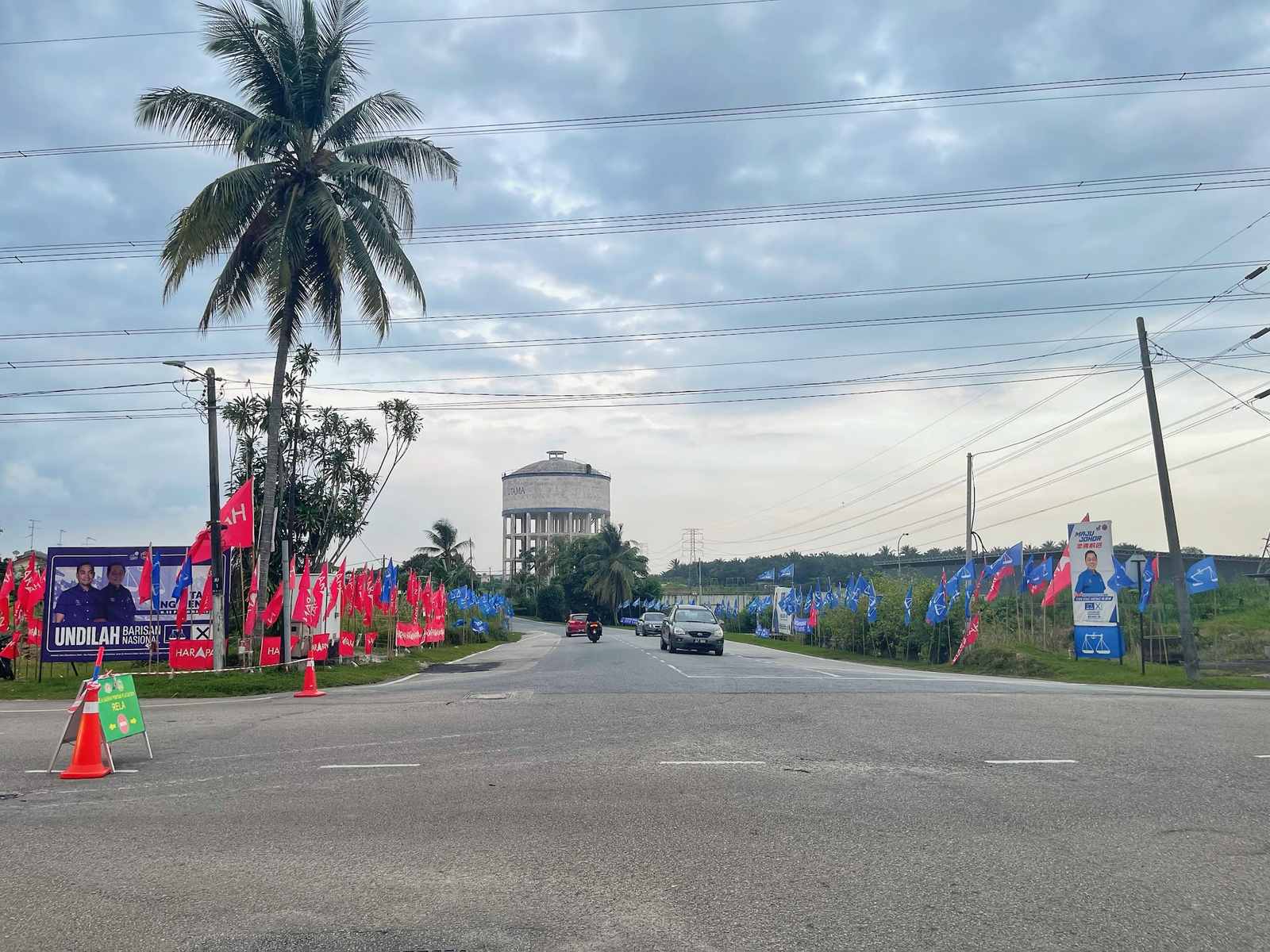
Macro dynamics still need to be played out on the ground. The unlikely seat of Pekan Nanas (N.55) — a commuter town 18km inland from the Straits of Malacca, whose residents make the long daily haul to Johor Bahru or Singapore for work — turned out to be a window into how both coalitions sought to connect with voters.
N.55 is a semi-rural state seat of 37,556 voters, of which 55.7% are Malay, 40.8% Chinese, and 1.1% Indian. This seat was one of four battlegrounds the DAP (Democratic Action Party, a PH component) needed to win back after losing it to BN’s MCA (Malaysian Chinese Association) in 2022, along with Yong Peng, Bekok and Paloh. Tan Eng Meng has held the seat since beating two-term assemblyman Yeo Tung Siong four years ago.
With a population of just over 30,000 today, Pekan Nanas is big enough to sustain two drive-throughs — a McDonald’s is common, but KFC is a rarer find — and its largest employer is Shimano, hiring about 2,000 workers at its 90,000-sq-m bicycle-wheel plant. Still, the draw of better-paying jobs in Singapore is irresistible, as the persistently jammed two-lane country road out of Pekan Nanas — particularly where it meets the highways around Gelang Patah — attests to.
By his own reckoning, at least, gas station attendant Ishak Salleh said that everyone in his village, Kampung Seri Bukit Panjang, about 10km from the town centre, backs BN. “No one there will vote for anyone else,” he declared in Malay. It might not be a literal fact, but it captured the confidence that both campaigns likely shared as they trained their sights on Taman Utama, the Chinese-dominated town centre and main ceramah (rally) spot
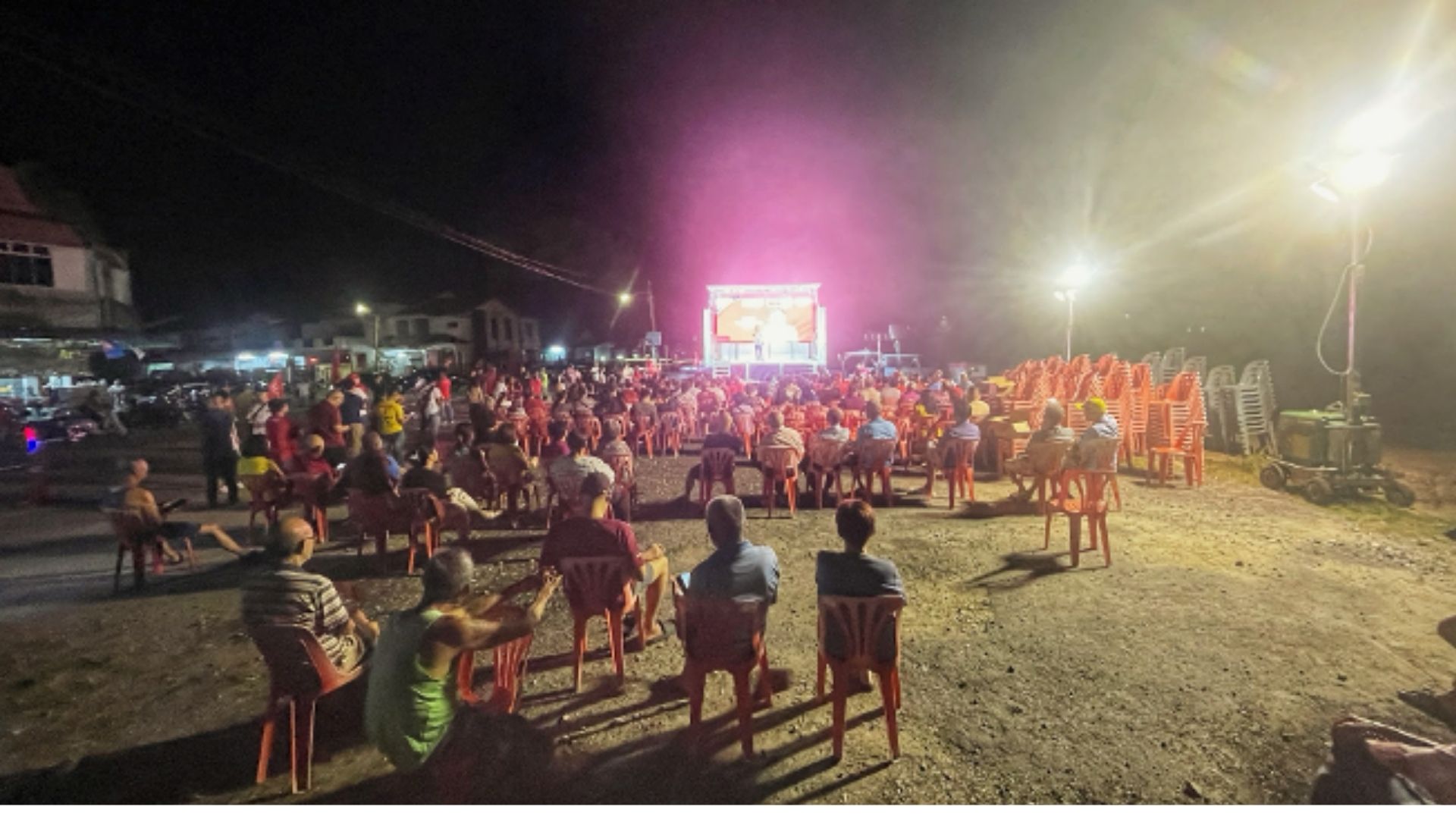
At his July 4 rally, attended by some 150 older and mostly Chinese residents, Tan pressed on a familiar theme: Daily life hasn’t gotten easier under three years of PH federal rule. Gesturing at the Xin Wang Jiao 369 kopitiam across from the stage, he ran through a checklist of trades he said he knew better than any minister. To hawkers, stallholders, vendors, car mechanics and Grab drivers, the message was: “I’m one of you”.
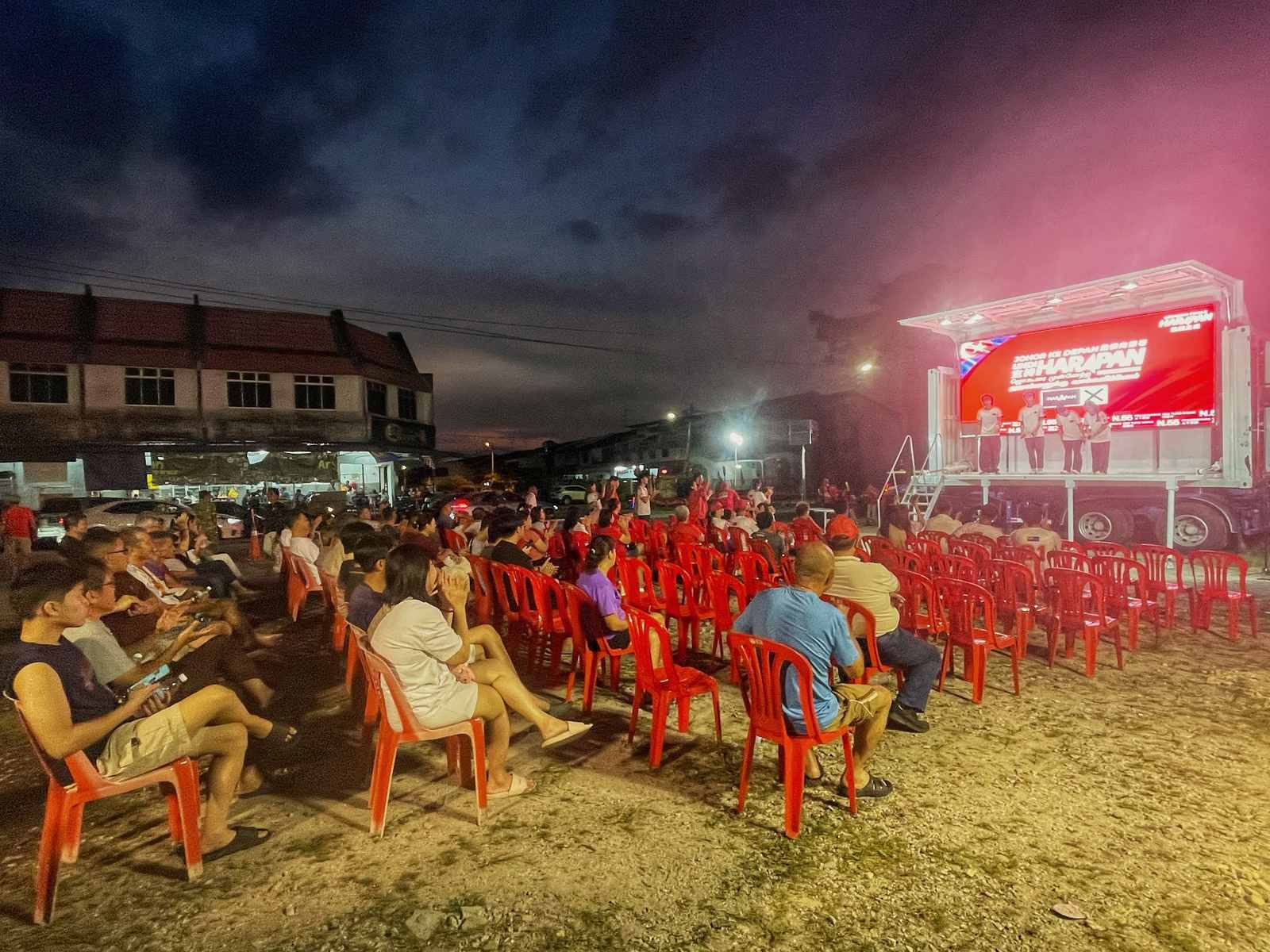
PH staged its own event 300 metres away at another kopitiam that same night. Past 11pm, a group of eight PH volunteers — out-of-towners in their teens and twenties, a mix of ethnicities, chatting in English and scrolling their phones — gathered at a nearby mamak restaurant. Four were media interns under Selangor state EXCO member Jamaliah Jamaluddin’s office, posted to Pekan Nanas since mid-June. At their later “finale” rally on July 9, PH speakers — from the four interns to their boss herself — emphasised the importance of inclusivity. As Hulu Langat MP Mohd Sany Hamzan (Amanah) put it, Malaysia’s different ethnic groups need to live together or die alone. The comparably sized crowd of 120 applauded, though it read as less charged than the energy elicited by Tan’s sharper cost-of-living attacks.
Onn Hafiz Ghazi visited Pekan Nanas on July 7 and took a jab at Yeo and his campaign machinery. “Now they have only reappeared because there is an election,” the Menteri Besar was quoted as saying in The Star.
The turnout surge PH and their supporters had hoped for — on the old assumption that higher voting numbers favour the opposition — did happen on July 11 with a 74.73 per cent turnout in N.55, up from 60.58 per cent in 2022. But as unofficial results trickled in, the question of whether BN’s Tan would hold his seat became “by how much?” In the end, Tan more than doubled his majority from 2022, to 12,281 votes over rival Yeo — it was a bigger margin than anyone here, including his own campaign team, had quietly expected.
With statewide turnout rising to 69.57 per cent from 54.92 per cent in March 2022, the same reasoning for PH’s poor showing evaporated as well.
Pekan Nanas, in miniature, showed the Current No 1 most plainly — pragmatism, rewarded — while the other two played out in seats like Perling and across the Malay-conservative belt.
Family above all
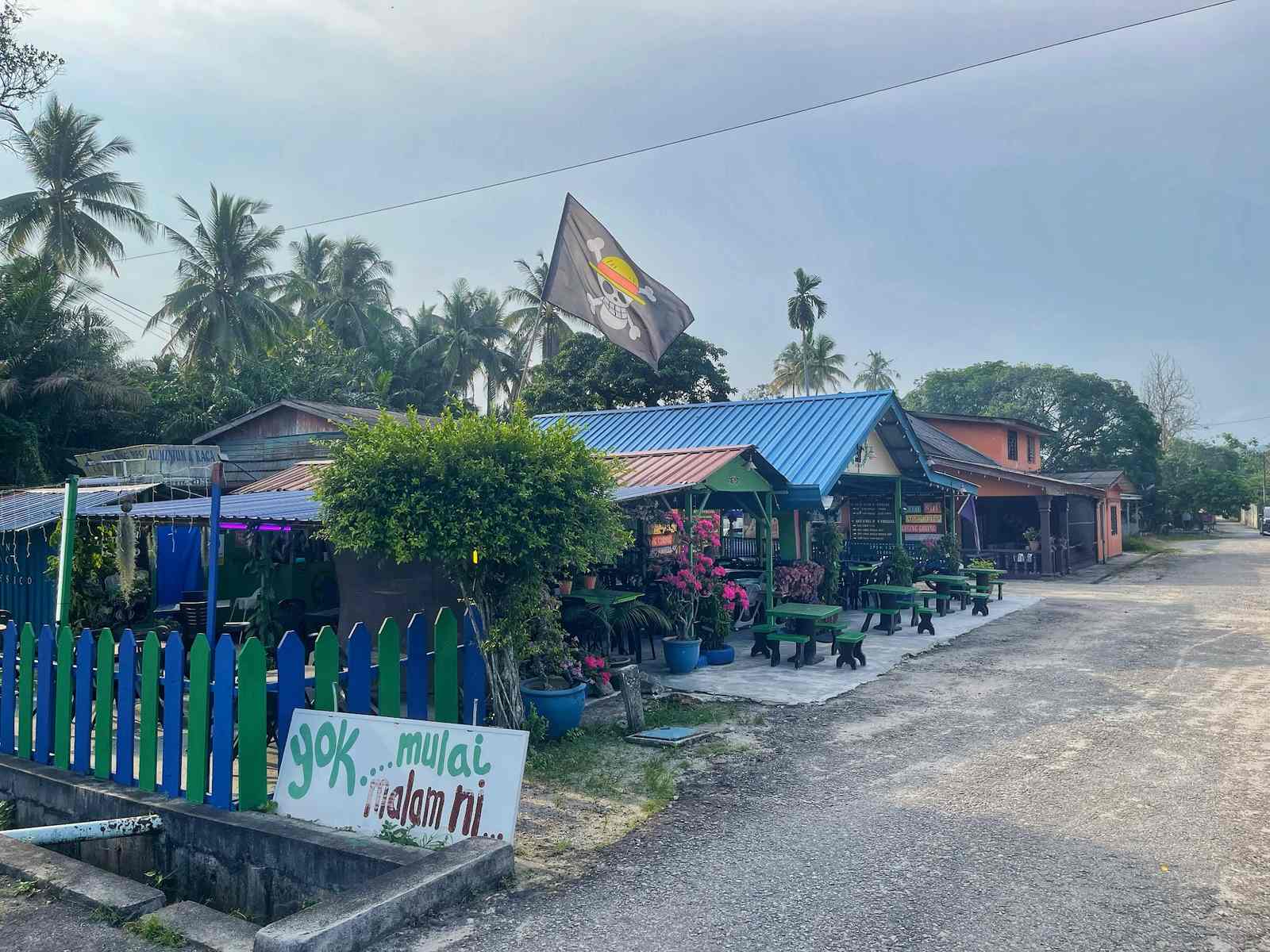
On the edge of town, one warung stood apart — not by BN blue or PH red, but by a black flag: The skull-and-crossbones of the anime One Piece, about a found-family pirate crew bound together as “one piece”. The young, savvy family crew running it would turn out to be an apt illustration of pragmatism and studied neutrality.
What started as a satay stall in 1997 became “Wan Classico Legacy 2020” when it moved to its current site six years ago, run by Nur Ain and her siblings (with the eldest brother in charge). “Second-in-command” Nur Ain cheerfully told me on July 8 that the business’s next chapter will be up to their own kids. Nur Ain wouldn’t be out of place in downtown JB or Singapore, but her priority is family, and the maintenance of a successful business serves that. As one data point, not a survey, she echoes a pattern this election surfaced more broadly: Pragmatic young Malay business owners for whom the ballot box is secondary to the balance sheet.
“We’ve reached a stage where we feel like we want to expand again, with more capital investment, but we’re wary about moving forward because the economy can be uncertain,” said the 24-year-old.
The economy is “lebih baik” (better) compared with five years ago, she admitted, but better doesn’t mean settled. “Business doesn’t always go up,” she said. “Sometimes it falls, then rises again.”
Asked whom she’d vote for, Nur Ain demurred — that’s a private matter, she said in Malay.

 Follow Google News
 Join us on WhatsApp
 Follow us on Telegram