
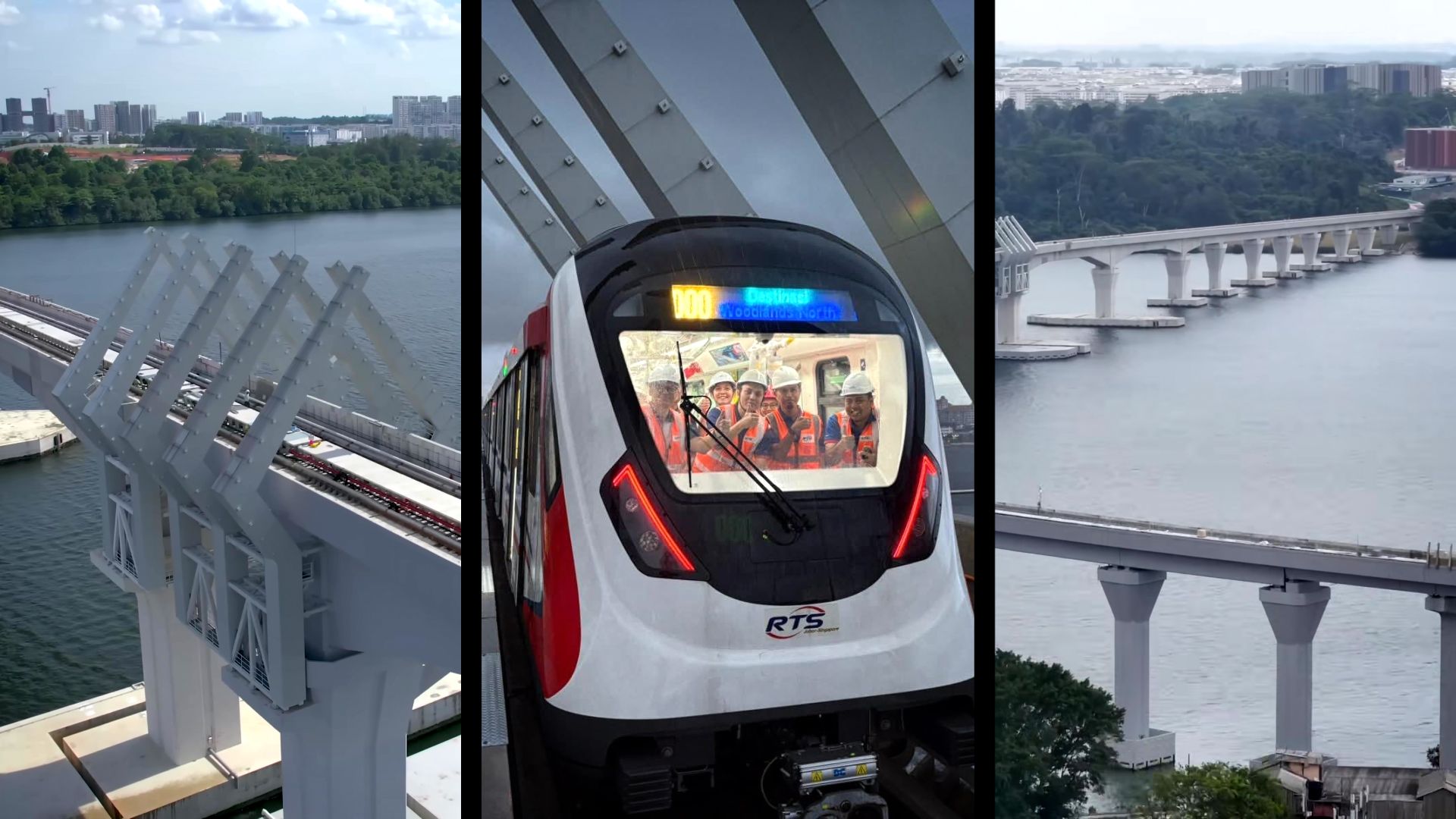

MALAYSIA/SINGAPORE: The Johor Bahru–Singapore Rapid Transit System (RTS) Link is moving into its final stretch, with both Malaysia and Singapore keeping the January 2027 launch firmly in sight.
Malaysia’s Transport Minister Anthony Loke said the project has reached 90% completion and is now focused on system installation, a phase less exposed to rising global energy costs, according to reports by Channel NewsAsia (CNA) and New Straits Times (NST).
And even as energy prices have surged due to global tensions, putting pressure on fuel subsidies, the RTS Link appears insulated at this stage, with most of the heavy construction already completed and no contractors flagging cost overruns.
A project shifting from concrete to operations
A recent media walkthrough showed how far the project has come. What was a bare structure late last year now looks like a working transit hub.
At Bukit Chagar, the Immigration, Customs, and Quarantine (ICQ) complex is nearly ready, with e-gates now installed. Body scanners and baggage systems are being fitted ahead of schedule. The site will include 100 e-gate lanes, 18 baggage scanners, and 10 security lanes to handle heavy passenger flow.
Platform screen doors are already in place. Work now centres on communications, passenger displays, and system integration.
Testing will begin in phases, starting with integration and dynamic trials, followed by full field readiness testing in September.
Fares still undecided, with subsidy limits
Pricing remains one of the biggest open questions.
RTS Operations Pte Ltd (RTSO), a joint venture between Malaysia’s Prasarana Malaysia Berhad and Singapore’s SMRT Corporation, is expected to submit fare proposals in the third quarter. Both governments will review the plan before announcing final prices by the end of the year.
Earlier estimates suggest one-way fares could fall between S$5 and S$7.
There is also a discussion of a season pass for frequent commuters. Loke said such passes often rely on government support. Malaysia may consider helping its own citizens, but not foreign commuters. Singapore is expected to take a similar stance.
The key issue is financial sustainability. Recurring revenue from passes must still cover operating costs for a cross-border service.
Why this matters for daily travel
The RTS Link is short, just 4 km, but its impact could be large. The train ride between Bukit Chagar and Woodlands North will take about five minutes.
Trains can carry up to 10,000 passengers per hour in each direction, with daily ridership expected to reach 40,000.
Experts estimate it could cut congestion at land checkpoints by up to 25%.
For Singaporeans and Malaysians who cross the border daily, this shifts the routine. Driving may become less appealing when a faster, more predictable option exists. Travel time becomes easier to plan. Border clearance is built into the rail system.
Beyond the station: traffic and access upgrades
The surrounding area is also being reshaped to support the new link.
Malaysia is investing over RM200 million in road upgrades around Bukit Chagar, which includes new flyovers, wider roads, and improved bus services with more than 250 additional buses.
A pedestrian link from JB Sentral to the RTS station is also planned, and existing rail lines are being upgraded to feed into the system.
These changes prevent bottlenecks on land, ensuring the rail system doesn’t shift congestion from checkpoints to nearby roads.
A steady timeline, despite global pressure
The project’s timing is notable. Malaysia has described the current energy situation as serious, with ripple effects from global conflicts pushing up costs. Yet the RTS Link has avoided delays so far.
With construction largely complete and systems going in, the project remains on track to finish by the end of 2026 and begin operations on Jan 1, 2027.
For a cross-border project of this scale, that level of coordination stands out. Both governments continue to meet and align on integration, operations, and pricing.
 Follow Google News
 Join us on WhatsApp
 Follow us on Telegram