
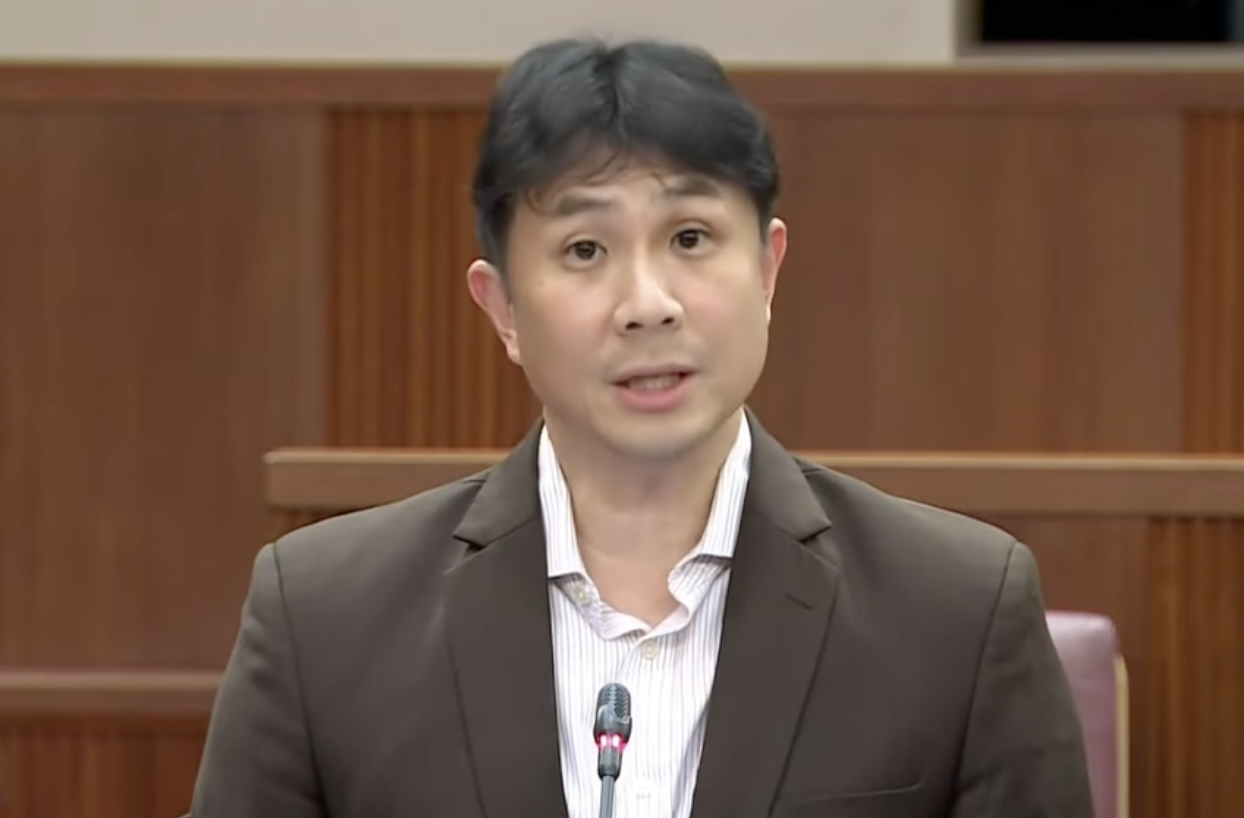
Jamus Lim proposes raising threshold for workfare scheme to S$3,500 to help SG's most vulnerable workers
SINGAPORE: In a March 30 Facebook post, Workers’ Party Member of Parliament (WP MP) Jamus Lim (Sengkang) touched on the topic of a higher Workfare threshold from S$3,000 to S$3,500 a month.
In Singapore, where the cost of living is among the highest in the world, there is no Universal Basic Income (UBI) scheme. What the city-state has instead is the Workfare approach, with salary increases for specific industries based on the Progressive Wage Model (PWM), Workfare Income Supplement (WIS), targeted assistance, and other ways to help low-income earners.
Assoc Prof Lim mentioned universal basic income in his post, however, saying that there has been interest in the scheme in light of the possibility of many people losing their jobs because of advances in AI.
Although he does not believe this will happen quite yet, he understands how wealthy countries might one day offer UBI and compares it to the vouchers given to Singaporeans in the wake of the Covid-19 pandemic, which did not have negative effects on society and the government.
Citing that a UBI scheme might discourage people from working, he added that Singapore, like other countries, offers tax credit for earned income through Workfare, which has been around since 2007 to supplement low wages.
While he appears to favour Workfare over an outright basic income, Assoc Prof Lim pointed out that since the pandemic struck, the cost of living has gone up all over the world.
“The prices of goods and services in categories that affect poorer households the most have risen disproportionately,” he wrote, citing research from Singapore, the US, and the EU.
Although salaries have gone up since 2020, the MP still believes Singapore “can help our most vulnerable workers more, and there is no better way than to do so with the most work-friendly antipoverty scheme we have in our arsenal: workfare.”
Hence, his proposal to raise the threshold for the scheme to S$3,500, which would ensure income support for the lowest 30th percentile of income earners.
Newsletter
Get updates straight to your inbox
Assoc Prof Lim calculated that this would add another S$250 million to the budget of the scheme, which currently costs S$1 billion.
The additional cost would only be about 0.17% of the total government budget, he added.
Meanwhile, the surplus for fiscal year 2025 was over 10%, he pointed out in a comment.
“For me, this is a worthwhile expense. It will help struggling Singaporeans in a way that also contributes to their dignity, as they labour for a fair, living wage in high-cost Singapore,” he wrote. /TISG
Read also: ‘JB businesses will be happy’ — Singaporeans debate pros and cons of Universal Basic Income