
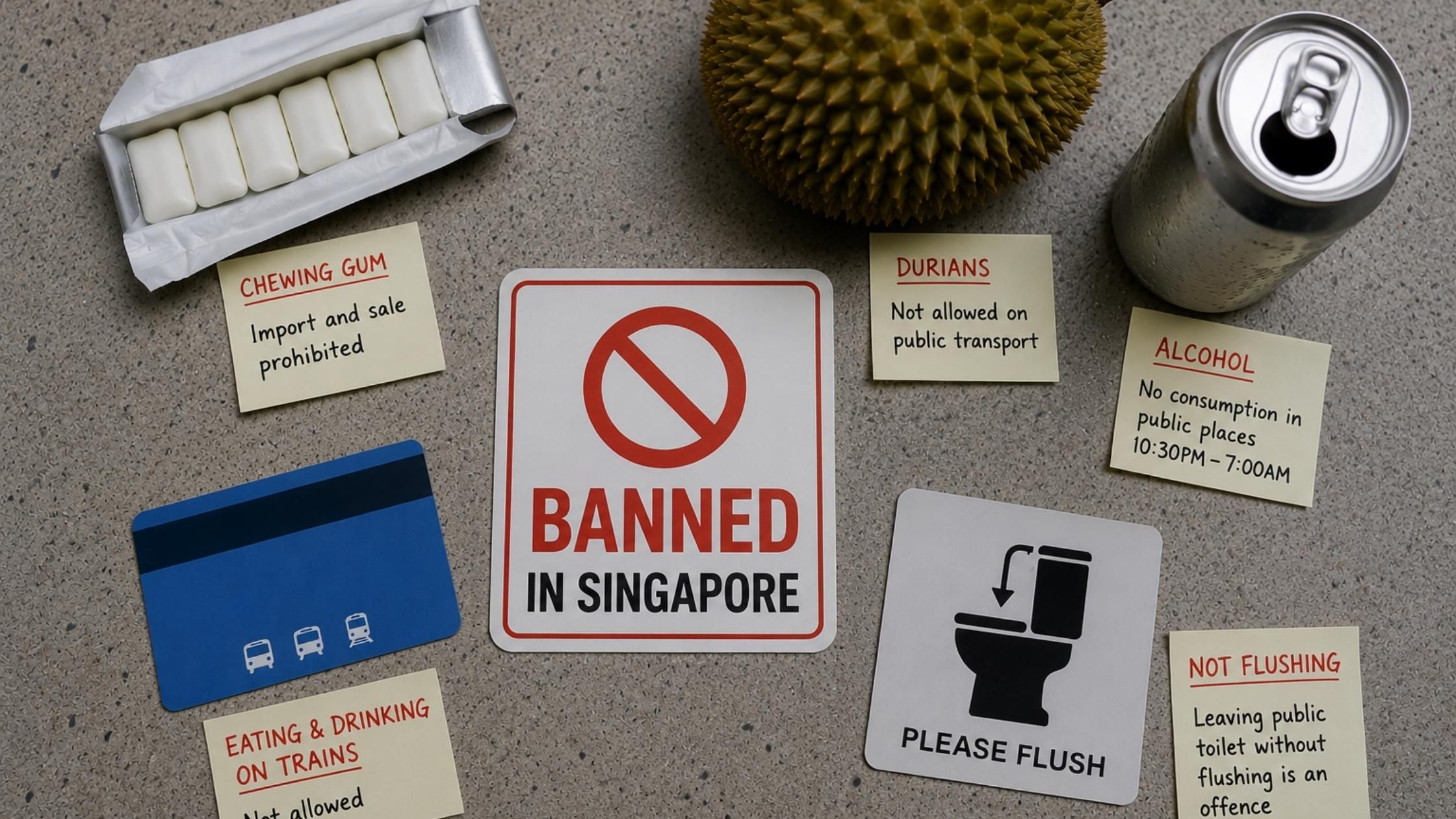

SINGAPORE: There are definitely a few things that people are surprised by when they learn about the illegal things that are widely accepted in Singapore. For instance, one of the very common things that people—from locals to foreigners—know about Singapore is the illegal importation of chewing gum.
“Gum is the one with the most surprising impact imo. As a Singaporean, I always thought it was silly, but when I travelled to the UK, there was gum stuck everywhere. It’s genuinely disgusting, so it’s a price I don’t mind paying to have Singapore be a little cleaner,” a netizen admitted.
Moreover, it is illegal in Singapore to consume takeaway alcohol from convenience stores and supermarkets in public spaces such as parks, HDB void decks, or on the street between 10:30 PM and 7:00 AM.
A netizen declared: “However, you can freely drink at licensed bars, clubs, and restaurants past 10:30 PM. Do be reminded, though, some places like Geylang you can’t drink starting from 7 pm instead of 10:30 pm.”
One more illegal thing to do in Singapore is to leave a public restroom without flushing. A comment shared that under the law, failing to flush a toilet immediately after use is an offence punishable by fines.
“Need to apply for police approval to hold public gatherings like protests. No work strikes by essential service workers (bus drivers, nurses, etc). No vandalism of public places. No eating and drinking in trains. No durians on public transport. No firecrackers,” a comment concluded.
Other netizens also observed that even if Singapore has a lot of laws, enforcement depends on the impact or disturbance one is causing, or if somebody else reports an issue.
“So, like jaywalking, for example, it’s super common here, and most police tend to turn a blind eye. Well, until an accident occurs, that is,” a netizen stated. In response to this comment, another netizen claimed: “Enforcement requires manpower, and they can’t be everywhere 24/7, I understand that. However, if there are no consequences, behaviour will not change. Consequences don’t have to be a government fine or police arrest; social consequences are consequences too.”
Indeed, Singapore has many rules that may surprise visitors. The result is a cleaner, more orderly public life for many in the country. More importantly, these laws also mean people, especially visitors, need to be aware of local rules and the consequences before they act to avoid any inconveniences.
 Follow Google News
 Join us on WhatsApp
 Follow us on Telegram