

Southeast Asia is facing a number of issues at the moment, including the disruption to the supply of fuel brought about by the war in the Middle East, the political crisis in Myanmar, scam compounds, as well as other security, economic, trade, and climate issues.
Another significant issue is the rivalry between superpowers, as the region finds itself facing pressures to choose between the United States and China.
However, with the US’s decreasing influence due to last year’s imposition of tariffs and this year’s conflict in the Middle East, which began on Feb 28 when Israel and the US started bombing Iran, China appears to be positioning itself to be a reliable partner in the region.
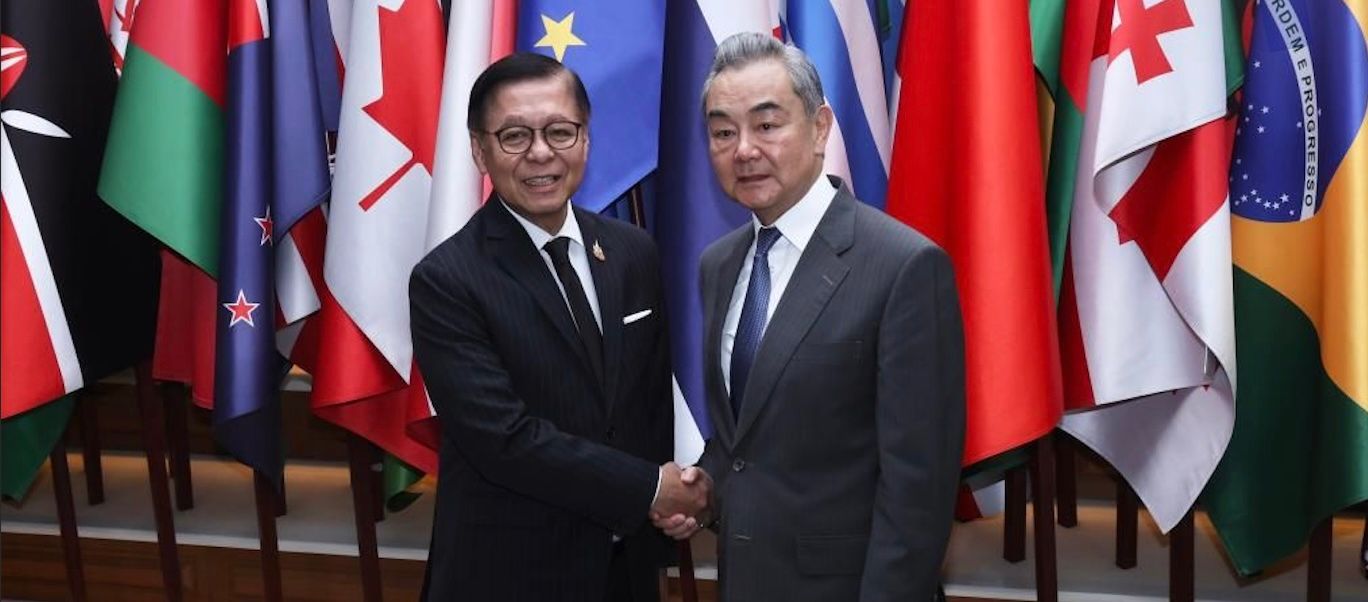
This is how several analysts are interpreting last week’s visits made by China’s Foreign Minister Wang Yi to three Southeast Asian countries: Cambodia, Thailand, and Myanmar.
In the State of Southeast Asia: 2026 Survey Report, released by the ISEAS-Yusof Ishak Institute in Singapore, over half of the respondents from the region said they would side with China over the US if they needed to choose, whereas last year, 52% of the participants had chosen to side with the US.
The survey also showed a growing trust in China among Southeast Asian nations, and 55.6% of respondents said they expected that their country’s relations with China would either improve or improve significantly over the next three years.
Moreover, it revealed concerns over “US global leadership” as respondents’ top geopolitical concern, topping issues concerning the South China Sea.
“This shift is not the result of a diplomatic push by Beijing but of the inevitable outcome of years of gradual drift in Washington’s policy toward Southeast Asia,” wrote Du Lan, the Deputy Director at Asia-Pacific Institute, China Institute of International Studies.
“The current US policy toward Southeast Asia is generating a range of negative effects. If the United States fails to adjust its competitive, confrontational, and self-serving foreign policy, its influence in the region is likely to face further decline,” she further noted.
Enter Beijing
The visit from China’s top diplomat to three Southeast Asian capitals “signified more than routine diplomacy,” an op-ed in Bernama noted, adding that it was a message showing China’s commitment to stability, unity, and cooperation in the region.
Notably, Southeast Asian nations are China’s biggest regional trading partner, with a predicted whopping US$1 trillion (S$1.28 trillion) in two-way trade.
Because of last week’s visits, China and Cambodia have strengthened their already close relationship through expanding cooperation into security through a new “2+2” dialogue format. In Thailand, meanwhile, China pushed for collaboration on transnational crime and, perhaps more importantly, positioned itself as a potential mediator in the Thailand-Cambodia border conflict.
The situation in Myanmar is somewhat more complex, but China has continued to engage the government to protect its strategic interests, ensure border stability, and advance infrastructure projects. /TISG
Read related: China fills void as the US loses ground worldwide due to Iran War
 Follow Google News
 Join us on WhatsApp
 Follow us on Telegram