
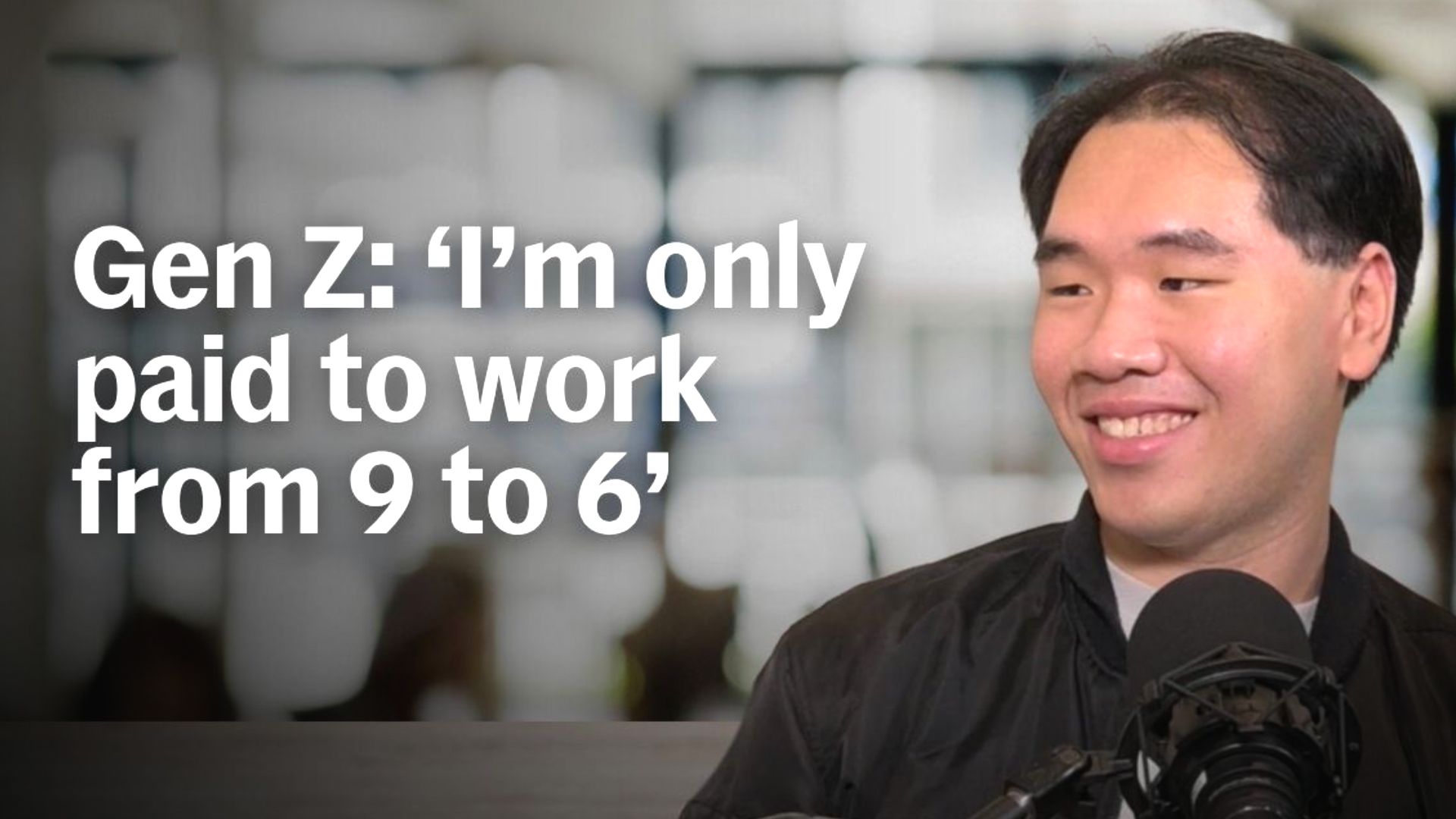
‘If I don't give ideas, you say I'm not productive; if I give ideas, you ask me, you think you know better than me’ — Gen Z worker laments how his generation is under pressure from being judged unfairly by older bosses
‘If I don't give ideas, you say I'm not productive; if I give ideas, you ask me, you think you know better than me?’ — Gen Z worker laments how his generation is under pressure from being judged unfairly by older bosses

SINGAPORE: The debate over Gen Z's work ethic is becoming louder, but many young workers say they are being unfairly judged even before they have the chance to prove themselves.
Ang Jie Chun, an intern at Channel NewsAsia (CNA TODAY), explored why younger employees are frequently labelled as lazy, disrespectful or unwilling to work hard. And after speaking with workplace experts and young professionals, he found the reality is far more balanced. Many Gen Z workers want to perform well, but also expect respect, clear guidance and healthy workplace boundaries.
Rather than a conflict over work ethic, the problem may be one of communication. Human resource consultants and academics who were interviewed said that managers who understand what motivates younger employees are more likely to build engaged and productive teams.
Young workers say negative stereotypes shape first impressions of Gen Z workers
One young intern, identified only as Natalie, recalled being publicly criticised while organising a colleague's farewell gathering after trying to check for dietary restrictions. She felt the incident turned into a criticism of her entire generation quite fast, rather than just her own actions.
Experiences like hers mirror a common complaint among younger employees. They say mistakes are sometimes linked to assumptions about “kids these days” instead of being treated as individual situations. According to Ang Jie Chun's reporting, many Gen Z workers believe these stereotypes create unfair expectations from the start.
Gen Z setting boundaries is mistaken for a lack of ambition by older generations
A common criticism is that Gen Z workers only do the minimum required. However, Ilse Clement, Senior Consultant for Human Resources and Business Support at Robert Walters, said this perception may come from younger employees being more deliberate about separating work from their personal lives.
Ang Jie Chun also shared his own internship experience, where taking on an excessive workload left him feeling burnt out and reluctant to accept every request in future roles. Rather than avoiding work, he said the experience taught him the importance of protecting his well-being.
Clement said employers have a better chance of motivating younger workers by explaining the purpose of their work, setting clear expectations and recognising good performance, rather than simply expecting them to do more.
Gen Z speaking up shouldn’t be mistaken for disrespect
Another stereotype is that Gen Z workers don’t respect senior colleagues because they are more willing to question decisions.
Joyce Goh, General Manager at Cornerstone Global Partners, said younger employees grew up in an environment where sharing ideas and asking questions is encouraged. She believes this openness can help organisations improve, provided discussions stay respectful and solution-focused.
One lab researcher who was interviewed described a workplace situation in which she had to push back after being assigned extra work beyond the original agreement, as her workload had already become overwhelming. While an older colleague silently accepted the additional tasks, she chose to oppose and raise her concerns instead.
The article argues that many younger employees aren’t rejecting authority. They simply expect conversations to go both ways and want meaningful mentorship from experienced colleagues.
Flexible work-life balance is becoming part of the modern work environment
The expectation of replying to work messages after office hours is also a point of tension between generations.
Dr Wang Ningxin, Senior Lecturer in the Department of Management and Organisation at the National University of Singapore, said technology has blurred the line between work and personal life far more than it did decades ago. From his perspective, Gen Z's desire for clearer boundaries is a practical response to today's always-connected workplace rather than a lack of commitment.
Newsletter
Get updates straight to your inbox
Renae Chen, Head of Talent Acquisition at WorkJoy Group, added that younger job seekers increasingly consider flexible work arrangements, commuting distance and mental well-being when choosing employers. At the same time, she cautioned Gen Z workers that flexibility shouldn’t be abused, as frequent requests without good reason can create tension within teams.
Better leadership and communication can bridge the generational labels and negative stereotypes
As expectations around leadership, communication and employee well-being continue to evolve, a recent Deloitte survey found that nearly half of Gen Z respondents wanted more mentoring from their managers, but only around one-third felt they were receiving enough guidance.
Millennials expressed similar concerns, suggesting the issue extends beyond one generation. So rather than focusing on age differences, workplace experts said organisations benefit more from adapting management styles, encouraging open communication and creating stronger mentoring relationships.
Generational labels can be useful for understanding trends, but they should never replace judging people on their actions. Good workplaces are built on trust, clear expectations and mutual respect. Those qualities matter far more than the year someone was born.
Note: Original quotes have been edited for brevity and clarity. Watch Ang Jie Chun, an intern at Channel NewsAsia (CNA TODAY), break down Gen Z stereotypes in the workplace in the CNA Podcasts, Work It, episode below: