
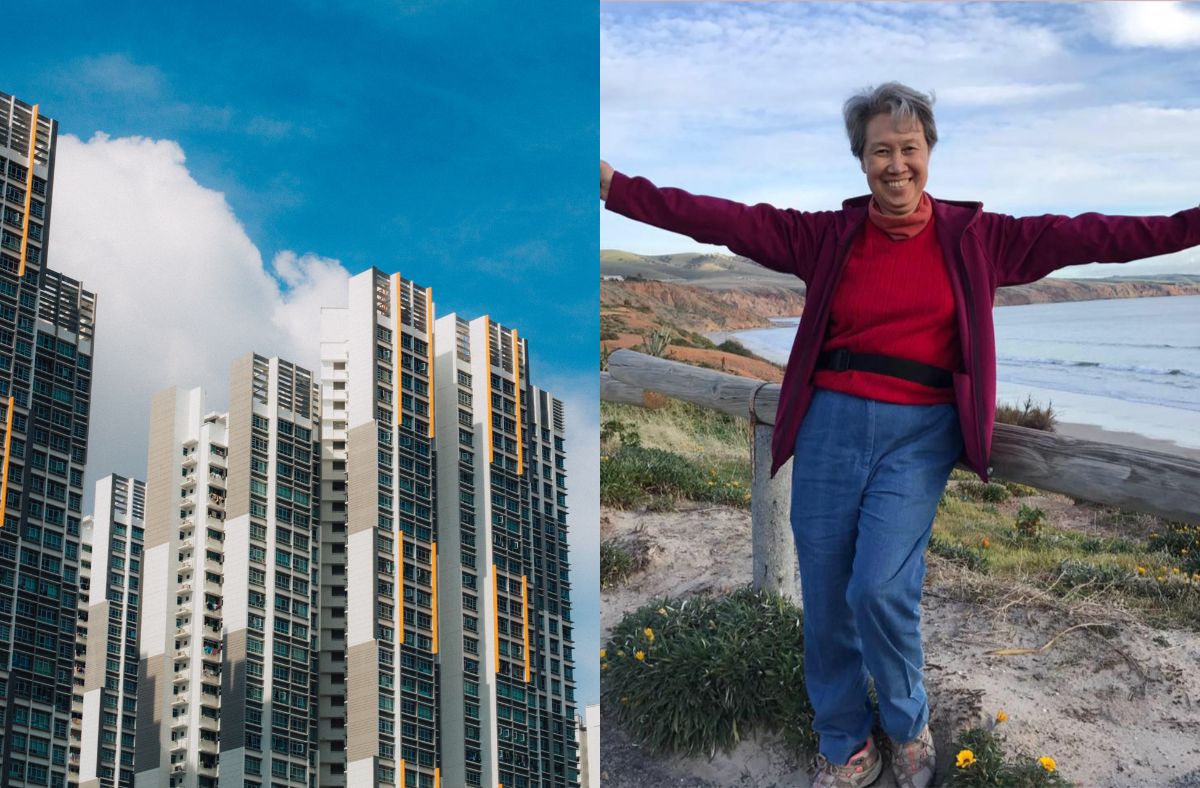
Photo: FB screengrab/Ho Ching and canva.com
Ho Ching: Buying HDB flat with lump sum payment is like paying rent without inflation for decades; keeps housing cost low

SINGAPORE — Chairman of Temasek Trust Ho Ching recently joined the topic of Housing & Development Board (HDB) affordability in a lengthy Facebook post explaining why buying an HDB flat is like paying rent without inflation.
She noted that a S$360,000 three-room flat with 60 years left on the lease is like paying S$500 a month rental over 720 months. Today’s dollar means we haven’t factored in inflation, she added. “By paying upfront, we more or less assure ourselves that we continue to have a roof over our heads and a home even as our incomes decline post-retirement.”
At the same time, flat owners don’t have to be subjected to unpredictable market forces and end up paying higher and higher rentals. “And if the economy does well, and the island is safe and secure with high stability and trust index, our housing assets will appreciate in our lifetime,” said Mdm Ho.
Compared to what HDB is doing, public housing in many places around the world often degenerates into slums within a few years of handing over to tenants or residents, she noted.
“HDB has done an excellent job in thinking community and town planning. This is unlike public housing agencies in many parts of the world, where public housing means just housing plonked in a piece of land without thought of other planning parameters to make the space livable and conducive to families and living,” said Mdm Ho on Tuesday (Dec 13).
However, HDB can begin thinking about family life cycles, wherein families grow and require more space in the future.
Aside from larger flat sizes, she suggested amenities that adapt to growing families and building a “community based on flows of generations after generations, rather than based on a starting stock of new young families at the start.”
Mdm Ho also touched on Singapore land and how it is treated as a resource tied to the reserves.
“Singapore is a small island without resources. This is why for sustainable and fair stewardship, land is treated as a past reserve.”
Newsletter
Get updates straight to your inbox
“Under our procedures for managing past reserves, land must be sold at fair market value and the proceeds locked up as past reserves,” she noted.
She explained that if Singapore is run poorly and becomes a “junk bond country,” the land value will fall sharply as people lose hope and investors flee with jobs.
Meanwhile, if the country is run well and continues to invest in its infrastructure, people, peace, stability and security, then the land value appreciates.
Therefore, “land value is not just a function of past acquisition cost. It indirectly captures the indirect investments that the Singapore government and the people have put into Singapore and its land.”
/TISG
https://theindependent.sg/so-many-sporeans-now-co-living-in-hdb-with-5-to-6-people-in-1-unit-netizens-react-to-high-property-prices/