
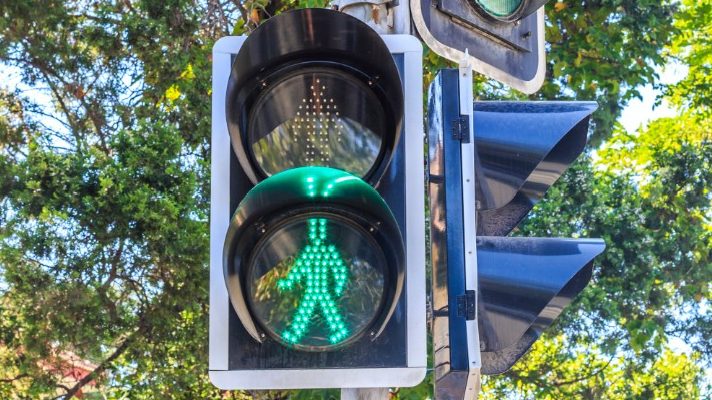

SINGAPORE: If you’ve recently crossed a street and felt a car getting a bit too close for comfort, you’re not alone. A Reddit user sparked a lively conversation after noticing a troubling trend: more drivers aren’t waiting for pedestrians to fully cross the road, even when the pedestrian signal is on.
“I’ve been noticing that more drivers don’t wait for pedestrians to fully cross during the green light,” the post began. “They inch forward or drive through small gaps, even while people are still walking. Isn’t it still a rule that cars must stop and give way until the crossing is clear? Has this just stopped being enforced, or has the practice changed?”
The discussion that followed revealed a mix of frustration, fear, and resignation from both pedestrians and drivers.
A rule still on the books, but rarely enforced?
Technically, the law hasn’t changed; drivers must still give way to pedestrians at crossings. But many anecdotes in the thread show that many aren’t following this rule, and enforcement seems almost nonexistent.
One commenter was blunt: “Who enforces? As long as there’s no accident, LTA can’t be bothered. Look at how many accidents it took to implement the turn-on-green-arrow traffic light.”
This lack of enforcement appears to encourage a free-for-all at intersections, especially at right turns, where vehicles and pedestrians often have to share the same green light.
A driver’s dilemma: Timing and traffic pressure
From the drivers’ perspective, there’s also a growing sense of impatience—some of it understandable. One driver described a situation where up to 50 people could be crossing during a single green light. By the time the pedestrian signal turns red, the vehicle light has already turned amber. “One traffic cycle, only one car can turn right?” they vented. “No right arrow, either.”
Given that context, some drivers feel they need to inch forward to avoid blocking traffic behind them. “I’ll inch forward slowly, and you all can walk around my car. The car behind me will thank me, too,” the commenter wrote.
Still, they acknowledged that if there were a right-turn arrow or just a few people crossing, they would wait. It’s a compromise, not defiance—a choice made due to flawed traffic design, rather than a disregard for safety.
Pedestrian anxiety on the rise
However, for pedestrians, the stakes are much higher. Many users reported “close calls,” even at zebra crossings. They said they’ve learned to pause and check before stepping out, even when they have the legal right of way. As one person noted, “Some drivers don’t even slow down at all. So, I always must stop and make sure.”
To add to the concern, people are increasingly distracted while walking. “These days, so many people look at their phones while crossing. I’m worried for them,” one commenter added. It’s a dangerous mix: impatient drivers, distracted walkers, and minimal enforcement.
What’s driving this change?
While no single reason explains this change in behaviour, some pointed to rising Certificate of Entitlement (COE) prices—now hitting record levels—as an indirect factor. The implication is that when car ownership becomes a luxury, some drivers may feel more entitled on the road.
Whether that theory is true or not, the main issue seems clear: road etiquette is getting worse. Until better enforcement or smarter traffic light design is implemented, both drivers and pedestrians must navigate an increasingly tense and potentially dangerous blend of urban life.
What can be done?
The conversation ended with more questions than answers. Should traffic signals be redesigned to better separate pedestrian and vehicle phases? Should enforcement increase, even with dashcam evidence? Or is it time for a broader culture shift in how we respect each other on the roads?
Until then, the advice from many in the thread was simple: Whether you’re walking or driving, stay alert—because not everyone else will be.
 Follow Google News
 Join us on WhatsApp
 Follow us on Telegram