
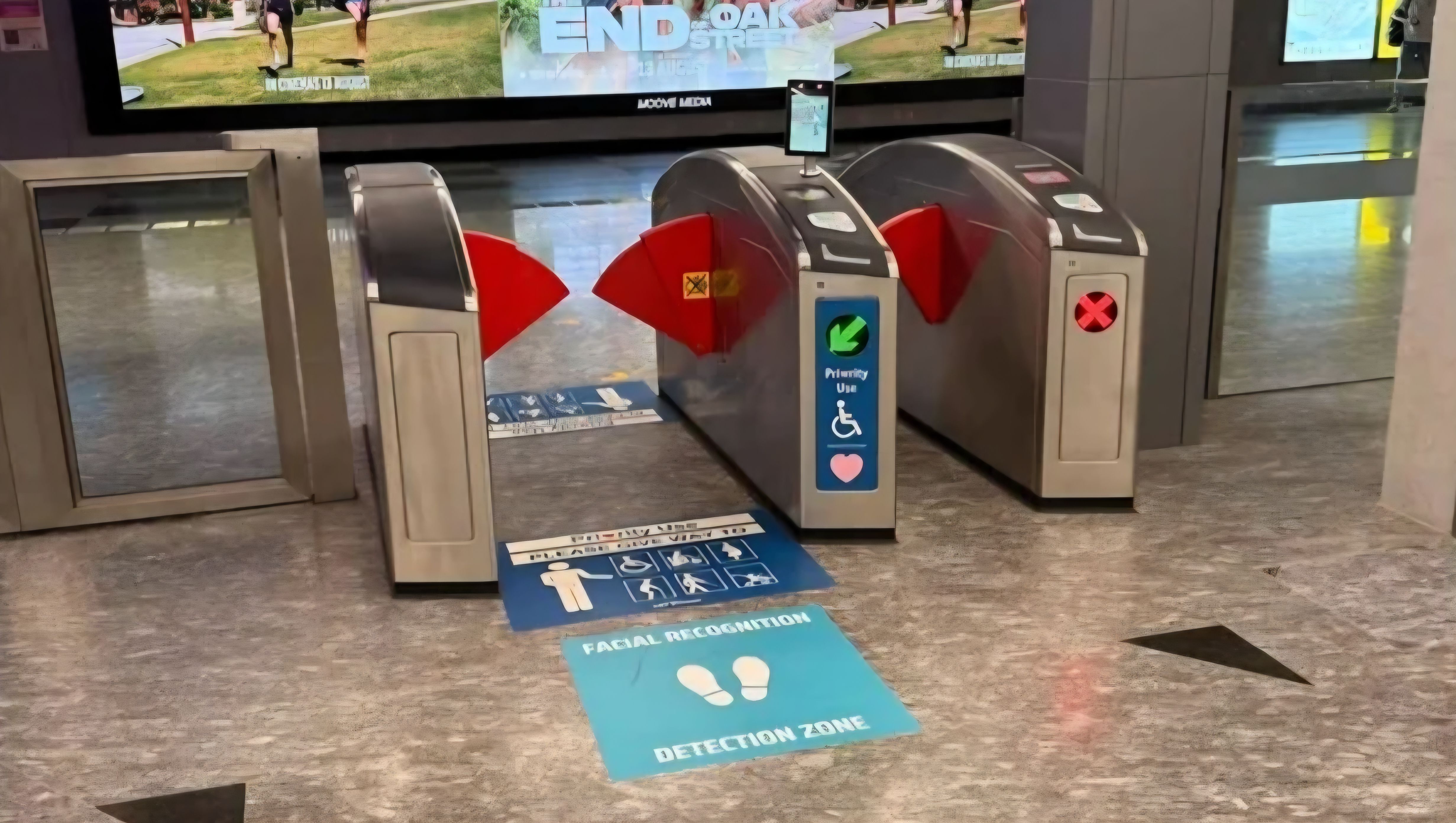

SINGAPORE: Commuters at Punggol Coast MRT station have noticed new facial recognition devices installed at selected fare gates, with the technology quickly becoming a talking point online after images of the system surfaced on social media.
The devices were seen mounted above two separate priority gantries at the station. A marked area on the floor identified a designated facial recognition detection zone, while the equipment itself, about the size of a small tablet, featured a camera at the top and an on-screen prompt directing commuters to “look at the camera”.
According to a TikTok post by 8 Days, a station staff member said the equipment is currently being tested as part of a trial. Under the pilot, commuters who wish to use the feature would first need to register, linking their public transport card to a facial recognition profile before they can access the system.
While the trial appears to be optional, the appearance of the devices has nevertheless prompted widespread discussion online, with many questioning the implications of introducing facial recognition technology into Singapore’s public transport network.
Much of the concern centred on privacy and surveillance. Some netizens said they were uncomfortable with the prospect of biometric data being used in a transport setting, arguing that facial recognition differs from conventional ticketing methods because it relies on a person’s unique physical characteristics rather than a card or mobile device.
Others questioned how the collected facial data would be stored, who would have access to it, how long it would be retained and what safeguards would be in place to prevent misuse or unauthorised access. For some, the uncertainty surrounding these issues was enough to raise doubts about the technology despite the registration process being voluntary.
Several commenters also expressed broader concerns about surveillance, saying the increasing use of facial recognition in everyday environments could normalise the collection of biometric information. They argued that while the technology may offer greater convenience, it also raises questions about where the line should be drawn between efficiency and personal privacy.
Others wondered whether such a system was necessary for public transport at all, suggesting existing payment methods already provide a quick and reliable way for commuters to enter and exit stations without requiring facial scans.
The trial has nevertheless attracted considerable attention, with netizens watching closely for further details about how the technology will work in practice and whether it could eventually be rolled out more widely across the MRT network.
 Follow Google News
 Join us on WhatsApp
 Follow us on Telegram