
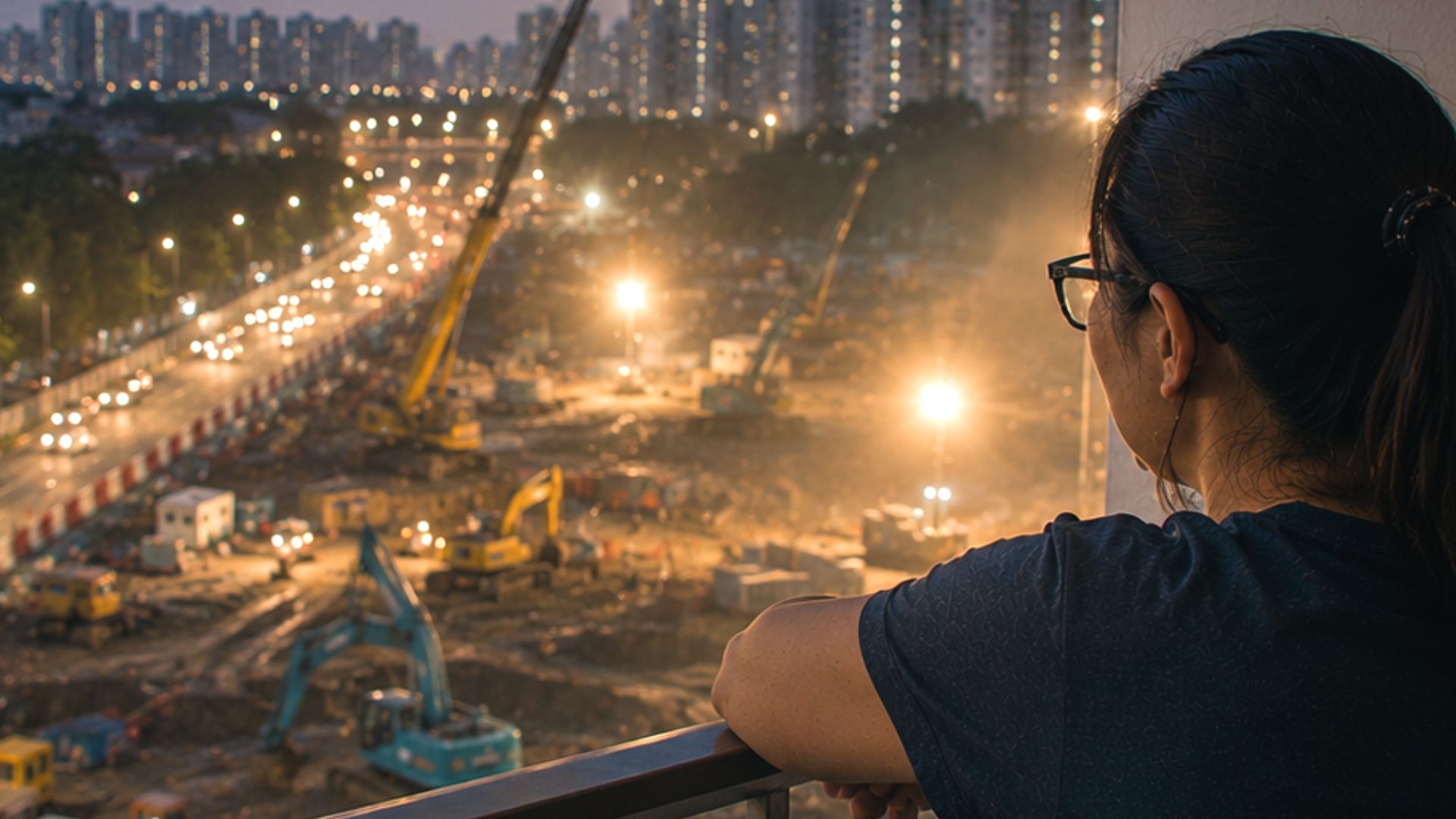

SINGAPORE: For many Singaporeans living along the North-South Corridor (NSC) construction, the project has become part of daily life but not always in a good way.
Residents told Channel NewsAsia (CNA) they have spent years dealing with construction noise, dust, traffic diversions, and changing pedestrian routes as work continues on Singapore’s largest transport corridor project. While many support the long-term goal, some are questioning whether the benefits will be worth nearly a decade of disruption.
The 21.5-km corridor, which began major construction in 2018, is expected to open in phases starting in 2027, with full completion scheduled for 2029. Originally targeted for completion around 2026, the project was delayed by the COVID-19 pandemic and manpower shortages.
Years of noise, dust and disruption from living beside a construction site
For Rachel Gauri, a Woodlands Housing and Development Board (HDB) flat resident, construction has become a daily challenge. Her family has spent years coping with noise that forces them to keep windows and doors shut, while dust regularly settles on their home.
Keith Kwek, a video director who has lived in Novena for decades, said residents have had to repeatedly adapt to changing road layouts, bus stop locations, and pedestrian routes. Familiar journeys suddenly become unfamiliar, adding stress to everyday travel.
Private-hire vehicle drivers have also struggled with frequent route changes, with navigation apps sometimes lagging behind the latest road adjustments.
The frustration isn’t limited to Novena. In Ang Mo Kio, residents said temporary traffic arrangements have lengthened walking routes. Some also miss infrastructure, such as overhead bridges that were removed to make way for construction.
In Yishun, several residents expressed concern about what comes next. While construction noise may eventually end, some fear that the completed corridor could bring even more traffic noise, particularly for homes near future viaduct sections.
Business owners also face years of disruption from construction barriers
Residents aren’t the only ones counting the cost. Businesses in Novena said construction hoardings have reduced visibility and foot traffic, making it harder to attract customers.
Some shop owners reported noticeable declines in sales after barricades were erected near their storefronts. Others said potential customers mistakenly assumed businesses had closed or been demolished because they could no longer be seen from the road.
Several business operators said they hope customer numbers will recover once construction is completed and normal access returns to the area.
The Land Transport Authority (LTA) acknowledged that construction barriers can affect businesses. The agency said it has worked with affected operators by providing directional signs and advertising space on hoardings to help maintain visibility.
Transport experts: NSC is more than just another expressway
Despite the complaints, transport experts explain the NSC represents something much bigger than just another new road. The corridor is designed to connect northern towns such as Woodlands, Sembawang, and Yishun to the city more efficiently.
According to LTA, travel times from northern neighbourhoods could be reduced by up to 30 minutes. Unlike traditional expressways, the NSC will include dedicated bus lanes, cycling routes and wider pedestrian spaces.
Transport engineering consultant Gopinath Menon said commuters can expect faster bus journeys and improved facilities for cyclists and pedestrians.
Dr Samuel Chng from the Singapore University of Technology and Design said it would be wrong to view the project as benefiting motorists primarily. He noted that dedicated bus infrastructure can move far more people than private vehicles occupying the same road space.
The project also comes at a timely moment. Professor Sing Tien Foo said improved links between northern towns and the rest of Singapore could support business activity and complement the upcoming Johor Bahru–Singapore Rapid Transit System Link.
Property experts: Property prices may benefit residents once NSC construction ends
Years of construction appear to have had a short-term effect on nearby property prices. According to data cited by Huttons Asia, homes located near construction zones generally recorded smaller price gains than comparable properties further away. The difference was noticeable for both public and private housing.
Still, property analysts expect much of that effect to fade once the project is completed. Improved connectivity could make neighbourhoods more attractive, although experts cautioned that road projects typically have a smaller effect on property values than new MRT lines, which benefit residents.
NSC: Community patience is wearing thin
A few residents who were interviewed opposed the corridor itself. Most accept that large projects bring disruption, but their concern was the length of time required to build them.
Eight years after construction began, and with another three years to go before full completion, patience is wearing thin in some neighbourhoods.
Still, if the project delivers faster public transport, safer cycling routes, better pedestrian spaces and smoother journeys into the city, many of today’s frustrations may eventually be viewed as the cost of building a more connected Singapore.
For now, residents are living through the construction phase, and the real verdict will come only after the barriers come down.
 Follow Google News
 Join us on WhatsApp
 Follow us on Telegram