

By: Toh Han Shih
The government of Singapore, the only Chinese-majority country outside China, wishes its Chinese population to remain loyal to Singapore yet retain Chinese culture. This can be a delicate balancing act, as some fear too much exposure to China might tilt the loyalty of Singaporean Chinese towards the country of their ancestors. However, Singaporean Chinese can live in China, master Chinese language and culture, yet remain loyal Singaporeans.
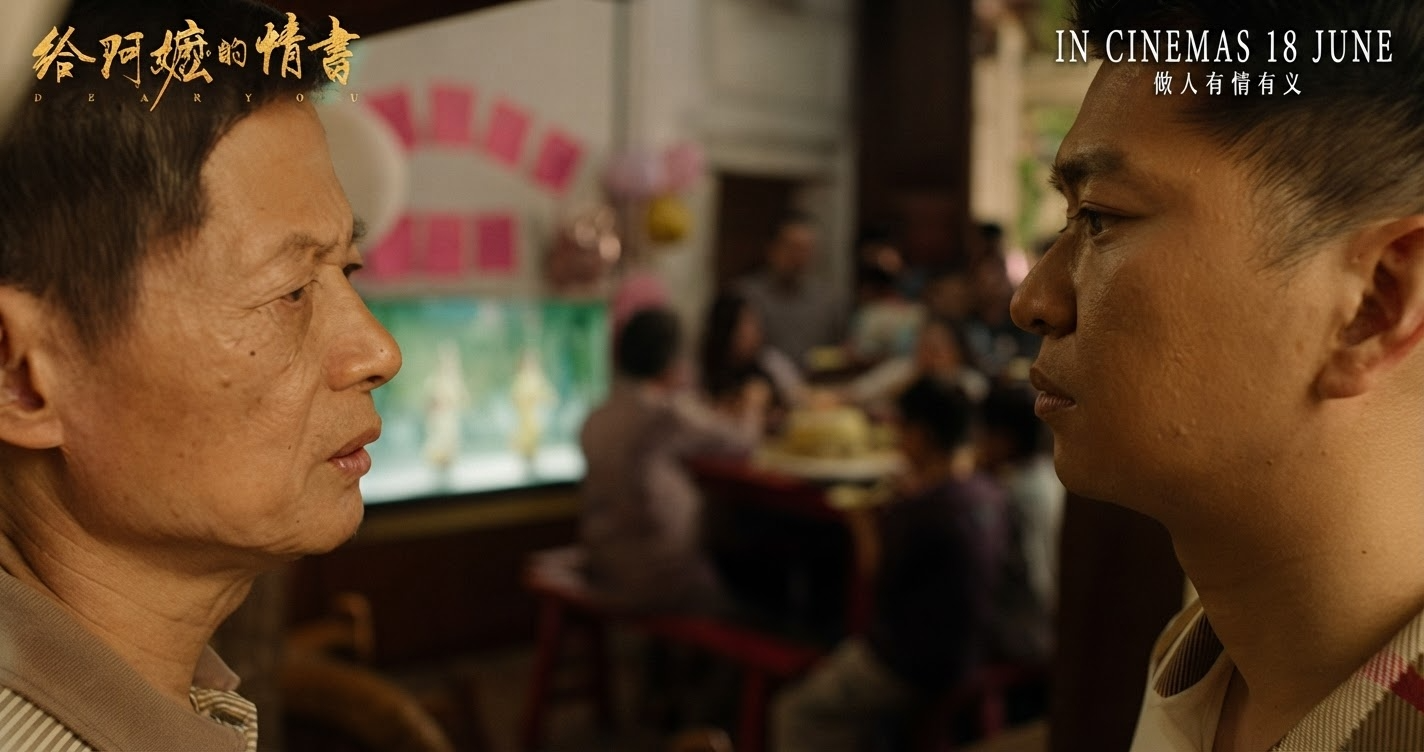
A recently-released Chinese movie, Dear You, has stirred anxiety in some quarters that the film might tug at the heartstrings of Singaporean Chinese to switch their allegiance from Singapore to China. The movie has grossed more than S$340 million in mainland China, Hong Kong and Singapore. This box office hit relates the story of a young man from a village in Guangdong province, home to the Teochew (Chaozhou) dialect group, who sets off to Thailand to find his grandfather who had fled the village in China. This movie portrays the feelings of overseas Chinese for the land of their ancestors.
On May 21, a Singaporean Chinese journalist, Sim Tze Wei, wrote a commentary on Dear You in Lianhe Zaobao, a Singaporean Chinese-language newspaper. Sim wrote, “This is a highly successful piece of United Front work — even if the director never intended it to be. For a change, the film’s United Front targets are not the Taiwanese but the global Chinese diaspora, in particular the ethnic Chinese in Southeast Asia.”
Through the United Front, Beijing seeks to influence overseas Chinese.
“It compellingly forces us to reflect on the connection to China for ethnic Chinese who hold non-Chinese citizenship and were neither born nor raised there,” Sim added.
In her column, Sim declared, “Since gaining independence in 1965, Singapore has stood as a multiracial nation in Southeast Asia.… My connection to China is one of ancestral heritage instead of patriotic allegiance.”
Fears of a film like Dear You converting Chinese people of Singapore and other Southeast Asian nations to card-carrying members of the Chinese Communist government are overblown.
Two Straits Chinese scholars, Lim Boon Keng (Lin Wenqing) and Thomson Ku Hung-ming (Gu Hongming), are historical examples of Southeast Asian Chinese who lived in China, mastered Chinese language and literature, yet not switch their allegiance to the Chinese government.
Straits Chinese are Chinese born in countries along the Straits of Malacca, namely Singapore and Malaysia. Lim, a third-generation Straits Chinese born in Singapore in 1869, won a Queen’s scholarship from the British colonial government to study medicine at Edinburgh University in Scotland. Lim distinguished himself so much as a scholar that in 1921, he became president of Xiamen University (formerly called Amoy University) in his ancestral province of Fujian, at the invitation of the university’s founder, Tan Kah Kee, a Fujian native who was then Singapore’s richest tycoon.
In an essay in 1917, Lim cited Thomson Ku Kung-ming (Gu Hongming) as an example of Straits Chinese who distinguished themselves in public service on behalf of China, said Lee Guan Kin, head of the Division of Chinese at Nanyang Technological University, in a chapter of a book, Singapore and China.
Ku was born in Penang, Malaysia in 1857 of a Chinese father and Portuguese mother. Like Lim, Ku studied at Edinburgh University. Ku also studied at the University of Leipzig in Germany and the University of Paris. He spoke English, Mandarin, Hokkien, Malay, French, German and Japanese, as well as Latin and Greek.
To British people, Ku criticised Britain using English. To French people, he scolded France in French. To German people, he criticised Germany in German. In 1920, Ku penned a column in the New York Times headlined, “The Uncivilized United States”, which proved he was no stooge of America.
Ku moved to China in 1885 and served as an advisor to Zhang Zhidong, an official of the Qing dynasty. From 1905 to 1910, Ku was an official of the Qing government. From 1915 to 1923, he was a professor at Peking University.
Despite being Eurasian, Ku was more Chinese than the Chinese. Even after the Qing dynasty was toppled by Sun Yat-sen’s revolution in 1912, Ku continued to wear a pigtail, which was required of Chinese men during the Qing dynasty. The anachronistic sight of this professor with a pigtail at Peking University drew laughter from some students. A contemporary Chinese scholar wryly noted Ku looked like a European, yet sported a pigtail with his blond hair.
Ku advocated polygamy, a feudal Chinese practise which is no longer acceptable in mainland China, Taiwan, Hong Kong and Singapore. He argued that just as a teapot was accompanied by multiple tea cups, a husband should have multiple wives. Ku’s analogy offended many modern Chinese like Lu Xiaoman, a Chinese painter.
Lu, the wife of Xu Zhimo, a Chinese modernist poet, told her husband that he could not use Ku’s analogy of a teapot with tea cups to have multiple wives. Lu told Xu, “You are not my teapot, but my toothbrush. A teapot can be used by many people, but a toothbrush is allowed for the private use of only one person.”
Ku was a supporter of Confucius. He translated the Analects, a treatise of the sayings of the ancient Chinese sage, into English. Like Ku, Lim was a staunch advocate of Confucius. That put these two Straits Chinese men at odds with mainland Chinese intellectuals like Chen Duxiu and Lu Xun, who repudiated Confucius.
In May 1924, students at Xiamen University against Lim’s insistence that the university’s students participate in Confucian ceremonies. The student protestors called for Lim’s resignation as the university’s president. Several days later, Chen Duxiu, then leader of the Chinese Communist Party, wrote an article which condemned Lim and Tan Kah Kee in harsh terms. Chen criticised Tan for supporting Lim. Chen’s article also mocked Lim for allegedly being illiterate in Chinese culture and accused Lim of fawning the British colonial rulers of Singapore.
In 1926 and 1927 while teaching at Xiamen University, Lu Xun criticized Lim’s Confucian teachings. Lu Xun branded Lim a “Chinese of British nationality who cannot open or shut his mouth without the word Confucius.”
Lu Xun patronisingly said he did not expect a “British Chinese” like Lim to be able to write authoritatively about Confucianism.
In 1929, Lim translated into English a Chinese poem, Li Sao, written in the third century BC by Qu Yuan, a Chinese official and poet. Lim’s translation of this important piece of classical Chinese literature refuted criticisms that his command of Chinese was inadequate.
The opposition of Lu Xun and Chen Duxiu towards Lim and Ku highlight the deep differences between mainland Chinese and Straits Chinese. Chen was a co-founder of the Chinese Communist Party, while Lu Xun is a Chinese writer endorsed by the Chinese Communist government. Hence, their thinking has been incorporated into the ideology of the current Chinese government. In contrast, Ku and Lim upheld traditional Chinese values which have faded away in China but are still preserved by Straits Chinese.
There are different notions of what it means to be Chinese, which set Singaporean Chinese apart from Chinese citizens. Like Lim and Ku, Singaporean Chinese can master Chinese language and literature, yet not adhere to the Chinese government’s ideology.
One example is Lee Kuan Yew. When the late Lee was Singapore Prime Minister, he laid down the bilingual education policy. Like Lim and Ku, Lee was an advocate of Confucianism. Lee even appeared to have briefly supported polygamy like Ku. In 1987, Lee suggested polygamy be reintroduced in Singapore, but his government never proceeded with such a plan. Yet Lee, as founding Prime Minister of Singapore, declared Singapore to be a multiracial country.
Toh Han Shih is a Singaporean writer in Hong Kong.
 Follow Google News
 Join us on WhatsApp
 Follow us on Telegram