
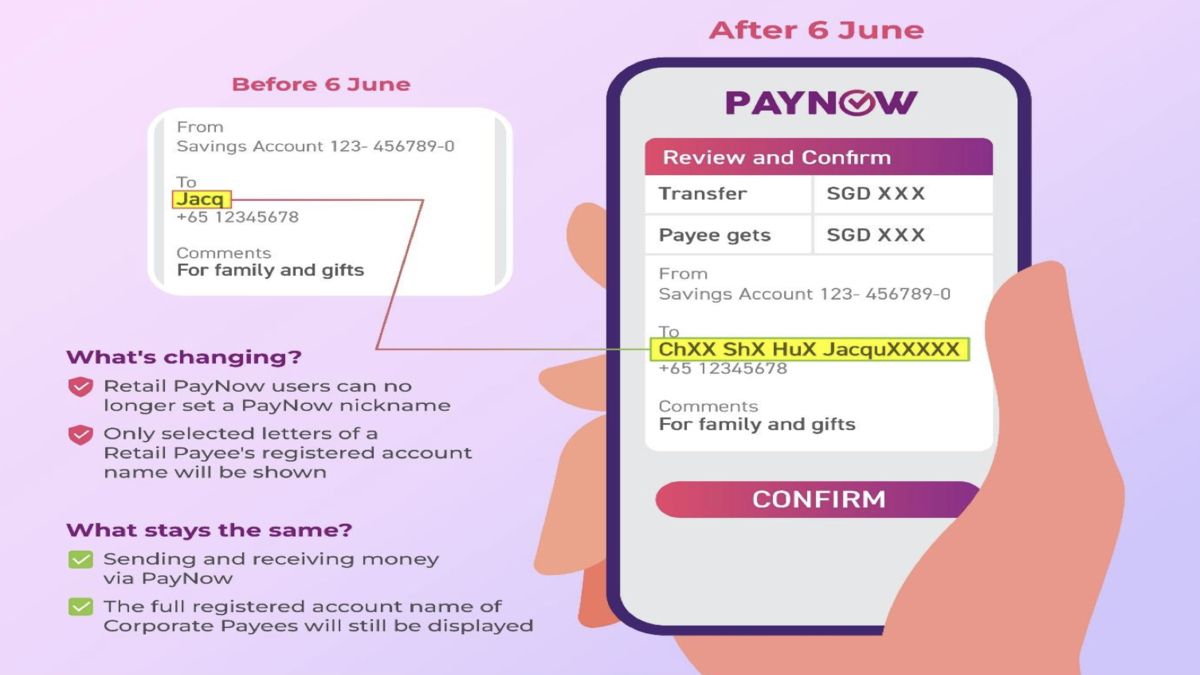

SINGAPORE: Singaporeans have raised concerns online that scammers may still be able to target them, even after PayNow removes its nickname feature, which has been exploited by scammers posing as established entities or trusted individuals using customised aliases.
On Wednesday (April 29), the Association of Banks in Singapore (ABS) announced that PayNow users will no longer be able to set or personalise their display names starting June 6, as part of measures to reduce impersonation scams. Instead, payment transactions will show the name linked to the user’s bank account, with only selected letters shown to protect privacy.
“With this enhanced security measure, scammers will no longer be able to masquerade as legitimate entities or persons, significantly reducing their ability to deceive unsuspecting users through PayNow. Given the current scam landscape, the upcoming change is essential to safeguard the interests of PayNow users against scammers,” ABS added.
However, netizens worry that even though certain letters in their names will be masked, the display format may still make their real identities “guessable”, leaving their names exposed to scammers.
One said, “Certain letters are removed but still very guessable”, while another pointed out just “how easily guessable names can be.” A third added that the change may have just “made it easier to impersonate real people.”
PayNow’s nickname feature, which has been available since the electronic fund transfer service was launched in 2017, was meant to address customers’ privacy concerns who preferred not to display their registered account names when receiving payments through their mobile number or NRIC numbers. /TISG
Read also: Scammers kick off Fire Horse year, with Millennials and Gen Z most at risk
 Follow Google News
 Join us on WhatsApp
 Follow us on Telegram