
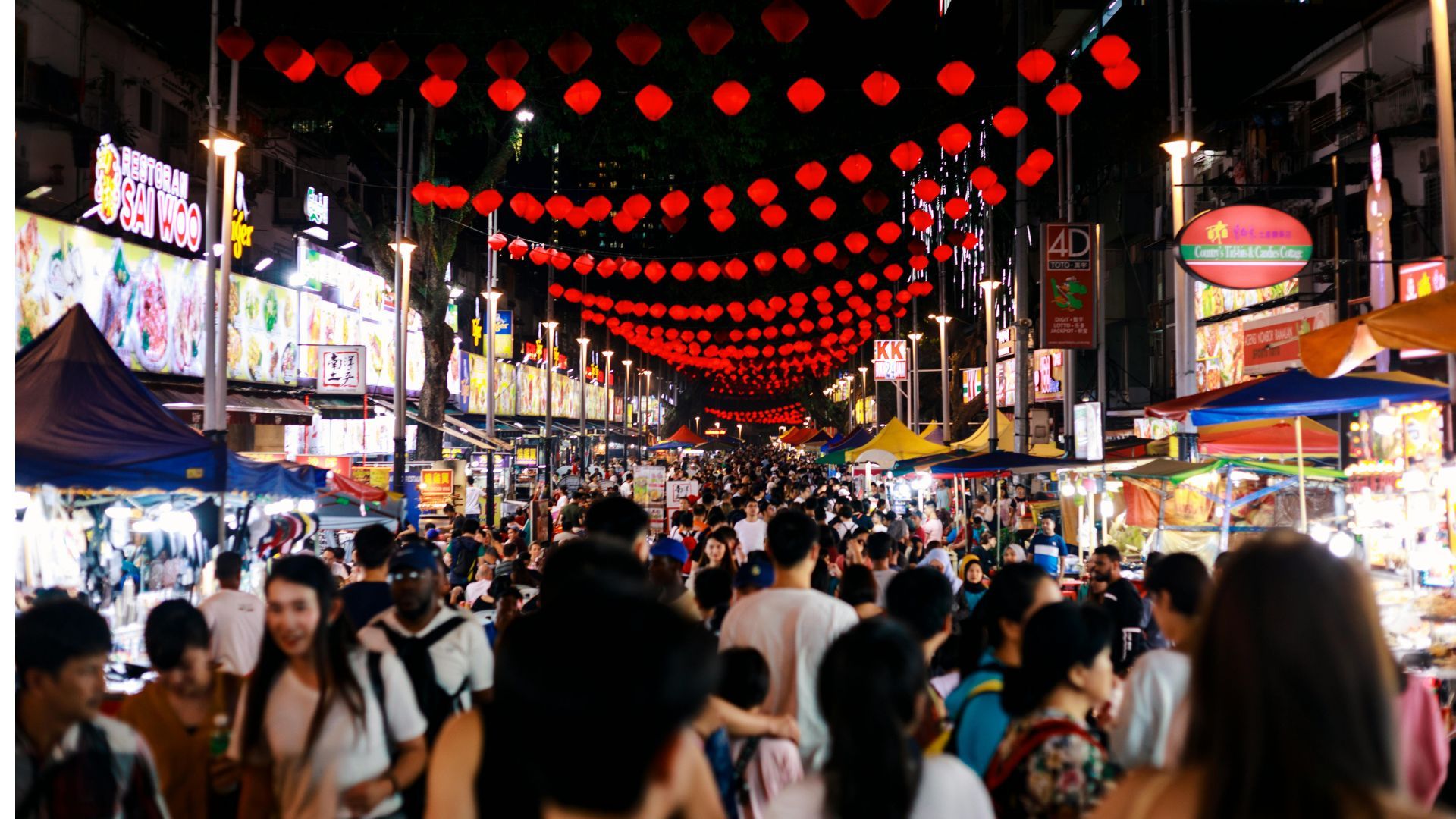

MALAYSIA: In a country that has embraced digitalisation, cashless transactions, and artificial intelligence, Malaysia’s night market (also known as pasar malam) and hawker culture might appear outdated at first glance. Yet in 2026, they remain deeply relevant not in spite of economic pressures, but because of them.
These informal markets continue to function as both an economic safety net and a social anchor for communities navigating rising living costs and uncertain employment conditions.
While national discourse often focuses on high-growth industries and macroeconomic performance, the lived reality for many Malaysians tells a more complex story. Even with moderate growth projections, cost-of-living pressures remain persistent.
In this environment, pasar malam and hawker stalls provide an essential form of everyday relief. Affordable meals such as nasi lemak and char kuey teow allow households to manage daily expenses without relying on higher-cost commercial dining. For students and lower-income groups, these are not lifestyle choices but necessities.
At the same time, these spaces play a critical economic role. For many in the B40 and lower M40 groups, hawking is not merely supplemental income but a primary livelihood.
Low entry barriers allow individuals to start small, test ideas, and gradually build income stability. In a labour market increasingly shaped by automation and structural change, this flexibility provides an important alternative to formal employment.
As noted by Bernama, more Malaysians are turning to small-scale food vending and informal trade as a response to economic strain and limited wage growth.
Public sentiment, however, reflects tension rather than consensus. Online discussions on Reddit frequently highlight rising prices, with users remarking that “RM10 is the new RM6” and describing pasar malam as “no longer what it used to, now it’s just expensive.”
Some question whether it is still worth visiting at all. Yet these criticisms are often followed by a different reality, many still return, albeit less frequently, saying they go “just to jalan-jalan” or out of nostalgia.
This contradiction is important; it shows that relevance has not disappeared, but shifted from affordability alone to experience, familiarity, and cultural attachment.
Insights from the Khazanah Research Institute reinforce this evolution, framing pasar malam as community ecosystems rather than purely transactional spaces. They sustain social interaction, preserve food heritage, and reflect everyday Malaysian life in ways that modern retail environments often cannot replicate.
Ultimately, pasar malam in 2026 persists because they adapt. They are no longer defined solely by low prices, but by their ability to meet both economic needs and emotional continuity. This raises an important question about whether municipal policies are doing enough to preserve and support these informal spaces, given their growing role in livelihood resilience and community life.
 Follow Google News
 Join us on WhatsApp
 Follow us on Telegram