

Summary
-
Singapore’s 24-hour Pollutant Standards Index (PSI) reached 81 in the Central region at 1 pm on Aug 9, placing air quality within the moderate range.
-
Dry conditions have increased hotspot activity across Sumatra and Kalimantan, with southeasterly winds capable of carrying smoke towards Singapore.
-
The Government’s 28-agency Haze Task Force has action plans ready if the 24-hour PSI exceeds 100.
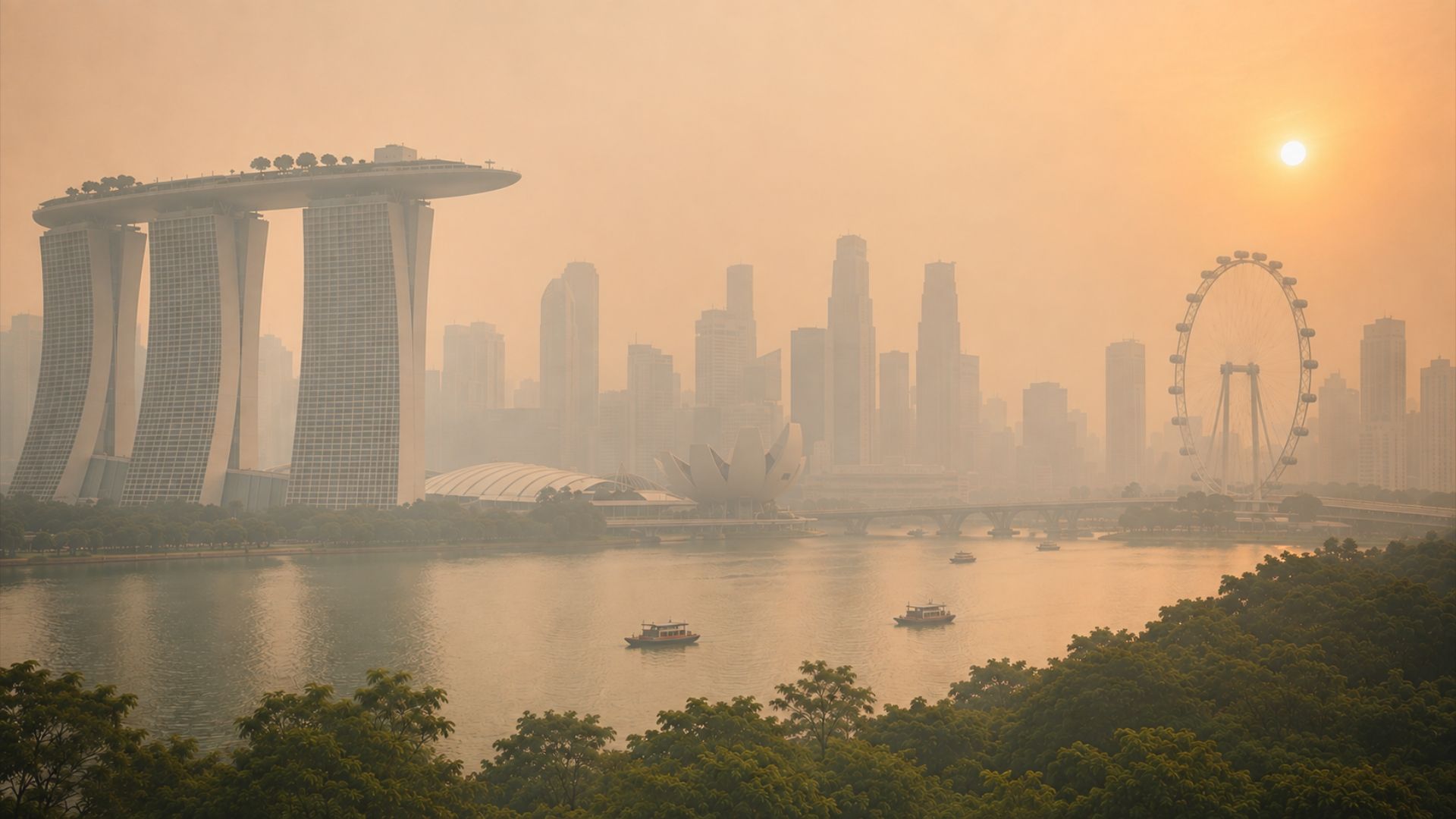
SINGAPORE: Singapore is closely monitoring the haze situation as dry weather and regional fires raise the risk of smoke reaching the island.
The 24-hour Pollutant Standards Index (PSI) stood at 81 in the Central region at 1 pm on Aug 9, placing the reading within the moderate range. The National Environment Agency (NEA) said the risk could increase over the coming week if dry conditions continue and fires in the region persist.
The agency issued the update on the same date on behalf of the 28 public agencies in Singapore’s Government Haze Task Force.
Smoke from regional hotspots could reach Singapore
Recent dry weather has led to more hotspots across parts of Sumatra and Kalimantan.
Smoke plumes have also been observed over the two areas. Southeasterly winds could carry smoke towards Singapore, especially from hotspots in southern Sumatra.
NEA said it will continue monitoring the situation and issue further updates if conditions change. The 24-hour PSI becomes particularly important if it rises above 100, as it marks the start of the Unhealthy range.
If that happens, NEA will issue daily haze advisories. These will include the forecast 24-hour PSI, giving people information to plan activities and events for the following day.
Singapore has response plans ready if air quality worsens
The Government Haze Task Force is chaired by NEA and includes 28 public agencies.
Rather than waiting for haze to become severe before deciding what to do, the agencies have tiered action plans based on air quality readings and forecasts.
The task force meets each year before the dry season to review and update those plans. It has already met twice this year. The first meeting took place at the end of January after dry weather contributed to peatland and vegetation fires in eastern Johor.
Some smoke from those fires drifted towards Singapore. The task force met again in April to update its preparations.
Haze can affect much more than visibility. Outdoor activities, schools, workplaces and people with health conditions can all be affected when air quality worsens.
The Government’s approach is therefore based on adjusting the response to actual air quality, rather than treating every rise in hotspot activity as a crisis.
One-hour PM2.5 readings help guide outdoor activity decisions
NEA is advising people to look at the one-hour PM2.5 concentration when judging current air quality. The reading can change during the day because of weather conditions. This is especially true during periods of transboundary haze.
The agency also provides a personal guide linked to the one-hour PM2.5 reading, which can help people decide whether to take part in outdoor or strenuous activities over the next few hours.
People who are more vulnerable to haze should take extra care. NEA advises the elderly, pregnant women, children and people with chronic heart or lung conditions to seek medical attention if they develop symptoms or feel unwell.
People with chronic heart or lung conditions should also keep their medication readily available. Reducing outdoor activity and physical exertion can lower exposure. Staying hydrated can also help reduce the effects of haze exposure.
Preparedness before the PSI turns unhealthy
The current PSI reading of 81 is still below the Unhealthy threshold of 100 or above. There is a difference between preparing for a possible haze episode and saying one is already happening. Singapore’s response system is designed around that distinction.
The 28 agencies have plans that can be activated at different levels depending on air quality readings and forecasts. NEA will also provide daily advisories if the PSI enters the Unhealthy range.
The Government’s stated priority was to protect public health, especially among vulnerable groups, while keeping daily life and essential services going.
For now, the most useful thing residents can do is keep an eye on the readings instead of guessing from the sky. Air quality information is available through NEA, the haze microsite and the myENV app.
Haze is one of those problems where preparation is far more useful than panic. The sensible approach is to watch the readings, follow the health advice and adjust outdoor plans if the air quality worsens.
 Follow Google News
 Join us on WhatsApp
 Follow us on Telegram