
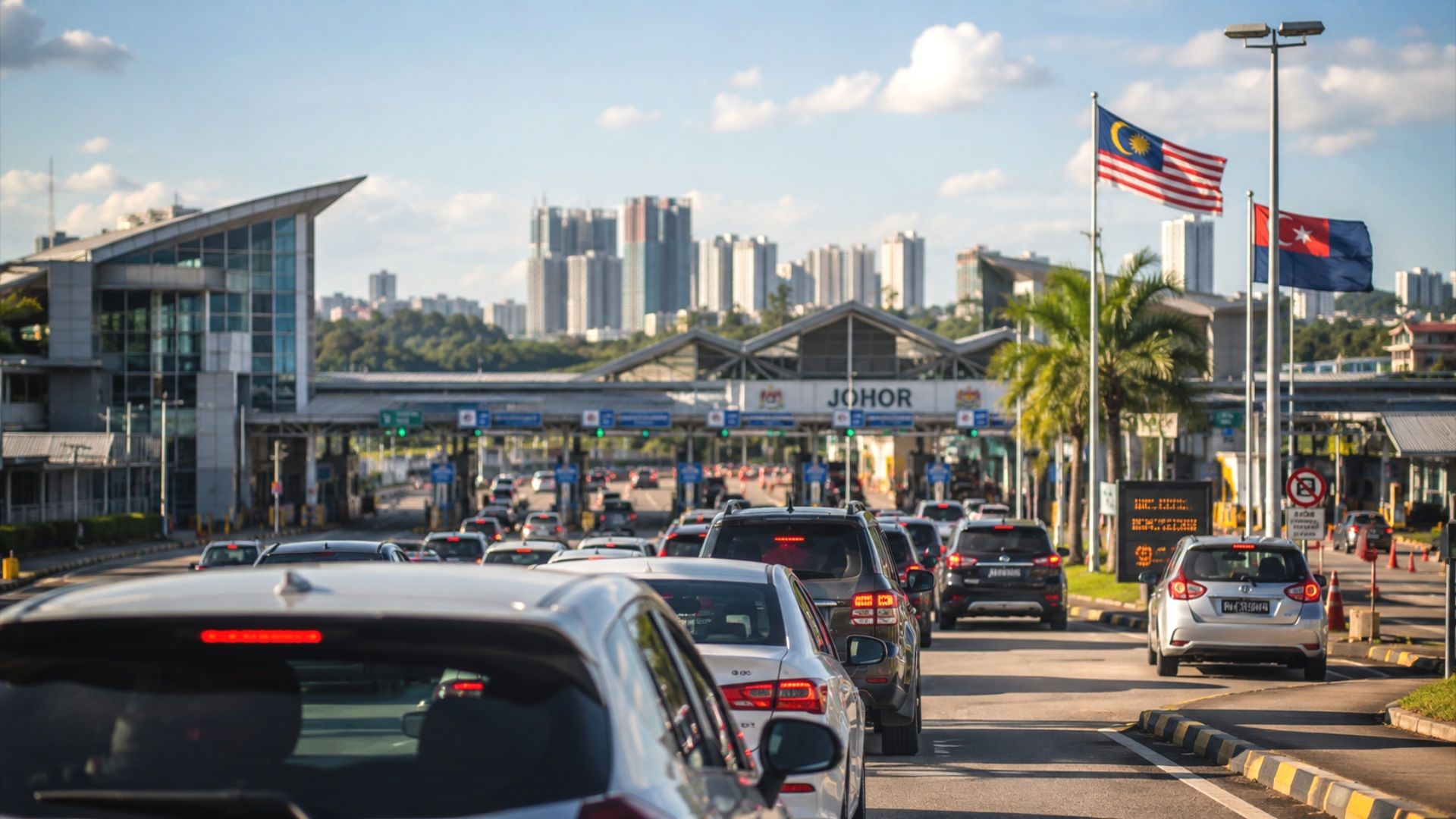

SINGAPORE/MALAYSIA: Malaysia is setting up backup plans in place to keep traffic moving at the Johor-Singapore border during the Johor state election on July 11, as thousands of voters are expected to return home from Singapore.
The country’s Home Ministry has formed a special task force to address any disruptions linked to the ongoing switch from the Malaysian Immigration System (MyIMMs) to the new National Integrated Immigration System (MyNIISe), according to The Star, citing Bernama’s report.
Home Minister Datuk Seri Saifuddin Nasution Ismail said the ministry’s top goal is to make sure voters can cross the border smoothly on polling day. He said both the old and new immigration systems are still in use during the transition, creating a risk of technical problems.
Backup plans are already in place
Mr Saifuddin said the ministry is preparing for various scenarios rather than waiting to react if problems arise.
He said the government has already prepared multiple contingency plans and instructed officials not to leave anything to chance. The ministry wants to avoid disruptions that could slow travel through the Causeway and other entry points on election day.
The Home Minister spoke to reporters at SMK Bandar Dato’ Onn in Johor Bahru on June 27. He was accompanied by Datuk Seri Amirudin Shari, vice-president of PKR, while supporting Pakatan Harapan candidate Dr Maszlee Malik in the Puteri Wangsa state constituency.
Dedicated lanes are being considered
The government is also studying whether dedicated immigration lanes can be introduced for Malaysian voters travelling back from Singapore.
Mr Saifuddin said every practical step that helps Johor voters return home to cast their ballots will be considered. He didn’t confirm whether dedicated lanes will be implemented, but said the ministry is open to measures that can make the journey easier.
Many Malaysians commute daily between Johor and Singapore, so border congestion on polling day could affect both voters and regular travellers if traffic is not managed well.
Border reliability in focus
The preparations follow technical problems with Malaysia’s new immigration system that caused long queues at border checkpoints earlier this year, raising concerns about how future transitions could affect cross-border travel.
With polling day drawing closer, the government’s focus is on keeping traffic flowing while making it easier for eligible voters to exercise their democratic right without unnecessary delays.
From a Singapore perspective, the plan will also be watched closely by commuters and businesses that depend on smooth movement across one of the world’s busiest land crossings. A well-managed border benefits both sides, especially during major events that increase travel demand.
 Follow Google News
 Join us on WhatsApp
 Follow us on Telegram