


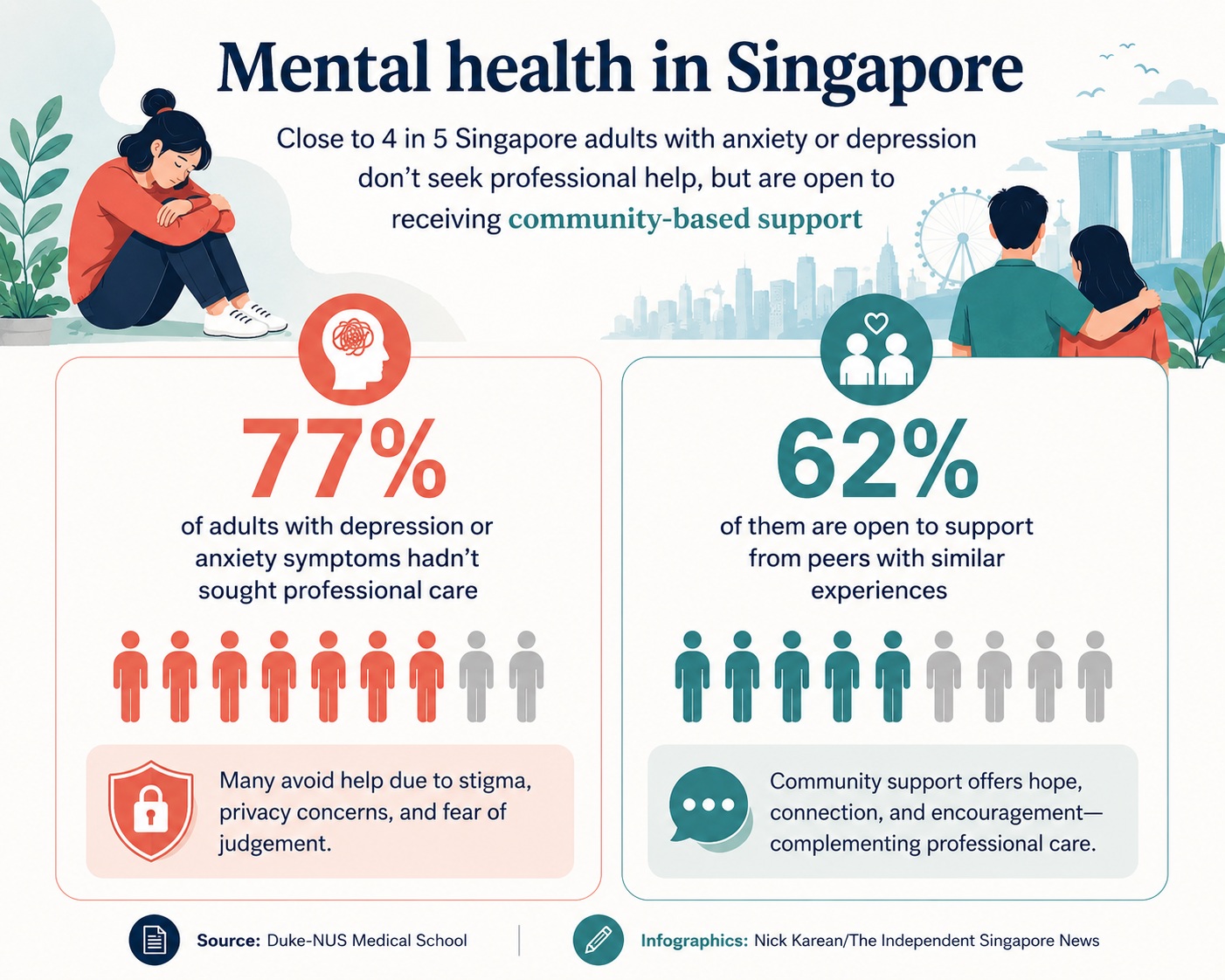
SINGAPORE: Nearly four in five adults in Singapore living with anxiety or depression aren’t getting professional mental health support, according to a new study by Duke-NUS Medical School. Yet many say they would welcome help from someone who has gone through similar experiences, pointing to peer support as one way to close a persistent treatment gap.
The findings, published in the Singapore Medical Journal, come from an online survey of 350 adults experiencing symptoms of anxiety or depression. Researchers said community-based support could complement formal mental healthcare, especially for those reluctant to seek treatment, Channel NewsAsia (CNA) reported (June 25).
Stigma and privacy fears keep many from seeking help
The study found that 77% of respondents hadn’t consulted mental health professionals such as psychiatrists, psychologists or social workers.
Associate Professor Daniel Fung, Senior Consultant at the Institute of Mental Health’s Department of Developmental Psychiatry and a co-author of the study, said that concerns about privacy, confidentiality and workplace judgment are major reasons people avoid seeking help.
Professor Fung said many people still see mental illness as a personal weakness or worry that speaking up could affect their careers. Others dismiss their symptoms as something they should simply cope with. He also noted that many Asian cultures tend to treat emotional struggles as private matters rather than topics for open discussion.
When people delay getting support because of stigma or fear, conditions can worsen before treatment begins, placing greater strain on individuals, families and the healthcare system.
Many are willing to accept help from peers
Although professional treatment is underused, respondents showed strong interest in informal support. The survey found that 62% would be willing to receive support from peers with similar life experiences.
Just over half preferred one-on-one conversations, while 43% said they would be comfortable receiving support online.
Researchers also found that younger adults were generally more open to peer support, likely reflecting greater awareness of mental health. People who had previously received professional care were also more likely to welcome peer support, suggesting both approaches can work together rather than compete.
Those in managerial and professional roles were also more receptive to peer support than non-managerial workers. Researchers suggested this may be linked to greater health awareness, higher workplace stress and fewer informal support networks in senior positions.
Peer support can guide people towards professional care
Professor Eric Finkelstein, Executive Director of the Lien Centre for Palliative Care at Duke-NUS and co-author of the study, said mental health care should be tailored to different people’s needs rather than relying on a single approach.
Professor Finkelstein said peers can provide hope, encouragement and stability during difficult periods. At the same time, he stressed that peer support should never replace trained mental health professionals. Instead, it can encourage people to seek formal treatment earlier and make professional care more effective.
One example comes from the National University of Singapore’s peer support programme. Dr Sven Petersen, Principal Research Scientist in Duke-NUS’ Cancer and Stem Cell Biology Programme and a peer staff supporter at NUS, said many conversations begin naturally through everyday interactions with colleagues.
Having experienced depression and anorexia himself, Dr Petersen now helps create a safe space where colleagues can talk without fear that personal matters will be shared or judged.
Mental health is one of the hardest topics for many people to discuss. Studies like this suggest that making the first conversation easier, whether with a trusted peer or a professional, may be one of the simplest ways to encourage people to seek the help they need.
 Follow Google News
 Join us on WhatsApp
 Follow us on Telegram