
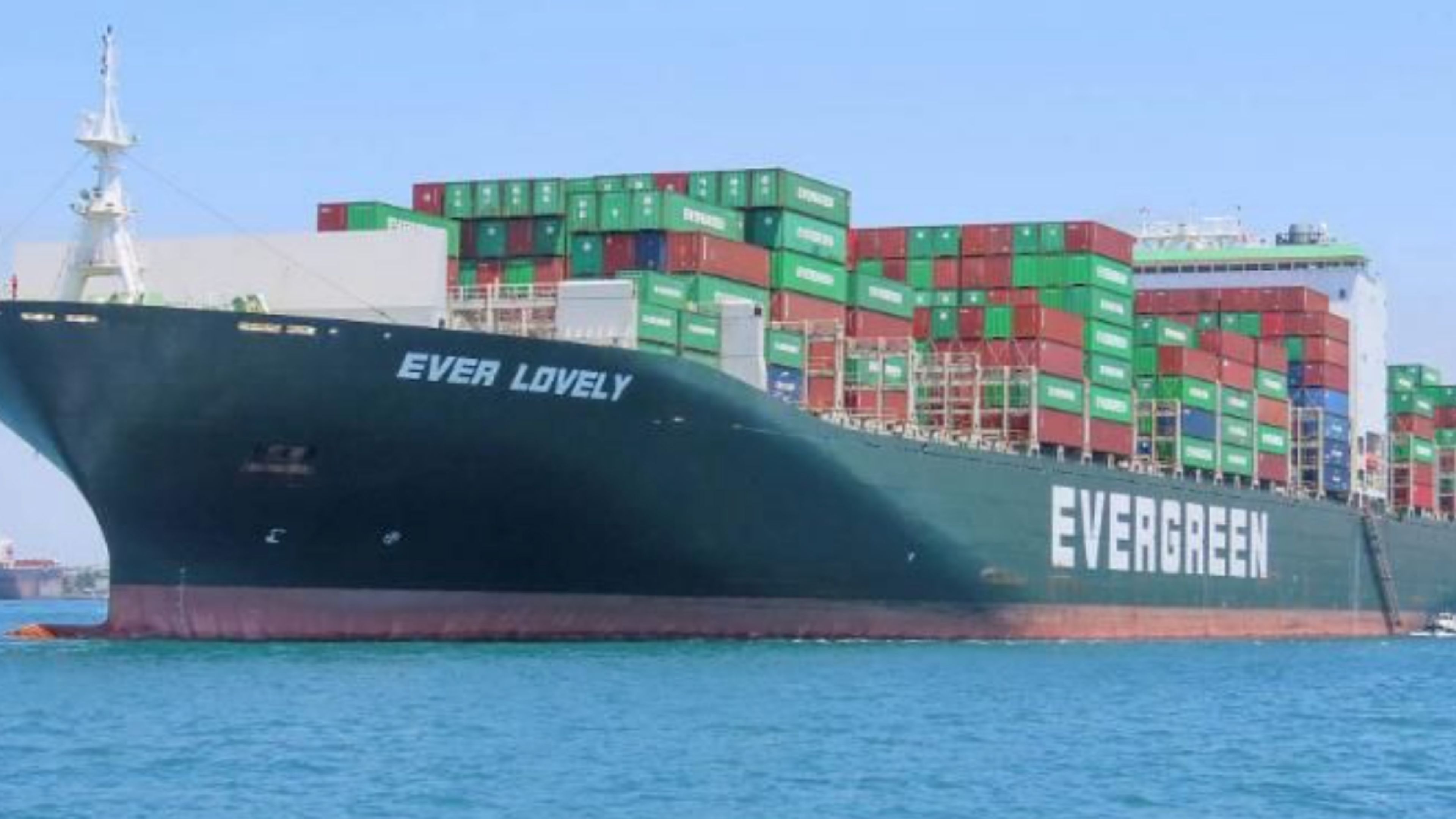

SINGAPORE: The Maritime and Port Authority of Singapore (MPA) has confirmed that a Singapore-registered container ship struck by an unknown object while transiting the Strait of Hormuz sustained only minor damage, with all 21 crew members remaining safe.
In a statement, the MPA said the incident occurred at about 10 p.m. Singapore time on Thursday (June 25) as the Ever Lovely was leaving the Strait of Hormuz. The United Kingdom Maritime Trade Operations (UKMTO), Britain’s maritime security agency, reported that the vessel had been struck by “an unknown projectile” about 7.5 nautical miles southeast of Oman’s Port of Dahit.
There were no injuries among the crew, and no Singaporeans were on board.
The incident followed warnings issued by Iran’s Islamic Revolutionary Guard Corps (IRGC), which had cautioned that ships using an IMO-designated route through the Strait of Hormuz would be considered to be taking an “unacceptable and completely dangerous” course and should instead coordinate with Iranian authorities.
According to US media reports, American officials believe Iranian forces fired on the vessel.
Maritime risk management firm Vanguard said that despite the attack, the Ever Lovely successfully cleared the Strait of Hormuz and has continued its scheduled voyage. The MPA said it is maintaining close contact with the ship’s management company and will continue to provide any necessary assistance.
The authority also expressed deep concern over the incident, describing it as a baseless and unreasonable act that violated international law. It stressed that all actions affecting international shipping must comply fully with international law and must not put the safety of seafarers or vessels at risk.
The attack has also prompted the United Nations’ International Maritime Organization (IMO) to suspend its planned evacuation of more than 11,000 sailors who remain stranded in the Strait of Hormuz.
IMO Secretary-General Arsenio Dominguez said several vessels had already been evacuated under the operation, but the agency had decided to pause the effort until it could be assured that “necessary safety guarantees” remained in place.
In a separate statement, Dominguez claimed that the Ever Lovely “did not transit under IMO’s evacuation framework.”
“I have always reiterated that the safety of the seafarers remains paramount. Therefore, to ensure a coordinated approach and navigational safety, the evacuation plan will be paused until further clarity is obtained,” he said.
Data from ship-tracking website MarineTraffic, reviewed by BBC Verify, showed that the vessel had followed a southern route identified by the IMO on Thursday morning. The Wall Street Journal reported that the Ever Lovely was leading a convoy of four other ships through the waterway.
Seafarers travelling with the flotilla told the newspaper they had received no radio warnings from the Iranian navy before the attack.
The latest incident comes amid ongoing tensions in one of the world’s busiest shipping lanes. Hundreds of commercial vessels and thousands of seafarers have remained stranded in the Gulf since February because of the conflict involving the United States, Israel and Iran.
The IMO had announced a large-scale evacuation effort on Tuesday after the Strait of Hormuz reopened.
The attack also came after the Persian Gulf Strait Authority (PGSA), the Iranian body overseeing the strait, warned that ships sailing outside designated routes would not be guaranteed safe passage.
In a post on X, the PGSA said that any consequences arising from the use of unauthorised routes would be the responsibility of the vessel’s owner, operator and master.
According to reports, many commercial vessels have been using an alternative southern route closer to Oman’s coastline.
Although the United States and Iran agreed last week to end hostilities under a 14-point agreement that included a commitment by Tehran to make its “best efforts” to ensure the safe passage of commercial vessels for 60 days without charge, Iran has continued to maintain that it intends to impose what it describes as maritime service fees rather than transit tolls.
The proposal has been strongly opposed by Washington. US Secretary of State Marco Rubio said earlier this week that no country has the right to impose tolls on the Strait of Hormuz, which he described as an international waterway.
The Strait of Hormuz remains a critical global shipping route, particularly for oil and gas exports. After fighting between the US, Israel and Iran escalated in late February, Tehran effectively closed the waterway, disrupting global energy supplies, delaying shipments of other key commodities such as fertiliser and driving oil prices sharply higher.
However, crude prices have eased significantly since the United States and Iran signed a Memorandum of Understanding on 17 June, launching a 60-day negotiation period covering Tehran’s nuclear programme and measures aimed at ending the conflict. Oil prices briefly fell below US$72.48 per barrel on Thursday before recovering slightly to US$73.23.
 Follow Google News
 Join us on WhatsApp
 Follow us on Telegram