
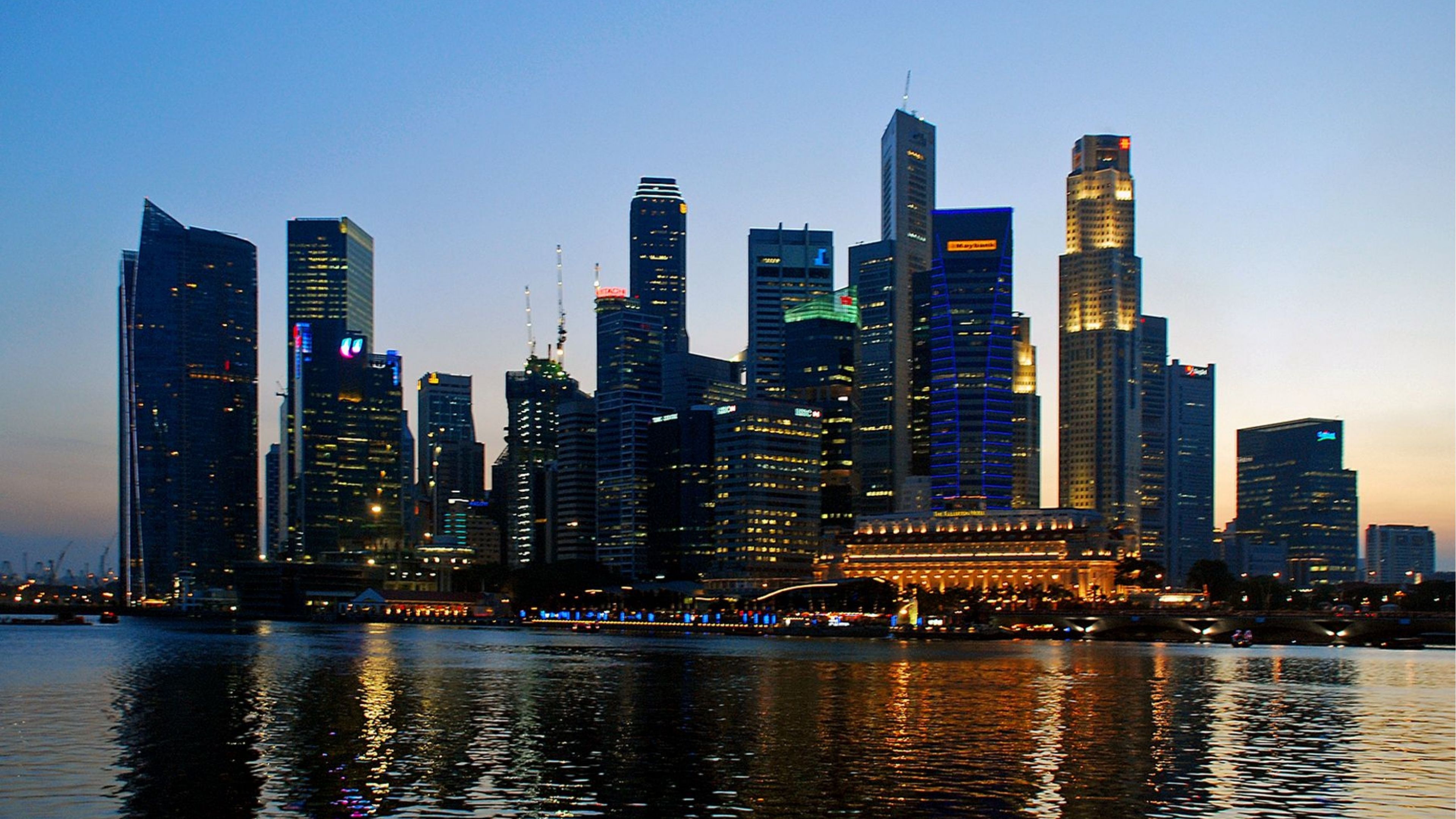

SINGAPORE: Singapore has reclaimed its position as the world’s most competitive economy, climbing from second place last year to top the 2026 IMD World Competitiveness Ranking.
The annual ranking by the Institute for Management Development (IMD), which assesses 70 economies using a mix of economic data and executive survey responses, measures competitiveness across four broad pillars: economic performance, government efficiency, business efficiency, and infrastructure.
Singapore emerged as the overall leader after recording a sharp rise in business efficiency, where it climbed seven places to rank first globally. The country also placed third in both economic performance and government efficiency, while ranking fifth in infrastructure.
Across individual indicators, Singapore ranked second in international trade, productivity and efficiency, scientific infrastructure, and prices.
The country also secured fourth place for public finance, tax policy, international investment, health and environment, and business legislation. It ranked fifth in basic infrastructure, sixth in education, and seventh in institutional framework, societal framework, and management practices.
Not all areas performed equally well. Singapore was ranked 14th for labour market performance, 16th for technological infrastructure, and 23rd for finance. Its weakest result came in attitudes and values, where it placed 69th out of the 70 economies surveyed.
The index highlighted several economic strengths underpinning Singapore’s competitiveness. The economy expanded by 5.0 per cent in 2025, while inflation remained low at 0.9 per cent and unemployment stood at 2.0 per cent. Singapore also topped the world in GDP per capita based on purchasing power parity, at US$163,406.
The Ministry of Trade and Industry noted that Singapore continues to face a range of structural and external challenges, including geopolitical tensions, rapid developments in artificial intelligence, the shift towards a lower-carbon economy, and demographic pressures arising from an ageing population and slower workforce growth.
Hong Kong secured second place in the overall ranking, followed by Switzerland, Taiwan and the United Arab Emirates.
For Switzerland, the latest results marked a notable reversal after holding the top spot in 2025. The European nation slipped to third place, overtaken by both Singapore and Hong Kong.
According to the IMD, Switzerland’s decline highlights the vulnerability of even highly competitive economies to global uncertainty and shifting investment patterns. The country has also faced increasing pressure from external economic factors, including high US trade tariffs and the impact of a strong Swiss franc on investment attractiveness.
Arturo Bris, director of the IMD World Competitiveness Center, pointed to Switzerland’s currency strength as a key factor behind the deterioration in its rankings, “With an expensive currency obviously we see the deterioration in price ranking,” he said. “And you see the biggest decline in the attraction of foreign investment, the under-performance of Switzerland has been really significant.”
Switzerland’s inward direct investment flows turned negative at US$60.7 billion, placing it last among the 70 economies assessed for that measure. IMD noted, however, that the figure could reflect valuation adjustments and capital repatriation rather than a long-term structural shift.
Ivo Germann, head of the Foreign Economic Affairs Directorate at Switzerland’s State Secretariat for Economic Affairs, said the country was facing challenges similar to those confronting many developed economies.
He added that the country would need to continue expanding access to foreign markets through free trade agreements amid growing protectionist trends and a weakening multilateral trading system.
Over the past year, Switzerland’s traditional appeal as a stable destination for capital has also been tested by domestic debates, including proposals to cap the population at 10 million and introduce a 50 per cent inheritance tax on ultra-wealthy residents.
The country, home to major corporations such as UBS and Nestlé, also found itself targeted by the Trump administration over its sizeable trade surplus and was subjected to some of the highest tariff rates imposed on Western nations. Bris said such measures had weighed on sentiment towards the Swiss private sector.
“Tariffs are certainly affecting more those small countries that are more isolated and Switzerland is a victim of that,” he said.
Despite its overall decline, Switzerland retained its position as the world leader in government efficiency and infrastructure, while remaining sixth globally for business efficiency.
The IMD noted that its rankings are primarily based on 2025 macroeconomic data and therefore do not fully reflect the impact of the ongoing conflict involving Iran.
 Follow Google News
 Join us on WhatsApp
 Follow us on Telegram