

SINGAPORE: A report naming CNA and The Straits Times (ST) as Singapore’s two most trusted news brands has sparked scepticism online, with some netizens questioning how the findings square with Singapore’s standing in global press freedom rankings and the close relationship between mainstream media organisations and the state.
The discussion followed the release of the Reuters Institute Digital News Report 2026 on Tuesday (June 16), which ranked CNA as Singapore’s most trusted news brand, giving it a trust score of 78%, up 4% from last year.
The Straits Times, owned by SPH Media Trust, was ranked second with a trust score of 77%.
Mediacorp brands dominated the trust rankings, occupying four of the top five positions. Channel 5 came in third with a score of 76%, followed by Channel 8 at 73%. Mediacorp’s news radio stations rounded out the top five with a trust score of 71%.
Overall trust in news among Singapore respondents remained unchanged at 46%, comfortably above the global average of 37%.
The findings were based on responses from 2,041 people in Singapore. The survey was commissioned by the Reuters Institute for the Study of Journalism, a research centre at the University of Oxford, to examine news consumption patterns, levels of trust, and the role of digital platforms across different markets worldwide.
The Thomson Reuters Foundation, the philanthropic arm of Thomson Reuters, funds the Reuters Institute.
According to the report, samples were assembled using nationally representative quotas for age, gender and region, while education and political quotas were applied in selected countries. Research was carried out by YouGov through an online questionnaire between mid-January and the end of February this year.
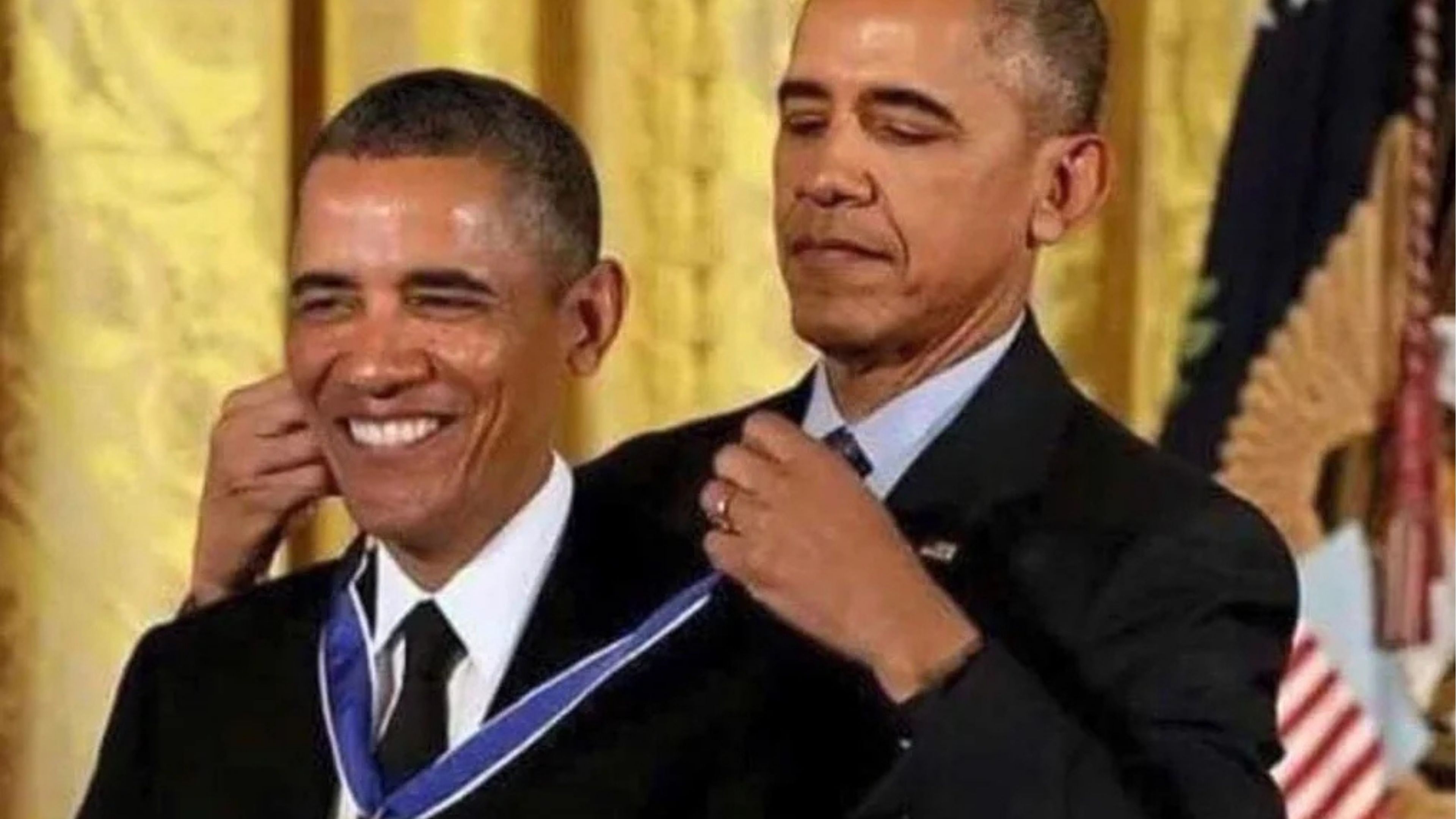
While the report painted a positive picture of trust in Singapore’s mainstream media, reactions online were mixed. Quite a number of commenters online shared this meme showing former US President Barack Obama appearing to give a medal to himself as they reacted to the news:
Several commenters also pointed to Singapore’s position in the world press freedom rankings, with one commenter pointing out, “In other news, Singapore ranks 123rd out of 180 countries in the 2026 World Press Freedom Index.”
Others argued that the achievement was less impressive given the limited competition in the local media landscape.
“Well, it was an extremely low bar to clear anyways,” one person remarked. Another commenter agreed, writing: “Nothing against CNA, but it’s an extremely low bar.”
The Straits Times also came under criticism from some readers, who felt the newspaper’s standards had deteriorated over time.
“ST quality has really nosedived these few decades, is all I can say,” one commenter wrote.
Another was even more critical, claiming: “Since at least the 90s, it has been tremendously biased, if anything, way worse in the past. But only recently has their basic English writing ability really declined.”
Others online were more blunt in their criticism. “It’s trusted because Singaporeans are borderline brainwashed to trust govt-approved media,” one commenter wrote.
“Trust me, bro,” one user quipped, while a number of netizens dismissed the rankings as “Ownself praise ownself,” invoking a commonly used Singaporean phrase implying self-congratulation.
Another commenter said, “the best kinda praise…is self-praise”.
Others asked how mainstream media can be trusted, given its longstanding links to the Government. Mediacorp is fully owned by Singapore’s sovereign wealth fund, Temasek Holdings. There is also a strong public perception that Singapore Press Holdings (SPH), which publishes ST, is the “mouthpiece of the Government”.
A US diplomatic cable leaked by WikiLeaks several years ago caused a stir after it quoted a former ST bureau chief for the US as saying that SPH’s “editors have all been groomed as pro-government supporters and are careful to ensure that reporting of local events adheres closely to the official line”.
Former SPH chief editor Cheong Yip Seng’s famous book ‘OB Markers: My Straits Times Story’ also laid out alarming details of the Government’s interference in SPH’s newsrooms.
Mr Cheong wrote that once, Singapore’s founding Prime Minister warned him that “If you print this, I will break your neck”. Mr Cheong wrote: “I was taken aback by his thunderbolt…It was my first taste of Lee Kuan Yew’s ways with the media…Thankfully, not every encounter would be as bruising as (that)…but there were many occasions when the knuckleduster approach was unmistakable.”
Mr Cheong also revealed that the Government threatened to install a “GTO (government team of officials)” in the SPH newsroom and eventually placed S. R. Nathan as a monitor to watch whether the “newsroom was beyond control.”
Mr Nathan, Director of the Security and Intelligence Division and later President of Singapore, served as SPH’s Executive Chairman from 1982 to 1988.
Mr Nathan is not the only SPH director to have close ties with the Government. SPH’s first President (1994–2002) was Tjong Yik Min, former chief of the Internal Security Department. The immediate former Chairman of SPH, Tony Tan, was Deputy Prime Minister of Singapore from 1994 to 2005 and President of Singapore from 2011 to 2017.
SPH personnel’s relationships with the ruling People’s Action Party (PAP) are not something that totally belongs in the past. Mr Cheong revealed that Warren Fernandez, who oversaw most of SPH’s print publications, including the ST, until 2022, was scouted out by the PAP.
Revealing that Mr Fernandez was about to be selected as a PAP candidate during the 2006 General Elections, Mr Cheong wrote that “senior PAP leaders had been impressed with (Warren Fernandez’s) work for us. His columns in particular have been generally supportive of PAP policies.”
Mr Cheong asked the Prime Minister whether Mr Fernandez could be kept at the ST “unless he was earmarked for higher office, but the PM’s response was that he needed Eurasian representation in parliament”.
Mr Lee Kuan Yew apparently agreed to keep Mr Fernandez out of the PAP’s line-up in the end.
 Follow Google News
 Join us on WhatsApp
 Follow us on Telegram