
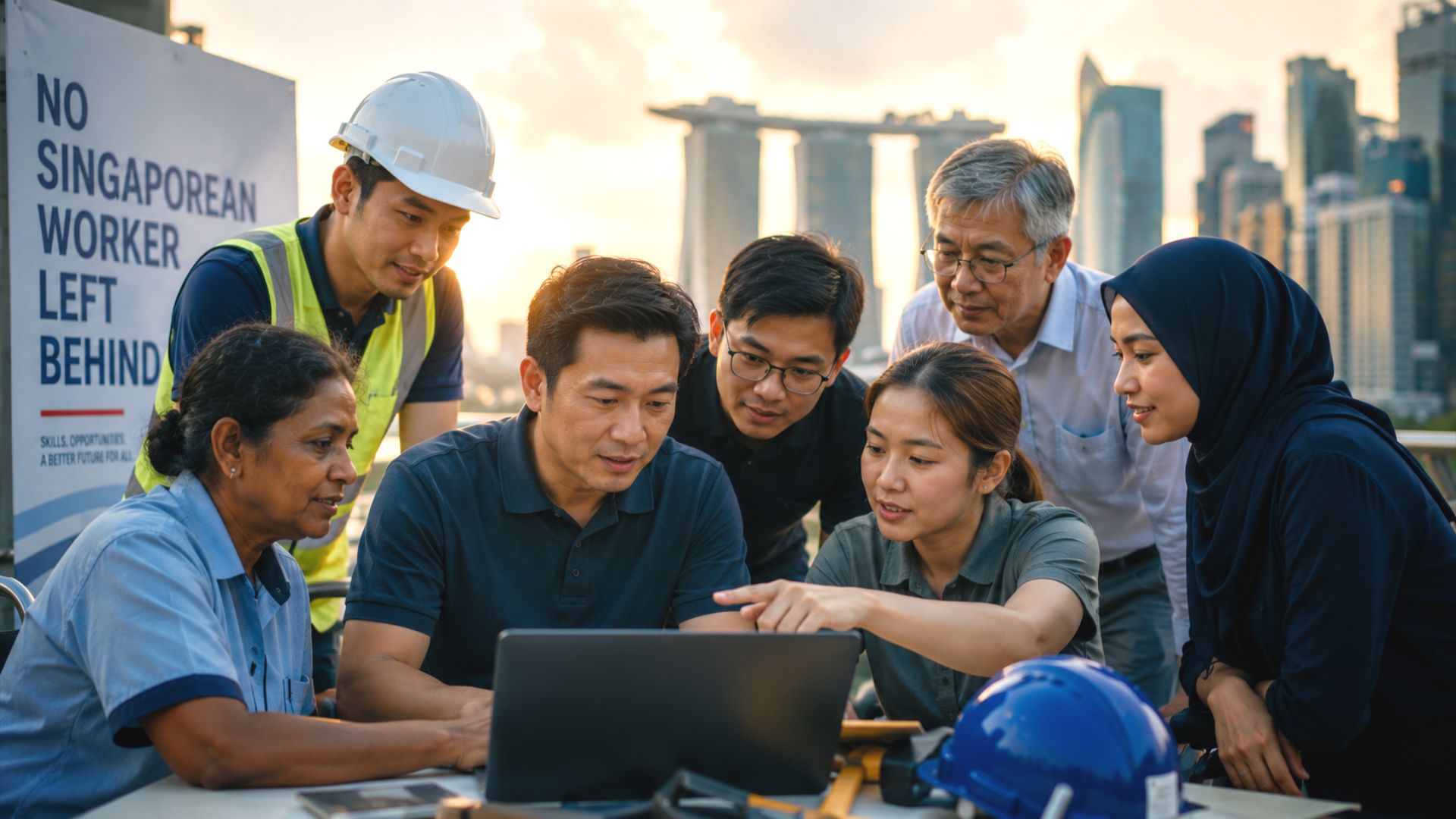

SINGAPORE: Singapore has taken its message on artificial intelligence (AI) and jobs to the global stage, arguing that workers must remain at the centre of the technology progress rather than becoming casualties of it.
Speaking at the 114th International Labour Conference in Geneva on June 8, National Trades Union Congress (NTUC) President K Thanaletchimi told delegates that AI’s benefits must be shared widely and that workers facing the biggest risks shouldn’t be left behind. According to the Union of Security Employees (USE), her remarks were made during discussions about how AI is reshaping work around the world.
The debate follows growing concerns worldwide that AI could automate tasks faster than workers can adapt, particularly in office, administrative, and entry-level roles. Governments, employers, and unions are increasingly grappling with how to balance innovation with job security.
Workers should have a voice at the outset of AI transitions
At the heart of Singapore’s approach is the newly formed Tripartite Jobs Council (TJC), which brings together NTUC, the Singapore National Employers Federation (SNEF) and the Ministry of Manpower (MOM).
Rather than waiting for disruption to happen, the council is designed to discuss AI’s impact on jobs before major changes take place.
Ms Thanaletchimi said this mirrors Singapore’s long-standing tripartite model, where workers, employers, and the Government work together on major economic issues. She said workers should have a voice at the outset of transitions, rather than being consulted only after decisions have already been made.
The council was introduced shortly after Parliament unanimously backed a motion on ensuring an AI transition that doesn’t result in “jobless growth,” a term used when economies expand but employment opportunities fail to keep pace.
Women, younger and older workers, face the biggest challenges in AI adoption
Ms Thanaletchimi identified several groups she believes face greater risks as AI adoption grows. Women are more exposed to automation in some sectors while continuing to be underrepresented in technology fields where AI systems are designed.
Younger workers may find it harder to secure entry-level jobs if routine tasks become automated. Older workers, meanwhile, may face pressure to keep their skills current as technology changes rapidly.
Rather than treating these concerns as theoretical debates, she said they are real worries among unionised workers. The findings from international studies show that AI is expected to reshape jobs unevenly, affecting some sectors and demographic groups more heavily than others.
AI training and support take centre stage to help workers stay employed
To help workers prepare, NTUC pointed to initiatives such as AI-Ready SG, which offers training pathways, works with technology firms to encourage AI adoption, and helps workers build new skills.
Another programme, AI Career Coach, provides personalised career guidance and job-matching support.
The message from the labour movement is straightforward: adapting to AI should not be left entirely to workers themselves. Support systems must be available throughout the transition.
Ms Thanaletchimi also stressed that skills training alone is not enough. She argued that worker protections must keep pace with changes in employment arrangements.
She pointed to Singapore’s Platform Workers Act, which gradually extends Central Provident Fund (CPF) contributions, work injury compensation coverage and collective representation rights to platform workers from 2025 onwards. According to her, similar thinking may be needed as AI continues to blur traditional employment arrangements.
Government: “Technology must always serve people, and not the other way around…”
Singapore’s Government delivered a similar message during the conference. Speaking as Singapore’s Government delegate, Manpower Minister Tan See Leng said the real challenge is how societies manage the transition so workers stay protected and included.
“Technology must always serve people, and not the other way around,” he said. He outlined Singapore’s AI journey, from the launch of the National AI Strategy in 2019 to its refresh in 2023 and the creation of a National AI Council this year, chaired by Prime Minister Lawrence Wong.
Mr Tan also announced the formation of a new Skills and Workforce Development Agency (SWDA), created through the merger of two existing agencies. The new body will integrate skills training, career guidance and job-matching services more closely.
Workers will also gain access to AI readiness assessment tools, while selected AI courses will come with six months of complimentary access to premium AI software for hands-on learning.
AI and technology work best when people remain the priority
The conversation around AI is increasingly about who benefits from it and who may be left behind. Singapore’s position is that economic growth and worker protection should go hand in hand.
Whether that approach succeeds will depend on how effectively workers can reskill and how fast support systems adapt as AI becomes more deeply embedded across industries.
The concern for many workers is whether opportunities, training and protections can keep pace. As Singapore’s leaders debated in Geneva, technology works best when people remain the priority.
 Follow Google News
 Join us on WhatsApp
 Follow us on Telegram