
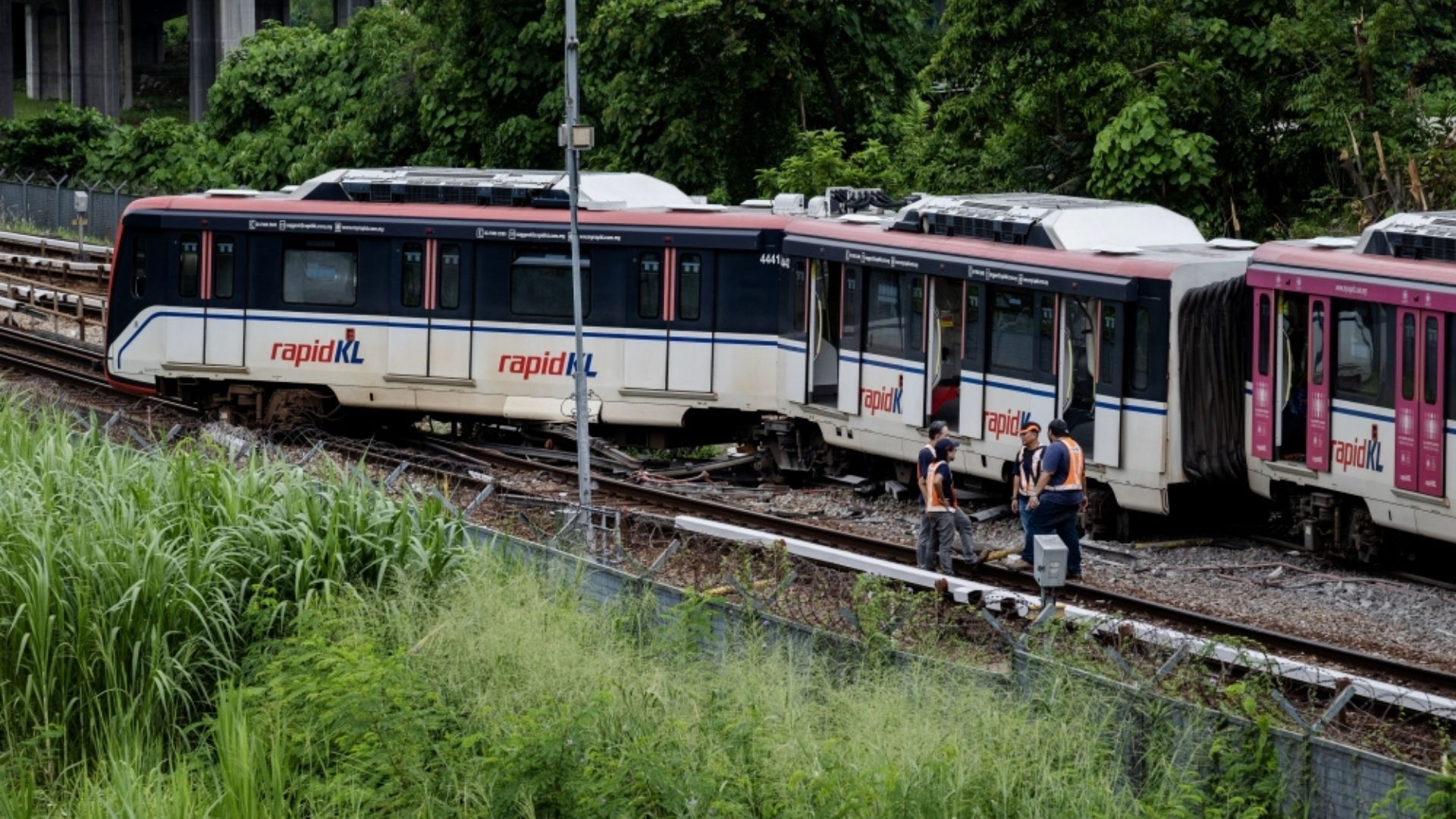

MALAYSIA: Transport Minister Anthony Loke ordered “maximum” punitive action against Prasarana Malaysia Bhd after an LRT derailment near Chan Sow Lin station, stressing no top management member will escape accountability.
He called the incident on the Ampang–Sri Petaling Line “very serious,” directing APAD to investigate and a special task force to report findings to the Cabinet. Though all 25 passengers were safely evacuated, Loke warned that safety standards cannot be compromised in public transport.
Just weeks after repeated breakdowns on the Kelana Jaya Line, Malaysian commuters now face disruptions on another LRT route. The latest incident has intensified public frustration and raised deeper concerns about the overall reliability of the country’s public transport system. With problems spreading across multiple lines, confidence in Malaysia’s rail services is eroding further.
Social media frustration continues to mount over Malaysia’s rail reliability. On X (formerly Twitter), one user went as far as urging Transport Minister Anthony Loke to resign, reflecting growing anger among commuters who feel train services have deteriorated in recent years.
While many echo this sentiment, others argue that the resignation of the transport minister won’t solve systemic issues.
Another commenter argued that Transport Minister Anthony Loke should not be solely blamed for recurring rail issues, noting that Prasarana and Rapid KL’s leadership also bear responsibility.
He suggested public scrutiny focus on the operator’s management quality rather than calls for ministerial resignation. The user added that Malaysia’s public transport problems are not new, pointing out similar breakdowns during former Prime Minister Najib Razak’s administration.
Public transport enthusiasts are weighing in on the derailment’s impact. One more X user noted that the damage is extensive, with power systems needing restoration and repairs likely to take a few days.
He observed that the tracks appear dented, which may complicate recovery efforts. Despite this, the silver lining is that the rolling stock involved in the accident was not severely damaged and does not need to be written off.
Many commuters are surprised that the derailment struck the Ampang/Sri Petaling Line, which has generally avoided the chronic issues plaguing the Kelana Jaya Line. The incident has shaken public confidence even further than before, as this line was seen as relatively stable compared to its troubled counterpart.
Malaysians hope the disruption will serve as a ministerial wake‑up call, prompting stronger oversight and reforms to prevent similar accidents in the near future.
 Follow Google News
 Join us on WhatsApp
 Follow us on Telegram