
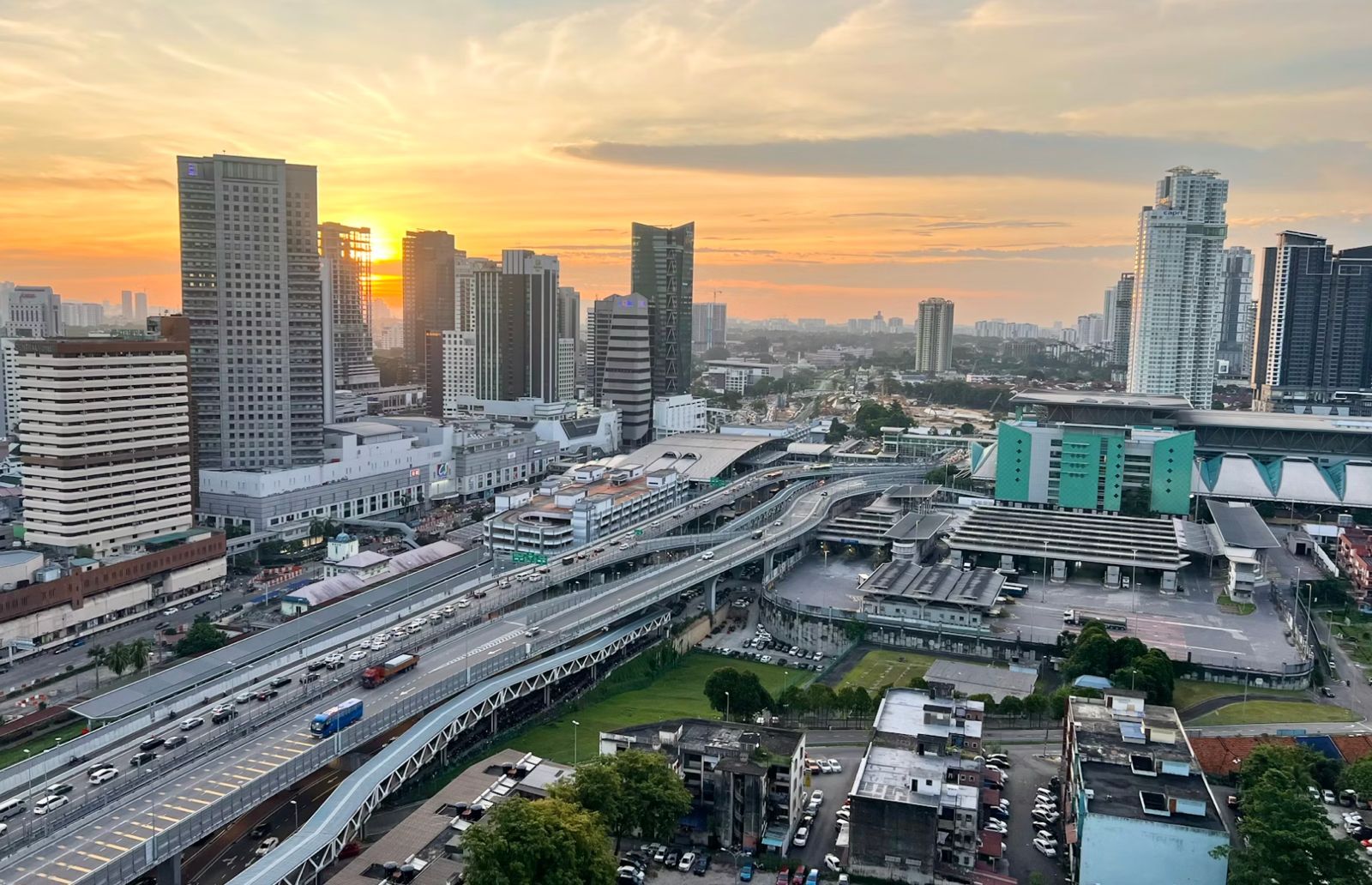

JOHOR BAHRU: The Johor Bahru–Singapore RTS Link is 90% complete, with launch set for January 2027. Heavy construction is finished, and system installation is underway. Malaysia’s Transport Minister Anthony Loke confirmed testing begins later this year, while fare proposals are expected by year‑end. Daily ridership could reach 40,000 commuters.
Social media users have voiced concern over the Johor Bahru side of the RTS Link, criticising its lack of pedestrian‑friendly design. A rapid transit system is meant to prioritise walkability and efficiency, yet Malaysians often encounter MRT stations isolated from residential areas, making accessibility a recurring frustration.
On X, one citizen criticised the RTS project’s large budget, arguing it “fails” to grasp the basics of human accessibility and comfort. To illustrate his point, he shared an AI‑generated photo showing how the Johor station could look if designed with passenger convenience and pedestrian‑friendly features in mind.
Moreover, another said that the Johor Bahru RTS station design is not pedestrian-friendly as planners are opting for more “spaghetti junctions.” The comment highlights Malaysia’s broader issue of car‑centric urban planning, which extends beyond Johor Bahru to most major cities, particularly Kuala Lumpur, where walkability remains limited.
Also, another predicted that the Johor Bahru side of the RTS could descend into a “third world” chaotic mess. He argued that Malaysia must learn from Singapore’s example, where accessibility and walkability are prioritised, to ensure the project delivers true commuter convenience rather than car‑centric congestion.
Following that, it is said that most Malaysians are “lazy” to walk around neighbourhoods and the town centre. A complaint states that the easy access to cars and having literal highways in neighbourhoods has normalised Malaysians to rely completely on their cars. Having affordable second-hand cars is possibly a contributing factor to such architectural designs.
Such car‑centric designs are unlikely to change in Malaysia anytime soon, as convincing an entire generation to abandon reliance on cars will be difficult. While speculation continues about the Johor Bahru RTS station’s accessibility, its true impact on commuters and urban flow will only be clear once it officially opens.
 Follow Google News
 Join us on WhatsApp
 Follow us on Telegram