
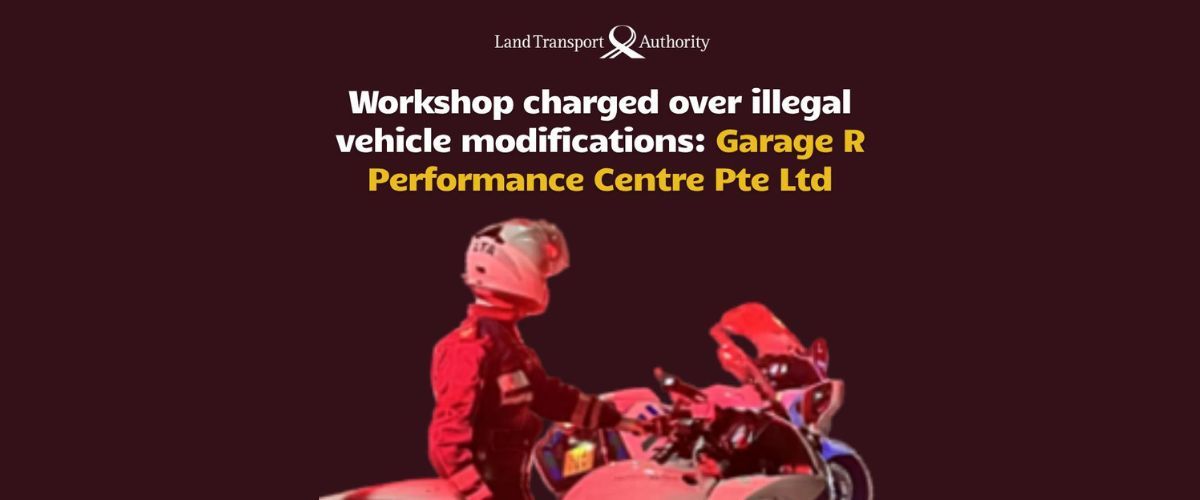

SINGAPORE: The Land Transport Authority (LTA) has issued a fresh warning against illegal vehicle modifications, following enforcement action against a local workshop and the introduction of tougher penalties.
In a Facebook post on April 8, 2026, LTA reiterated that it is an offence to modify vehicles illegally, stressing that such actions can compromise road safety and violate regulatory standards.
Workshop fined for repeated offences
On March 26, 2026, Garage R Performance Centre Pte Ltd was fined S$6,000 after being found to have illegally modified vehicle exhaust systems on five separate occasions between 2022 and 2025. The case is part of a broader enforcement effort. Since 2021, a total of 26 workshops have been charged in court for carrying out these illegal vehicle modifications, sometimes referred to as “mods.”
These mods, particularly those that involve changes to a vehicle’s exhaust systems, can result in excessive noise pollution, increased emissions, and potential safety risks. Regulated modifications are subject to approval processes to ensure that vehicles remain compliant with safety and environmental standards. Unauthorised changes bypass these safeguards, which is why enforcement remains a priority for authorities.
LTA’s actions signal a continued clampdown on workshops that attempt to flout these regulations.
Tougher penalties now in force
Penalties for illegal vehicle modifications were increased from February 27, 2026, in a move aimed at deterring both individuals and businesses from breaching the rules.
Individual offenders now face fines of up to S$20,000, imprisonment of up to two years, or both. For non-individuals such as workshops, fines can reach up to S$40,000. Repeat offenders face even steeper consequences, with penalties doubled under the revised framework.
The stricter measures reflect LTA’s intent to take a firmer stance against illegal modifications, especially as such practices can undermine road safety and environmental standards.
Netizens question fairness and enforcement
The announcement has sparked debate online, with some netizens expressing frustration over what they perceive as inconsistencies in enforcement.
One commenter pointed out the difficulty of complying with legal modification processes, saying that “legal exhaust need go through so much paperwork” and that even after approval attempts, modifications may still fail due to technical mismatches. This sentiment suggests that complexity in regulations may be pushing some towards illegal alternatives.
Others raised concerns about perceived disparities between local and foreign vehicles. One netizen remarked that “local cars have to abide [by] all local laws while foreign cars with full tinting & loud exhaust can drive into Singapore daily,” reflecting a view that enforcement may not be evenly applied.
Similar frustrations were echoed in comments such as “Malaysian bikers and their lorry drivers are laughing at us” and calls for authorities to “enforce the vehicles from across the longkang that come into Singapore,” highlighting cross-border enforcement concerns.
Another user questioned regulatory oversight more broadly, asking why heavily tinted foreign vehicles are still able to enter Singapore, suggesting a perceived gap between policy and on-ground enforcement.
While LTA’s latest actions and stricter penalties demonstrate its commitment to maintaining road safety and regulatory standards, public reactions show that enforcement remains a sensitive issue. Concerns over fairness, regulatory complexity and cross-border consistency continue to shape the conversation, even as authorities push ahead with tighter rules aimed at keeping Singapore’s roads safe and compliant.
Read also: CASE and LTA launch new accreditation scheme, raising safety standards in car-sharing industry
 Follow Google News
 Join us on WhatsApp
 Follow us on Telegram