
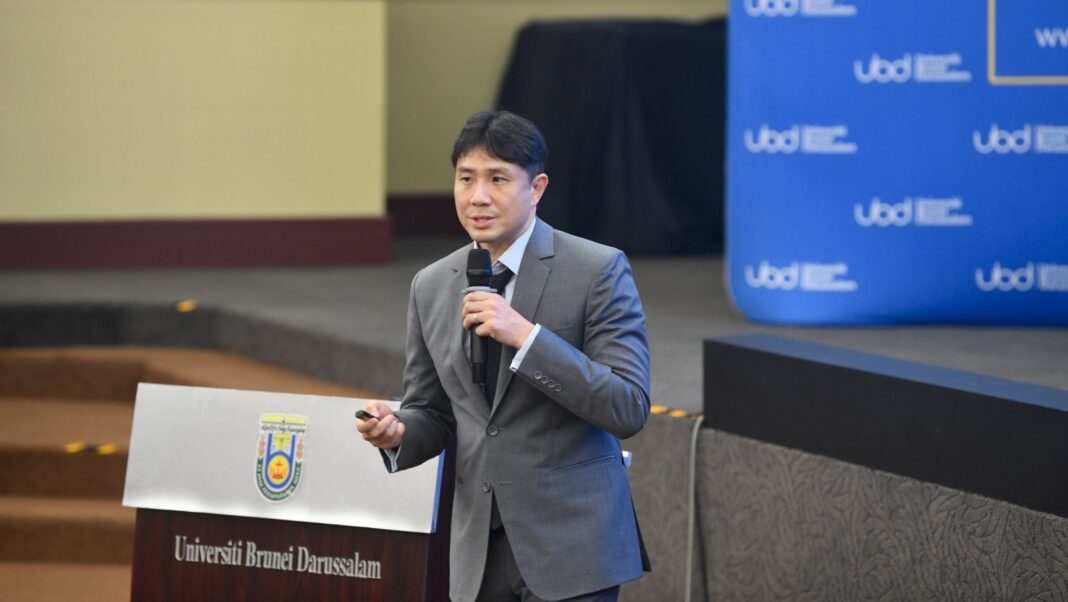

SINGAPORE: Jamus Lim, an Associate Professor of Economics at ESSEC Business School, was the keynote speaker at the Brunei Economic Forum on Sep 3.
Dr Lim is a Member of Parliament with the Workers’ Party who recently began his second term representing the Anchorvale ward in Sengkang.
The forum’s aim is to look into how small countries such as Brunei can advance innovation, resilience, and sustainable development amid the current economic situation.
“I spoke about rising geopolitical pressures in a multipolar world, and how small economies (like Brunei and, for that matter, Singapore) might navigate this evolving global landscape,” Dr Lim wrote in a Facebook post earlier this week.

He stayed on in Brunei to share research on property rights and long-term economic performance at the Universiti Brunei Darussalam’s economics department.
In his post, Dr Lim pointed out that because of oil, Brunei is a high-income country. The resource, he added, was responsible for transforming Brunei from one of the poorest to one of the richest nations in the world.
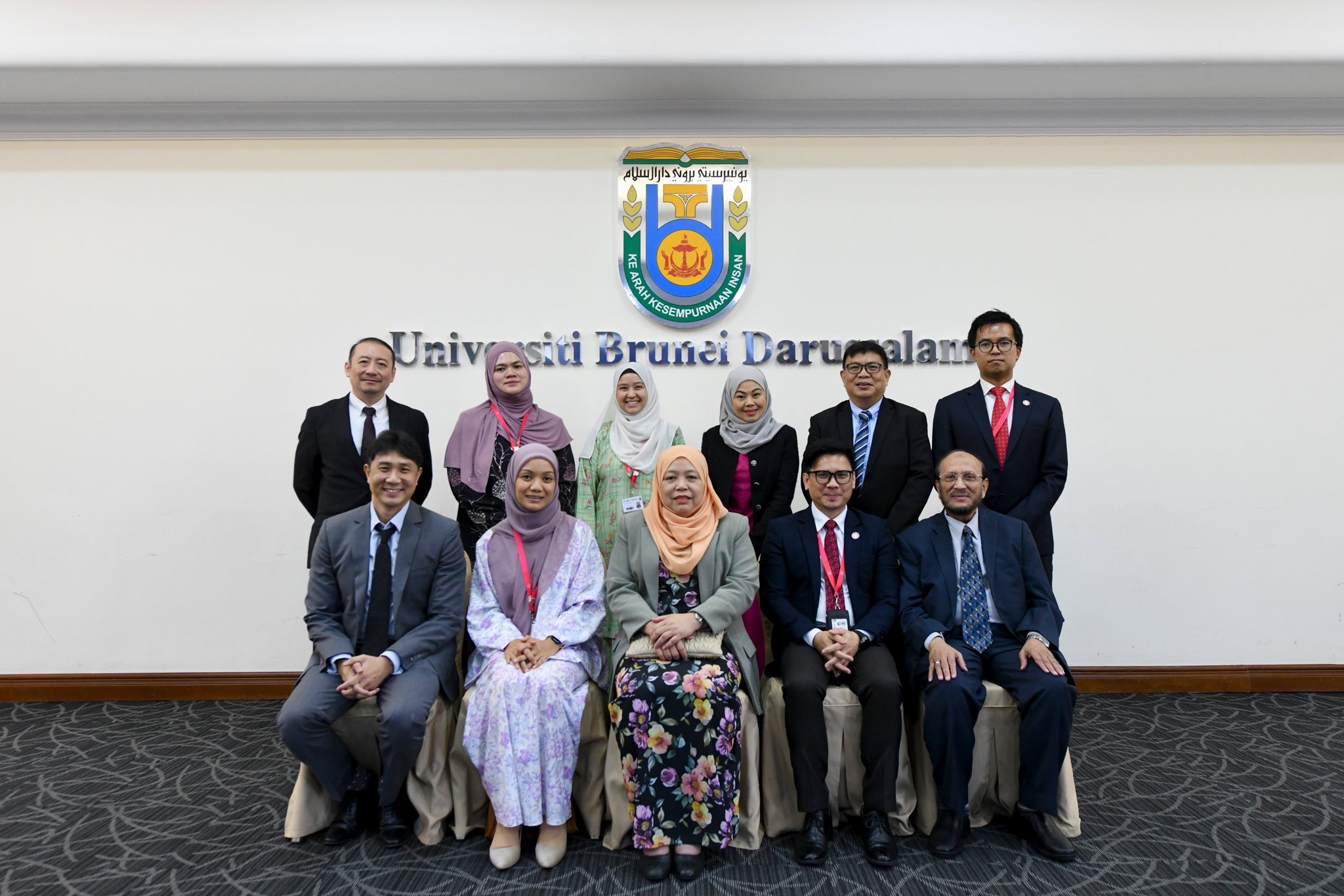
He wrote, however, that although the country may have deep oil and gas reserves, it is time to diversify beyond natural resources. Non-renewable resources such as oil and gas may become “stranded assets” in a world increasingly turning towards electricity, he said. Brunei’s policymakers are aware of this, he added.
Dr Lim recounted that Bruneian dollars often circulated freely in Singapore when he was a child, though this is not so common today. Since Jun 12, 1967, Brunei and Singapore have had a Currency Interchangeability Agreement, which means that in both countries, the two currencies can be exchanged at par without charge. Because of this, Brunei dollars are accepted in Singapore as “customary tender,” and vice versa.
He noted that because Singapore and Brunei had similar economic paths throughout the last century, it could be said that this was a good economic choice.
When asked if this remained the case, he wrote: “The choice is that of the Bruneian authorities, but from an economic perspective, it’s useful to consider whether the relatively strong exchange rate position and lack of monetary policy flexibility are still serving the needs of an economy seeking economic diversification, especially since inflation credibility seems to be reasonably assured already.” /TISG
Read also: Jamus Lim: Future of world trade will lean towards regional blocs, rather than hyperglobalisation
 Follow Google News
 Join us on WhatsApp
 Follow us on Telegram