
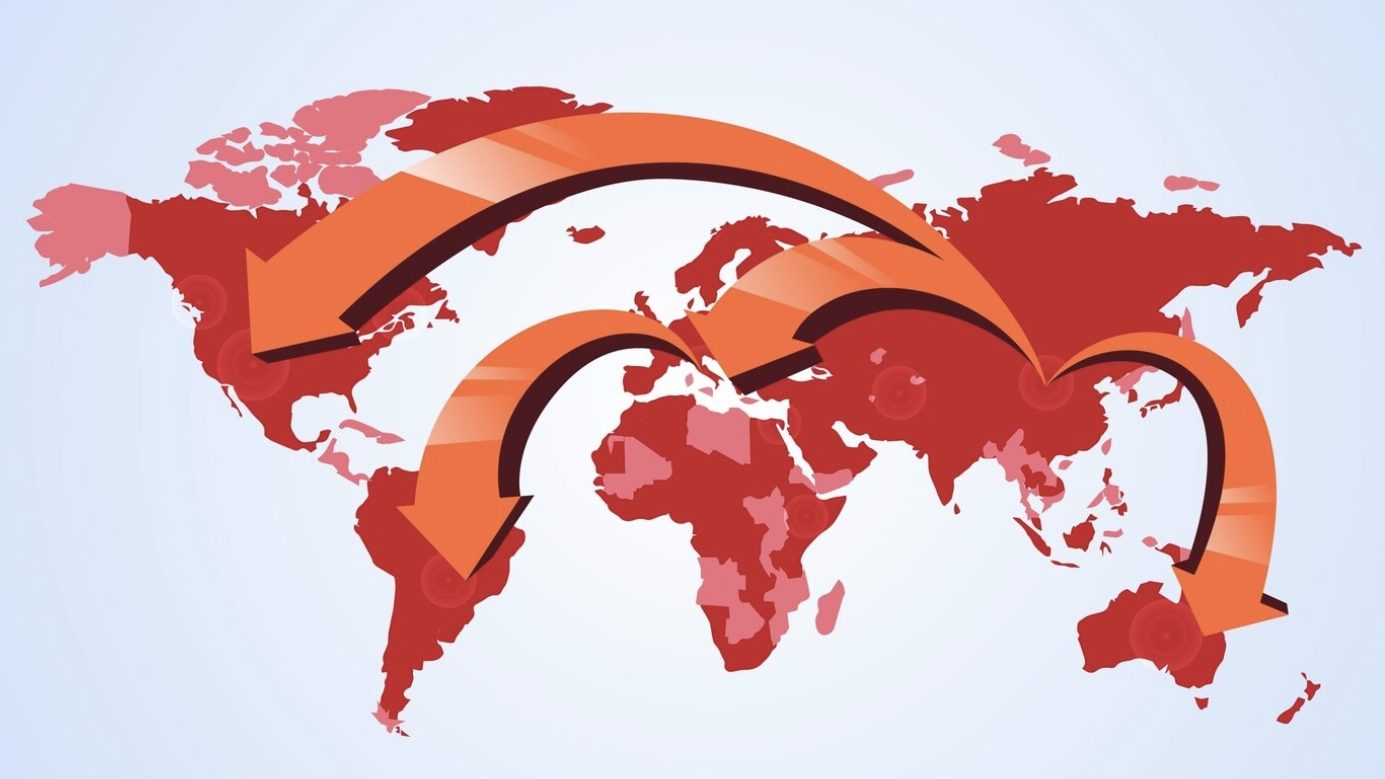

SINGAPORE: “Singapore-washing” is not a new phenomenon, but a recent Financial Times (FT) article underlined that it is perhaps more prevalent than ever.
Global companies from China established themselves in countries such as Singapore, Ireland, Mexico and Hungary that are not aligned with either the United States or China.
Setting up shop in Singapore allows firms to distance themselves from their country of origin, known as “Singapore-washing.” This strategy allows firms to repurpose or dilute their identity, FT added.
This strategy makes the companies more acceptable to the regulators of countries opposed to China, including the United States.
FT gave the example of Yuxiao Fund, a Chinese company based in Singapore that has endeavoured to gain control of military-use mineral assets in Australia.
A neutral bid from Singapore with a well-respected legal system was designed to minimize suspicions about China in Australia.
The Australian government, however, blocked Yuxiao Fund’s efforts, saying it was cautious of allowing “a foreign entity, especially one with strong links to the Chinese Communist Party, to control a critical national resource”.
However, more companies appear to be going a similar route to avoid being subject to protectionist measures imposed by Western countries. One well-known company through “Singapore washing” is Shein, founded in Nanjing, China in 2008.
Just fourteen years later, the company became the biggest fast-fashion retailer globally, controversy over alleged sweatshops and child labour notwithstanding.
Shein moved its headquarters to Singapore in 2022 and, as FT says, is defined as a “Singapore-headquartered global online fashion and lifestyle retailer” on its website.
It is now worth US$66 billion (S$85.89 billion).
The International Monetary Fund (IMF) has said that connector countries like Singapore are “rapidly gaining importance and serving as a bridge,” leading to an influx of investment and trade.
Singapore may serve this purpose in China, which is averse to Chinese investment abroad and has shut down more than 100 apps in the past four years. It has also launched a number of regulatory investigations against Chinese tech firms.
FT quoted an associate professor of political science at the National University of Singapore and a non-resident scholar with Carnegie China, Ja-Ian Chong, saying:
“There is a track record of Singapore becoming a cover for companies with questionable ties to China and even the Chinese state.” /TISG
Read related: China AI startups target Singapore as prime destination for global expansion
 Follow Google News
 Join us on WhatsApp
 Follow us on Telegram