
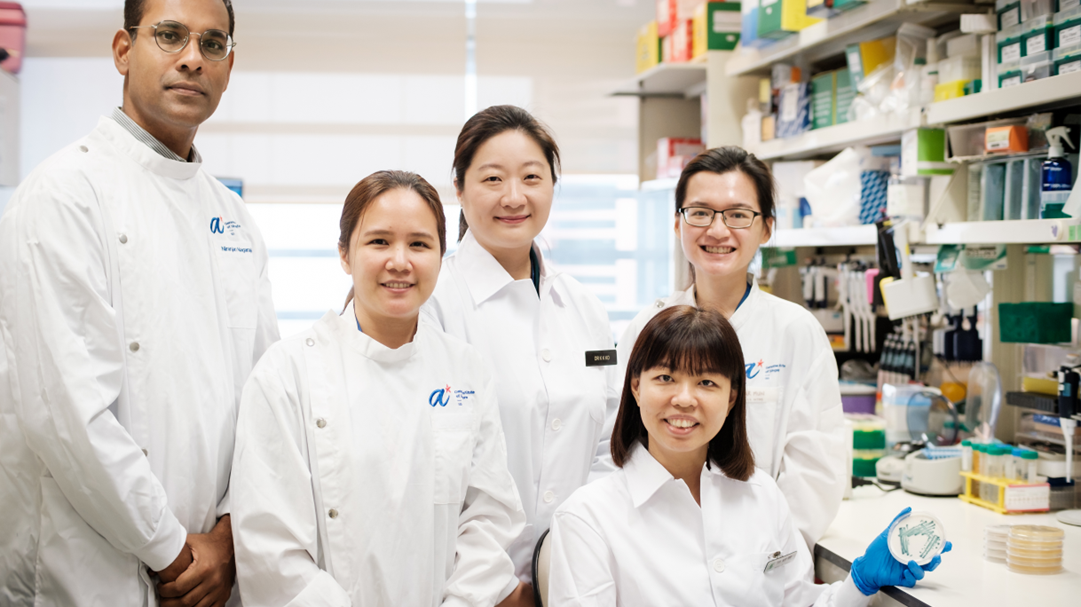

SINGAPORE: A team of scientists from Singapore General Hospital (SGH), A*STAR’s Genome Institute of Singapore (GIS), and the Yong Loo Lin School of Medicine at the National University of Singapore (NUS Medicine) has identified a previously unknown clade of Candida auris (C. auris).
This discovery marks the sixth clade of this highly transmissible and drug-resistant fungus to be identified globally. C. auris is a significant threat to public health due to its high transmissibility and resistance to standard antifungal treatments.
Primarily affecting patients with serious underlying health conditions, it can cause a range of infections, from superficial skin infections to life-threatening bloodstream infections.
Patients using invasive medical devices, such as breathing or feeding tubes and catheters, are particularly vulnerable to infection. The World Health Organization (WHO) has recognized C. auris as a critical priority for research and public health intervention since 2022.
Similarly, the U.S. Centers for Disease Control and Prevention (CDC) has labelled C. auris as an “urgent antimicrobial resistance threat” due to its increasing resistance to available treatments.
The new clade was first detected in 2023 when an SGH patient tested positive for C. auris. Unusually, the patient had not travelled abroad for two years, a characteristic typically associated with C. auris infections. This prompted researchers to investigate further.
Using machine learning techniques developed by scientists at A*STAR’s GIS, the team reconstructed and analyzed the fungal genome, confirming that this strain of C. auris belonged to a previously unidentified clade.
Upon further review of SGH’s patient records, two other cases were found, strengthening the evidence for the existence of this new clade.
The discovery was documented in a paper titled “Detection and Characterisation of a Sixth Candida auris Clade in Singapore: A Genomic and Phenotypic Study,” published in the peer-reviewed journal The Lancet Microbe.
As Singapore is an international hub with significant global connectivity, the discovery of this new clade highlights the need for enhanced surveillance of emerging pathogens.
To this end, the research team is developing a proof-of-concept machine learning system to automatically detect new clades of C. auris and other infectious diseases early.
This approach could be crucial in identifying emerging public health threats before they become widespread.
“Genomic surveillance is essential for understanding emerging pathogens,” said Associate Professor Niranjan Nagarajan, the senior author of the study.
Nagarajan, who is part of the Infectious Diseases Translational Research Programme at NUS Medicine and a senior leader at A*STAR’s GIS, emphasized the importance of integrating genomics, metagenomics, and collaborative efforts between researchers and clinicians to improve pandemic preparedness and public health responses. /TISG
 Follow Google News
 Join us on WhatsApp
 Follow us on Telegram