
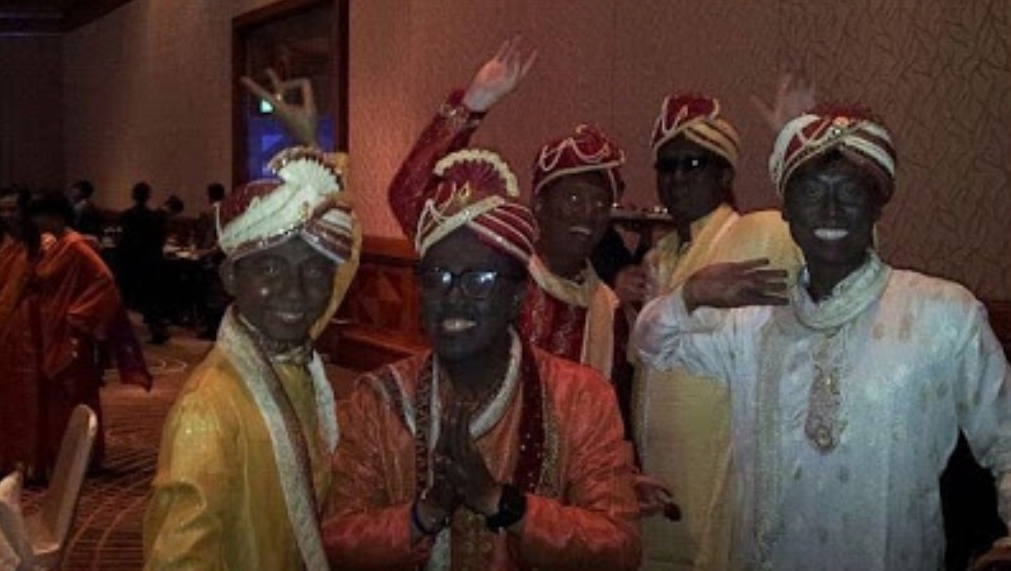

The recent uproar over a Chinese actor wearing “brownface” or dark makeup to portray Indian and Malay characters in an advertisement has caused more instances of “brownface” to recirculate online.
Days before Singapore celebrates its 54th national day, a discussion on racial relations gripped the nation after a “racially insensitive” advertisement campaign was spotted. The advertisement for government-led initiative E-Pay featured Chinese actor Dennis Chew dressed as a Chinese man, Chinese woman, Malay woman and an Indian man.
Mediacorp, the organisation that commissioned the advertisement, apologised after receiving backlash. Apologising for any hurt that was unintentionally caused, Mediacorp explained that “the message behind this advertising campaign is that e-payment is for everyone.
“For that reason, Dennis Chew, well-known for his ability to portray multiple characters in a single production in a light-hearted way, was selected as the face of the campaign. He appears as characters from different walks of life in Singapore, bringing home the point that everyone can e-pay.”
Mediacorp’s apology failed to sway Singaporeans who pointed out that this was not the first time Chinese individuals have worn “brownface” to portray Indians in the past. One of the earliest public examples of Chinese individuals openly wearing “blackface” occurred during a UOB Bollywood-themed staff party in 2012.
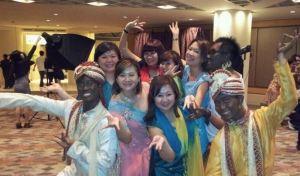
After the employees posted photos of themselves insensitively wearing dark makeup to portray Indians on social media, public backlash swelled against them and the staff were slammed for being offensive and distasteful.
A UOB spokesperson later told the national broadsheet that the picture was not meant to offend or discriminate against anyone. Revealing that the staff involved would be counselled, she said:
“UOB takes racial harmony very seriously and proudly employs more than 20,000 employees of about 50 nationalities. In fact, the occasion was one that was celebrating this diversity. However, we apologise if members of the public have been offended by the photos and have instructed the staff to remove the photos from their personal site.”
Twitter user Visakan Veerasamy, a local activist, has highlighted this incident and others to stress how the recent E-pay controversy is not the first instance of “brownface” in Singapore.
In 2013, YouTube channel Wahbanana – one of Singapore’s most popular youtube channels with over 1,200,000 subscribers that charges S$20,000–S$50,000 for sponsored content, according to Forbes – featured actors wearing “brownface” portraying Indian construction workers:

In 2015, MediaCorp actor Desmond Tan wore dark makeup and a turban in a video he uploaded to Instagram, making a Deepavali greeting:
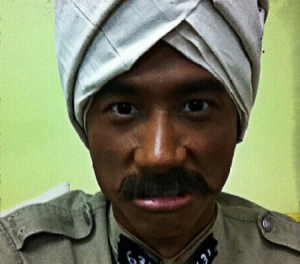
In 2016, a Chinese actor in a Toggle television show portrayed an Indian young man named “Muthu” – all because his Indian colleague could not make it to the shoot:
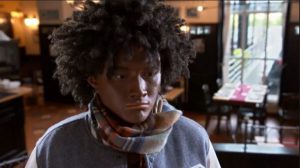

Just last year, Singapore Sports Institute chief Toh Boon Yi was spotted wearing a turban and a fake beard to portray an Indian at an internal staff celebration done annually for its Indian staff:
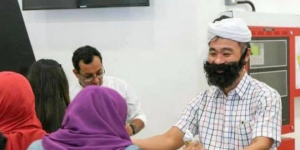
Mr Visakan’s posts have received over 1,600 re-tweets thus far:
It's time for a History of Singaporean Chinese people in Brownface
2012 UOB bollywood-themed party https://t.co/mqlMPe5VpT pic.twitter.com/lhuF0VUyUp
— Visakan Veerasamy (@visakanv) July 30, 2019
 Follow Google News
 Join us on WhatsApp
 Follow us on Telegram