
Why books still matter: Reading linked to better focus, empathy and brain health

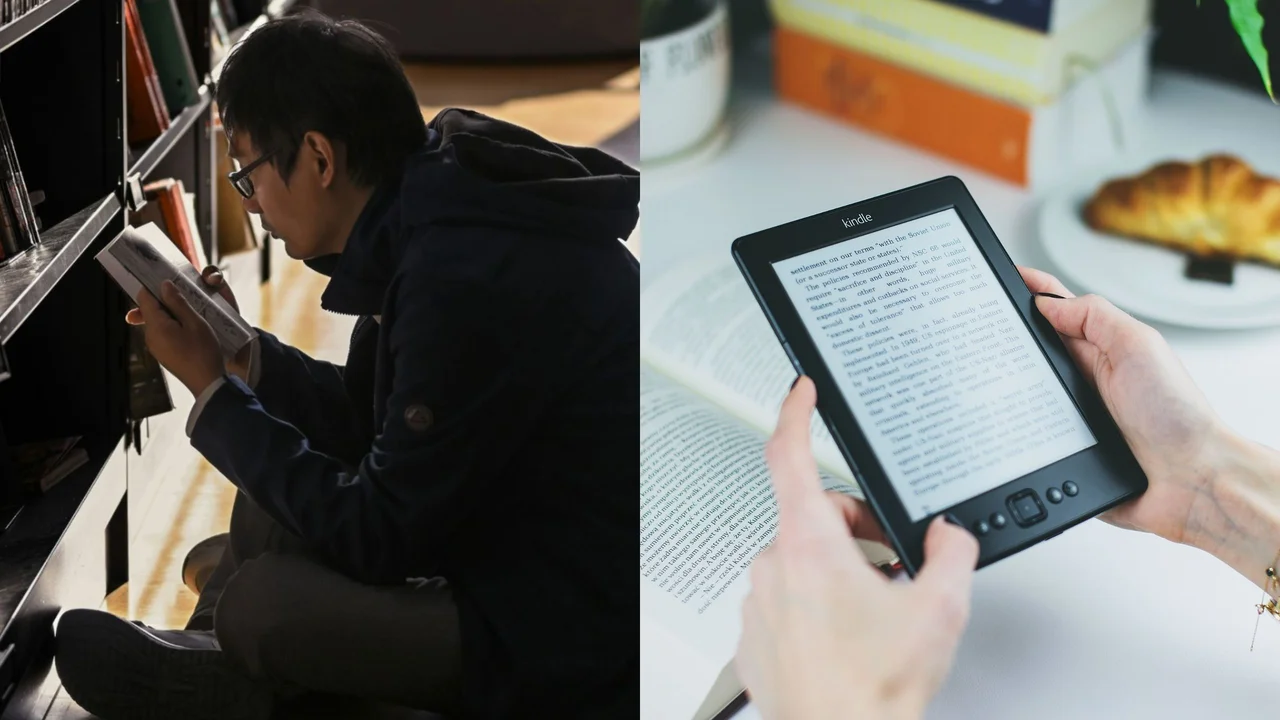
a man sitting on the floor in a library reading a book
SINGAPORE: Reading a book can feel almost old-fashioned these days. Between endless TikTok videos, Instagram reels, YouTube clips, and AI tools that can summarise hundreds of pages in seconds, sitting down with a book and reading it from beginning to end requires a rather different kind of patience.
Still, all this talk about reading becoming less popular does not mean books have suddenly stopped doing us any good. If anything, research suggests there are plenty of reasons to keep picking one up, even if our attention spans have been thoroughly spoiled by short videos.
Research by the University of Cambridge, carried out with The Queen’s Reading Room, the charity founded by Her Majesty The Queen, found that reading can improve literacy and mathematical skills, increase empathy and understanding, encourage tolerance of different perspectives, and improve concentration and problem-solving skills.
It can also help alleviate feelings of loneliness.
Reading may also reduce the risk of dementia. One study involving 5,500 people aged 55 and above found that those who read were less likely to develop cognitive impairment during a five-year follow-up period.
Another study found that reading newspapers, magazines, and books was associated with a 33% reduction in the risk of developing Alzheimer’s disease.
Reading can also help people relax. Spending just five minutes reading fiction has reportedly been linked to a reduction in stress of up to 20%.
Is the age of reading over?
Lately, there has been plenty of discussion online about whether we are witnessing the end of the reading era.
Two articles published in The Atlantic this year helped fuel the conversation: Adam Kirsch’s “Reading Is a Vice” and Rose Horowitch’s “The End of Reading Is Here.” Both examine the changing place of reading in modern life, although from rather different angles.
Horowitch discusses how reading has steadily declined over the years, arguing that we may now be entering what she calls a “post-literate era.”
Kirsch, meanwhile, takes issue with the way reading is often promoted, particularly the idea that people should be encouraged to read because it is their “public duty.”
Kirsch argues that reading should be promoted as a “vice” or a “private pleasure,” something people pursue simply because they enjoy it, rather than because it is supposedly good for society.
Kirsch makes several compelling points in his article, at least until he argues that “reading is not profitable; it doesn’t teach you any transferable skills or offer any networking opportunities.”
He goes further, describing reading as an “antisocial activity in the most concrete sense.”
By the end of the article, he suggests that reading can ultimately make people’s lives “more difficult,” a view that could arguably discourage people from picking up a book in the first place.
Unsurprisingly, those remarks drew criticism online, with other writers penning lengthy rebuttals.
One such writer, a Medium contributor known as "Momo,” argued that the article, while well-intentioned, “serves only to denigrate literature and reading rather than extoll it.”
She suggested Kirsch’s argument might have been more effective if he had compared reading to a specific type of vice, such as "drugs,” since losing yourself in a book can “produce euphoria; it can relax, it can excite. Reading leaves one wanting more. It’s addictive.”
Newsletter
Get updates straight to your inbox
On Reddit, one user said, “Reading doesn’t teach you any transferable skill is the biggest lie in this article probably. Whatever I am, whatever career I have is all because of my reading habit.”
Another wrote, “Ignorance is the vice, not reading.”
Reading campaign in Singapore
Criticism aside, the main argument behind these articles remains valid: reading has taken a back seat to many of our other activities.
The modern reader is competing with an almost endless supply of faster, more visual forms of entertainment.
To combat this declining trend, in Singapore, the National Library Board recently launched the ReadSG Challenge, which encourages people to read for at least 15 minutes a day.
Participants earn 20 virtual coins for each qualifying session (15 minutes), with 1,000 coins equivalent to S$1.