

WEST JAVA: When Rini Irawati rushed her teenage daughter to the emergency room, she could barely breathe herself.
Sixteen-year-old Nabila lay pale on the hospital bed, gasping for air. Just hours earlier, she had eaten lunch — one of the much-celebrated free school meals from President Prabowo Subianto’s flagship programme.
Now, instead of nourishment, it had nearly killed her.
“My heart was shattered,” Rini whispered. She thought the government was helping them. Instead, they had almost killed her child.
Nabila was not alone. That day, more than 500 other students across Indonesia fell violently ill after eating the same supposedly “safe” food.
A grand plan turned disaster
When President Prabowo launched the £3.2 billion (S$5.52 billion) free meal initiative in January, it was hailed as a war on child malnutrition — a bold vision to feed 39 million schoolchildren, toddlers and mothers. By the end of the year, the plan aimed to double that number.
However, instead of a national triumph, the programme has spiralled into tragedy. Watchdogs say over 15,000 cases of food poisoning have been recorded, and new outbreaks keep surfacing faster than the government can respond.
In towns from West Java to Sumatra, what was meant to be a lifeline has become a health hazard. Parents post videos of maggots wriggling in tempeh, shards of glass in rice, and meals being washed in filthy water.
Anger has spilt from kitchens to the streets.
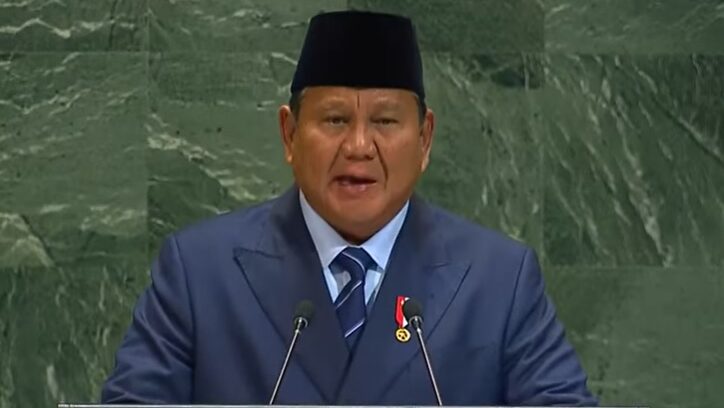
And yet, Prabowo remains defiant. “Of over a billion meals served,” he claimed, “only 0.0017% led to illness.” He called that “a proud achievement.”
The cost of a “quick win”
To many observers, that pride feels painfully misplaced.
“Prabowo wanted a quick win in his first 100 days,” said Made Supriatma, a political researcher at Singapore’s ISEAS–Yusof Ishak Institute. “However, it’s now turning into a quick death — for Prabowo’s credibility, and, worse, for children.”
Nutritionist Dr Tan Shot Yen believes the rush to scale up the programme without safety measures was reckless. “This programme’s implementation has been careless,” she said. “Bacterial contamination like Salmonella or E. coli could become endemic if unchecked.”
Diah Saminarsih, founder of the Centre for Indonesia’s Strategic Development Initiatives, agreed: “In West Java one kitchen may cater to 3,500 students. There’s no way a nutritionist can control quality under those conditions..”
Built on politics, not planning
Even as officials vow “zero incidents” with tighter hygiene rules and smaller kitchens, critics say the problem runs much deeper.
Some of the meal kitchens, reports show, are operated by police and military units — a sign, analysts warn, of Indonesia’s old authoritarian habits creeping back.
“This has one of the biggest budgets in history,” said Egi Primayogha from Indonesia Corruption Watch, but according to Egi, there isn’t a single solid regulation ensuring transparency or accountability. So, who really benefits — the children, or the power networks?
Two sides of the table
For many low-income families, the meals still offer relief. During a recent government-arranged visit, journalists watched uniformed workers neatly serve rice, chicken and vegetables to smiling students in South Jakarta.
“It helps parents like us,” said Rohmani, a breastfeeding mother of six. “We can focus on work, knowing our kids have eaten.”
However, for mothers like Rini, that faith is gone. They were told this was for their children’s health, but now she’s praying that no other parent has to see their child as she saw hers.
A costly lesson
Indonesia’s free meal programme began as a symbol of hope — nourishment for children and pride for a new presidency, but beneath the soaring promises lies a painful truth — when policy is made for applause, not for the people, it can destroy the very lives it claims to protect.
Prabowo may have sought a “quick win” to define his legacy.
Yet if children’s safety continues to be sacrificed for political spectacle, this victory may become one of Indonesia’s quickest — and most tragic — defeats.
 Follow Google News
 Join us on WhatsApp
 Follow us on Telegram